Ask any Swati household how the month ends and you will hear the same story: The money finishes before the month does. Prepaid electricity runs out sooner, the loaf costs more, the bus fare has gone up and the salary, for those who have one, buys less than it did a year ago. This week, the squeeze tightened again.
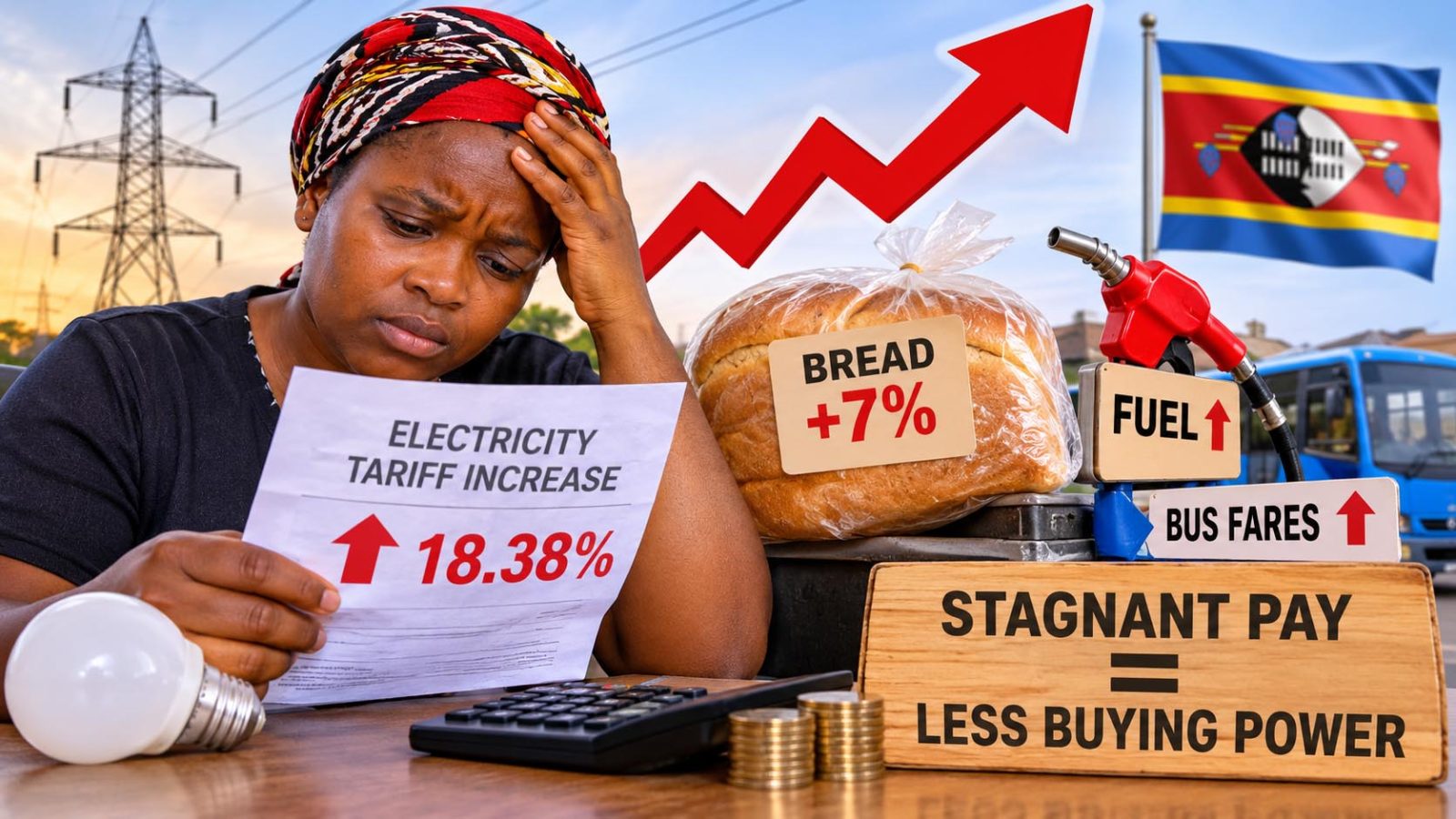
The Eswatini Electricity Company (EEC) has applied to the Eswatini Energy Regulatory Authority (ESERA) for an average tariff increase of 18.38 per cent for 2027/28, followed by 14.68 per cent the year after, before the electrification levy and VAT. ESERA chief executive Skhumbuzo Tsabedze announced the application barely seven months after the last increase took effect in April.
EEC says the request is driven mainly by the cost of imported bulk power and the recovery of past shortfalls. In practical terms, the E100 that buys about 35 units today could buy only about 29.
An application is not a verdict and fairness demands we say so. ESERA scrutinises these requests and has often awarded less than was sought. This year it approved a lower figure than EEC asked for and government funding trimmed the effective increase further. But the direction of travel is unmistakable. Stack this year’s increase on the two now requested and, if all were granted in full, electricity would be far more expensive than it was before April.
Electricity does not stand alone. Bread rose by seven per cent last November and has risen again this October. Petrol and diesel jumped sharply in April and May as the Middle East conflict pushed up oil prices and moved again in September. Commuters are about to pay higher bus fares. The Central Statistical Office reports that in the year to September, electricity prices were up by about 15 per cent, while liquid fuels were up by more than a third.
Headline inflation, at 2.9 per cent, sounds mild. But averages hide who pays. A poor household spends a far larger share of its income on food, power, fuel and transport than a wealthy one, so it feels the rise in essentials far more sharply than any national figure suggests.
Wages, meanwhile, move at a walking pace. Credit where it is due: The civil service salary review brought long-overdue relief to tens of thousands of public servants after years of stagnant pay, and this year’s wage regulation orders delivered increases across several sectors. But the Finance minister has already cautioned that government must tighten its belt again in the coming years to bring the wage bill closer to its long-term target. One review is not a pattern of rising pay and a once-off adjustment is quickly eaten by the next tariff notice.
The deeper problem lies beyond the payslip. Unemployment stands at around a third of the labour force, according to World Bank data, and the International Monetary Fund has pointed to youth unemployment above half, income inequality among the highest in sub-Saharan Africa and a poverty rate close to six in 10. For these families, there is no wage order and no salary review to chase rising prices, only piecework, remittances and the goodwill of relatives. Every tariff and price increase, therefore, works like a regressive tax: Lightest on those who have most, heaviest on those who have least.
What should be done? ESERA must test EEC’s claims hard, demanding proof of efficiency and a clear account of how much of the shortfall stems from import contracts and how much from the utility’s own management. Government should keep cushioning consumers, as it did in 2025 and 2026 and protect the lifeline tariff for the poorest households.
Wage reviews, in the public and private sectors alike, must be tied to what essentials actually cost, not to a headline average. And we must invest seriously in locally generated power, so that the lights in our homes are not hostage to the price of imports.
No one is asking that real costs be wished away. But a country cannot keep the lights on by pushing its poorest into the dark.
The gap between what things cost and what people earn is widening and unless leaders close it deliberately, the poor will go on paying the difference with smaller meals, missed school needs and delayed medical visits. emaSwati are patient, resilient people. But patience is not a budget.