
Madam,
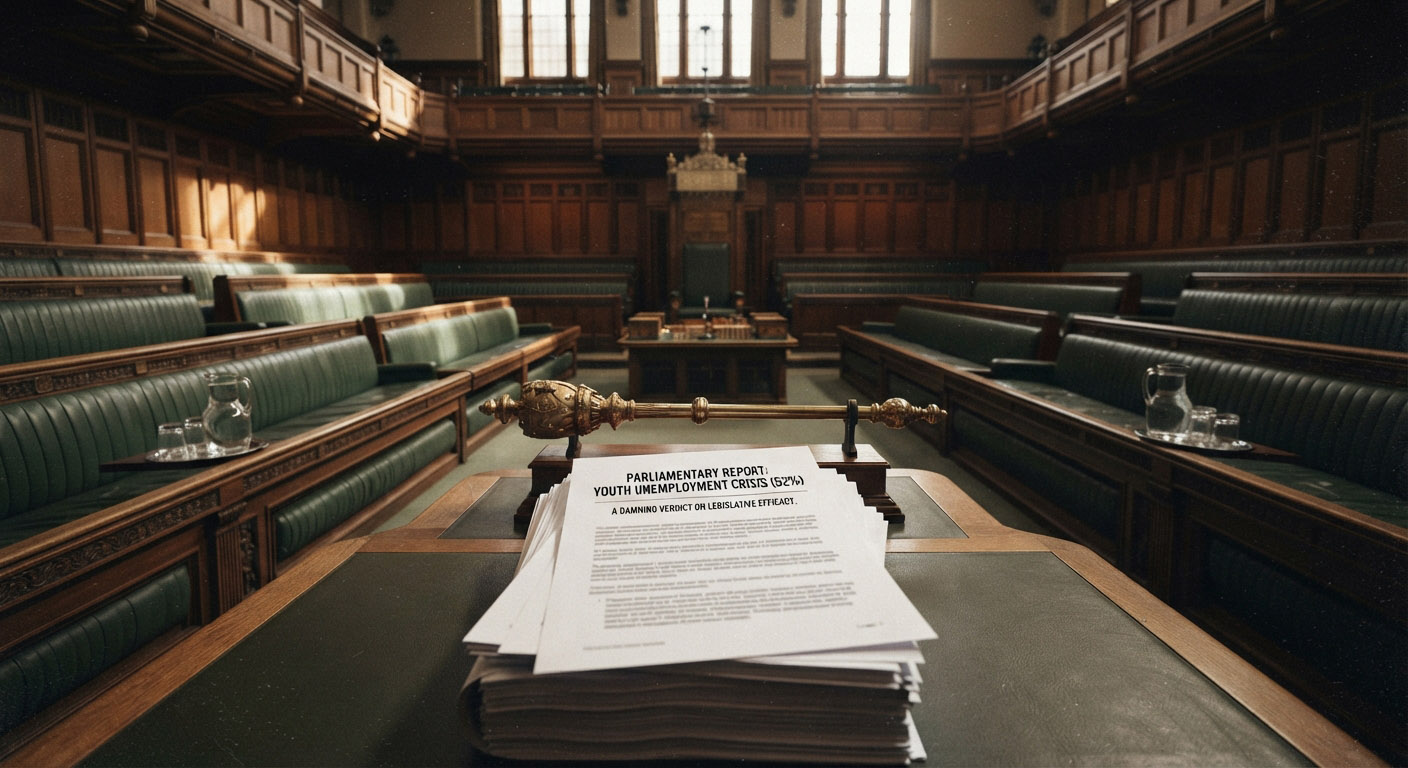
The recent revelation in Parliament that youth unemployment hovers around the catastrophic figure of 52 per cent is not merely a statistic; it is a damning verdict on the efficacy of our bicameral legislative system. When a nation’s youth, its most vital demographic dividend, are consigned to the economic scrapheap at such a scale, we must move beyond lamentation and interrogate the structural failures of our governance.
His Majesty’s Parliament, comprising the Assembly of MPs and the Senate, is constitutionally mandated to be the engine of policy correction. Yet, the plight of the youth exposes a profound disconnect between legislative representation and executive delivery. The search results confirm that MPs are acutely aware of the crisis, inundated with desperate pleas from graduates and professionals seeking even menial police recruitment posts. However, awareness without aggressive legislative oversight is impotent.
The national causes and impressions derived from this parliamentary performance are deeply troubling:
Pathology of patronage over policy
The impression gleaned from recent debates is that Parliament functions more as a reactive grievance channel than a proactive policy architect. While MPs rightly decry the 30 000 jobs promised versus the 190 000 people needing employment, the legislative response has been fragmented. The dependency on the Executive to fill 422 vacant public works posts, rather than Parliament aggressively legislating for private-sector deregulation and FDI incentives, suggests a Legislature content with micromanagement over macro-strategy.
Skills mismatch and educational cul-de-sac
The poignant sight of qualified teachers applying for police roles is a structural indictment. It reveals a catastrophic disconnect between our education system and the labour market.
Parliament has failed to exercise its oversight to ensure the Ministry of Education aligns curricula with industrial demands. The fact that 53 per cent of youth are not in employment, education or training (NEET) points to a systemic failure that legislative committees should have foreseen and pre-empted through rigorous policy interrogation.
Agricultural loan paradox
While the Senate recently fast-tracked an E800 million loan for youth agriculture, the impression is one of reactive financialisation rather than structural reform. Without corresponding legislative frameworks to secure land tenure for youth and guarantee market access, such loans risk becoming debt traps rather than empowerment tools. Parliament’s role should have been to first dismantle the regulatory bottlenecks that make youth participation in agriculture unattractive.
Silence on informal sector reform
With the formal sector creating a mere 1 000 jobs annually against 25 000 new entrants, the informal sector is the de facto employer.
Yet, there is a conspicuous legislative silence on formalising, protecting and scaling the informal economy. Parliamentarians have failed to champion the legislative amendments required to unlock credit and social protection for the self-employed youth, leaving them in a precarious economic limbo.
Conclusion
The 52 per cent figure is a symptom of a Legislature that has perhaps prioritised political alignment over economic emancipation. The impression is that our Parliament, despite its dual chambers, lacks the esprit de corps required to declare a state of emergency on youth employment.
Until Parliament moves from debating that there is a crisis to legislating how to dismantle the barriers, skills mismatches, capital access and bureaucratic red tape, the youth will continue to view the legislative gallery not as a house of hope, but as a theatre of irrelevance.
Cyclone Gama