
Madam,
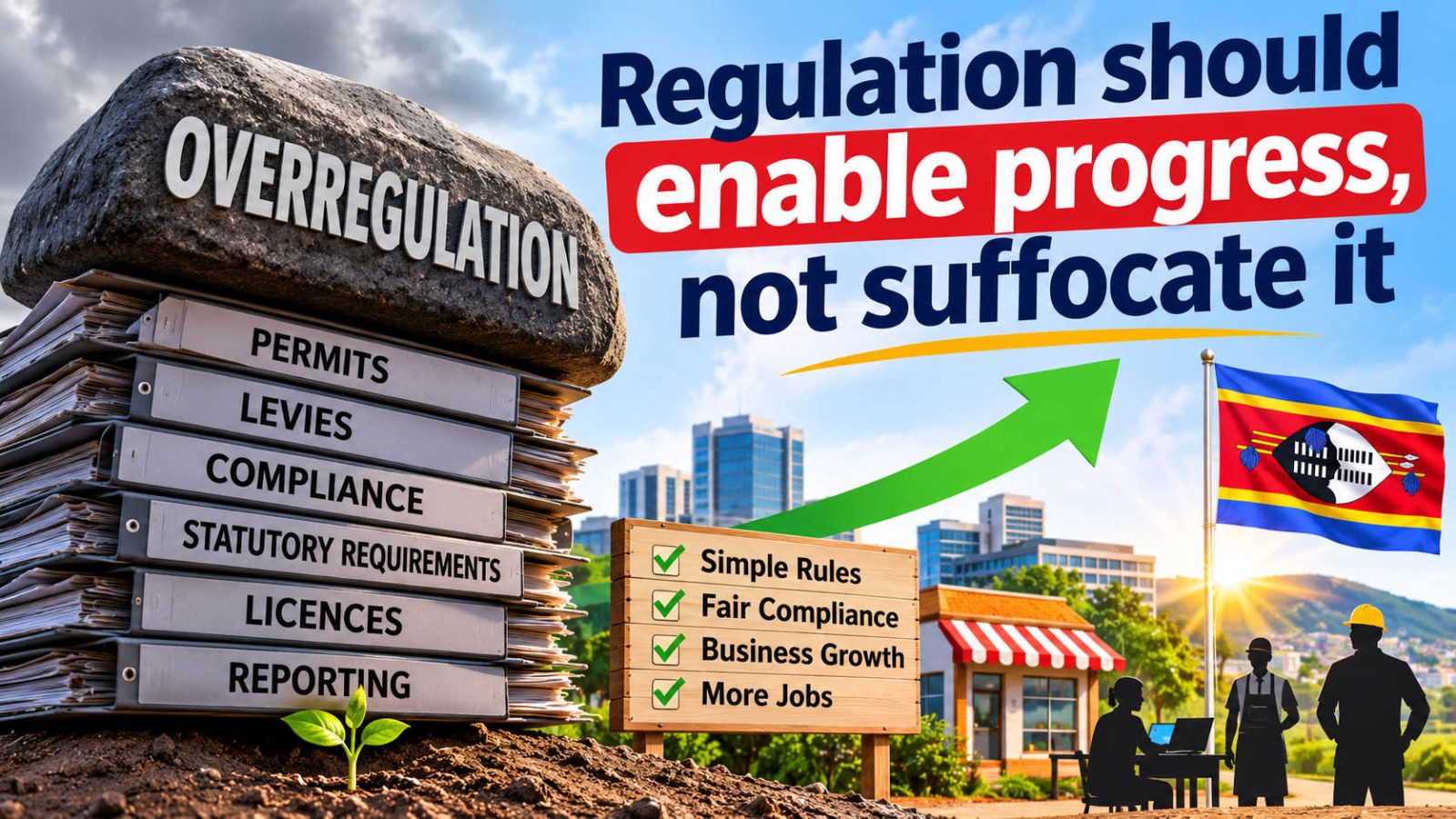
Eswatini is increasingly beginning to resemble a country imposing First-World regulatory standards on a third-world, developing country. There is an undeniable place for regulation in any functioning State; laws, oversight and institutional safeguards are necessary to protect consumers, preserve order and ensure accountability. However, regulation must be proportionate to the economic realities of the people and businesses expected to comply with it. When rules become excessively elaborate, expensive or difficult to navigate, they cease to facilitate progress and instead become formidable barriers to participation. A developing economy cannot afford regulatory sophistication that outpaces its productive capacity and broader national development.
Our regulators are undoubtedly well-educated and will win the best awards across the world, while extinguishing any entrepreneurial light, unfortunately. There is little consolation in celebrating regulatory excellence if the consequence is the systemic suffocation of entrepreneurship.
A regulatory framework should create an environment in which businesses can emerge, innovate, expand and employ people; it should not turn commercial activity into an exhausting exercise in compliance. We must be careful not to mistake the proliferation of rules for effective governance.
The true measure of regulation is not how much it controls, but whether it protects the public without unnecessarily obstructing economic initiative.
Placing the cart before the horse and expecting it to pull is a recipe for frustration. A country cannot demand sophisticated compliance from businesses and citizens, while the economic foundations required to sustain such obligations remain fragile. Sir Winston Churchill is often credited with the observation that a government seeking to sustain itself by increasing taxes resembles someone standing inside a bucket and attempting to lift it.
Productivity
The lesson is clear: Extracting more from an economy does not automatically make that economy stronger. Governments must first cultivate productivity, widen opportunity and strengthen the conditions that enable people to generate wealth.
I was explaining to one of my colleagues that Eswatini has become so heavily regulated that a person could, quite unknowingly, find themselves committing five offences in a single day.
The remark was deliberately exaggerated, but the frustration behind it is real. When ordinary people struggle to understand the obligations imposed on them, and entrepreneurs must navigate an intimidating maze of permits, procedures, levies and statutory requirements, compliance becomes less a matter of responsible citizenship and more a daily source of anxiety.
Regulations should be intelligible, accessible and reasonably enforceable; otherwise, they risk criminalising confusion rather than correcting deliberate wrongdoing.
In conclusion, this is not an argument for abolishing regulation, disregarding the law or allowing businesses to operate without accountability. It is an appeal for intelligent, proportionate and economically sensitive governance. Our laws must protect consumers, workers and the public, but they must also recognise the circumstances of a developing economy where employment opportunities, capital and entrepreneurial resources are constrained. The objective should be to make it easier for honest people to build livelihoods, not to overwhelm them with requirements they can scarcely interpret or afford. Be that as it may, we must all endeavour to become the best versions of ourselves.
Mbuyiselo S. Sikhondze