

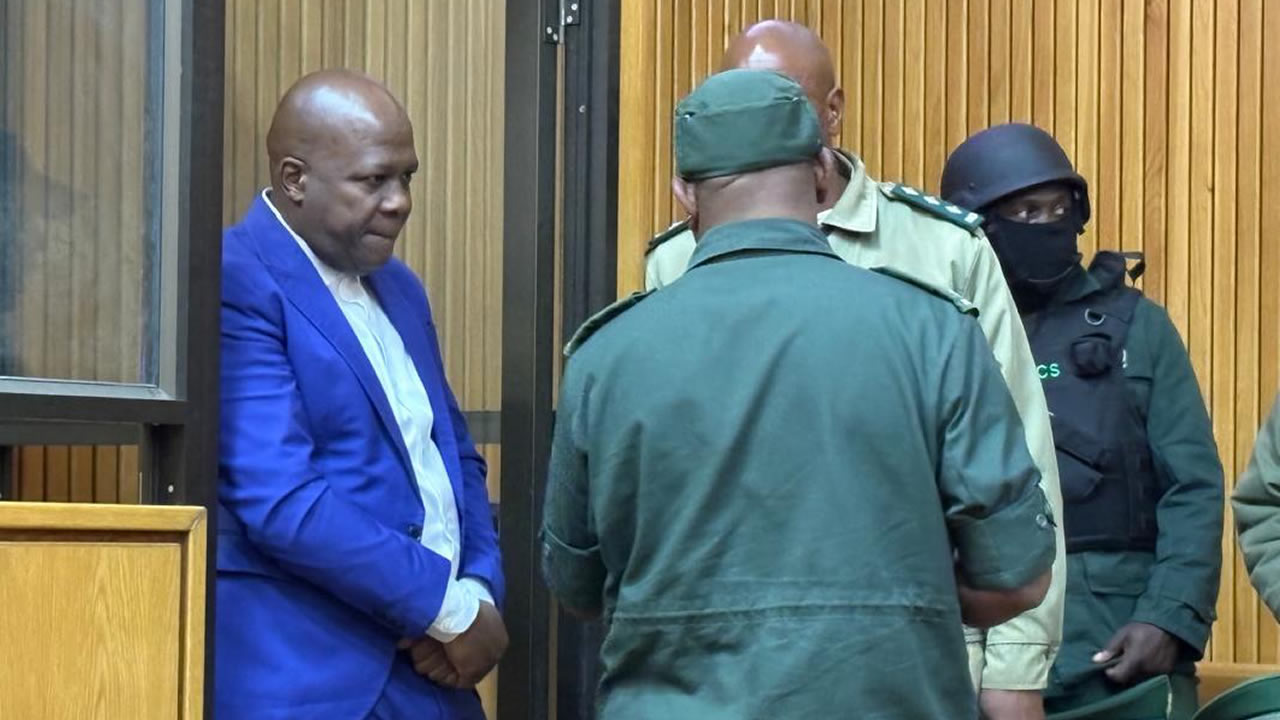
Shongwe, convicted of killing businessman and football administrator Victor Gamedze, was in court yesterday. He presented evidence from Clinical Psychologist Jacob van Zyl, who had evaluated Shongwe. Van Zyl conducted a psycho-legal evaluation to explore Shongwe’s background, behavioural patterns and psychological profile.
This involved interviews, observations and psychological testing to gather information about his emotional stability, personal profile and life skills, specifically within his context as an inmate for the past seven years. Shongwe has been detained at Matsapha Maximum Prison since his arrest in January 2018.
He was accused of Gamedze’s murder on January 18, 2018, at Ezulwini Galp Filling Station. Shongwe was convicted in October 2023 and appeared in court yesterday for submissions on extenuating circumstances and mitigation. Van Zyl stated that Shongwe informed him he had been framed.
Shootout
A post-mortem report confirmed that Gamedze died from two gunshots to the head at close range. The shots were fired by Mbuso Ncaza Nkosi, who was later killed during a shootout with police in the Republic of South Africa. At the time of Gamedze’s murder, he was walking from the convenience store at the filling station with one Ananias Khumalo towards his motor vehicle parked next to the fuel pumps.
According to Shongwe, he was framed, and the police know who the real killer was.
Van Zyl’s report states that: “According to the accused, he was framed for the murder of Mr Gamedze and that the police know who the actual murderer was, who is still free.”
Shongwe questioned the sense of keeping him in prison for longer than the seven years (from 2018 to 2025) he has already served without any prospects of rehabilitation or correctional aspects. He stated he had already received rehabilitation from the Department of Correctional Services, Barberton. According to certificates received from Correctional Services while in prison in South Africa, he made a significant positive impact on the education system and teaching during his incarceration.
After Shongwe was released from prison in South Africa in 2008, he returned to Eswatini, started companies, providing employment to over 100 people, and married Viyi in 2014. The psychologist said he got the impression that Shongwe wanted to emphasise that he had been exposed to Correctional Services or interventions before, gained skills and was not experiencing any new corrective experiences in his current imprisonment. According to Shongwe, he has reached a point in his life where he feels he needs to be released from prison to make a difference on the outside.
Due to time constraints during the psycho-legal evaluation in prison, Van Zyl said he decided to not get into the detailed specifics of the offence for which Shongwe was found guilty of. While Shongwe occasionally shared his perspectives on the offence, according to the psychologist’s report, the focus of the evaluation was on clinical observation, comprehensive interviews and psychometric assessment. The summary of the offence presented in court by Van Zyl was mostly derived from the judgment on conviction of Judge Nkosinathi Maseko and the heads of argument from advocates Michael Hellens for the Crown and Laurence Hodes for Shongwe at the time.
The psychologist went to state that he established that Steve Horton, involved in the trucking business, also testified that Shongwe stopped at Galp Filling Station between December 18-20, 2017 and spoke to him and Mike Mamba. Shongwe mentioned to them his unhappiness with Gamedze’s conduct regarding soccer teams and the premier league. Horton testified that Shongwe signalled a warning to Gamedze, which Horton and Mamba relayed to the late Gamedze.
Frame
Shongwe referred to them as Gamedze’s boys, meaning they were his supporters or friends. He questioned why he would share negative information about Gamedze with them if he knew they were Gamedze’s associates.
According to Shongwe, they were set up to testify and frame him as the one who instructed the hit men to kill Gamedze.
After the murder, police led by Senior Superintendent Sikhumbuzo Fakudze, launched a full-scale investigation which led to the arrest of the accomplice witnesses, Simphiwe Tata Ngubane and Nkosi (who fired the shots), by Interpol. Shongwe was arrested five days later, on January 19, 2018, at the Ngwenya Border Gate and was accused of instructing Ngubane and Nkosi to kill Gamedze.
Ngubane was reportedly under the impression that the task was merely to steal money Gamedze was transporting in his vehicle. However, the psychologist testified that the information that the task was to eliminate Gamedze was withheld from Ngubane.
Meanwhile, Nkosi testified that he was unwilling to take the order to kill Gamedze from Shongwe, but that he threatened to harm his pregnant girlfriend. Shongwe denied this. During the psychologist’s evaluation, Van Zyl said Shongwe denied knowing Ngubane and Nkosi or giving the instruction to murder Gamedze. According to Shongwe, he had a good relationship with Gamedze after they had resolved their past tensions and reconciled.
Remorse
Shongwe explained that Gamedze had initially threatened to murder him, a threat he reported to the police in Matsapha for his own safety. Their differences were subsequently resolved, he said. Shongwe stated during the evaluation that he felt remorse about Gamedze’s death, not because he allegedly gave the instruction to eliminate him, but because a life was lost.
Shongwe also rhetorically asked during the evaluation what he would gain from Gamedze’s death, as football in Eswatini was primarily about passion, not money. He also denied offering money and drugs to Ngubane and Nkosi to prevent them from being witnesses, stating they lied about this. He claimed he did not have access to drugs and lacked the money to offer them.
Advocate Hodes, in his heads of argument, contended that the analysis of the relevant telephone records data (which indicated Shongwe’s active involvement in instructing the two hit men) was not conducted in a valid, reliable or permissible way. Shongwe is represented by Sanele Mabila, who instructed Advocate Johan Basson and Russell Schorn. The matter continues today.
I never contemplated suicide – Shongwe tells psychologist
MBABANE – During the psycho-legal evaluation, Sipho Shongwe told Clinical Psychologist Jacob van Zyl that he has never contemplated suicide.
Van Zyl pointed to Shongwe’s composed demeanour throughout the consultation. He was observed to be calm, relaxed and extremely self-controlled, exhibiting an even temperament. His behaviour was described as well-mannered, mature, wise, respectful and accommodative.
Van Zyl said Shongwe perceived himself as a born leader, a loving individual, religious and someone who fears God, guided by strong norms, values and convictions.
Life-experience
“Shongwe came across as intelligent, sharp and calculated. He expressed that his time in prison has led to growth in life-experience, wisdom, endurance and personal strength.
“He affirmed that his orientation, attention, focus and memory remain good, attributing this partly to his engagement with newspapers and novels available in prison,” said the psychologist.
Shongwe, according to Van Zyl, confirmed that he has never contemplated suicide. He also revealed that he has never sought counselling, therapy or psychological services within the prison due to concerns about a lack of confidentiality and perceived incompetence within the system. He said his only previous emotional support came from Pastor Malaza of the Jesus Worship Centre, who visited him.
Shongwe writing book in prison
MBABANE – Business and football administrator Sipho Shongwe is writing a book in prison.
This revelation was made during a psycho-legal evaluation conducted by Clinical Psychologist Jacob van Zyl on Shongwe at Matsapha Maximum Prison.
During the evaluation, Shongwe, according to Van Zyl, provided insights into his health, daily routine and personal beliefs. He disclosed a family history of illnesses for which he currently takes medication.
He expressed an urgent need to consult a urologist for a prostate examination, with his most recent general check-up having been two weeks prior to the evaluation. Shongwe also mentioned having undergone stomach surgery in the 1990s following an accident.
To deal with insomnia, especially under stress, Shongwe says he engages in physical exercise, running in the prison yard and doing exercises, which aids his sleep.
Shongwe is said to be still interested in football, a sport he once actively participated in as a player and team owner. While Shongwe is in prison, Van Zyl told the court yesterday that he occupies his time by reading newspapers and novels, alongside writing his own book, which he hopes will be published.
Shongwe also noted a lack of developmental activities at Matsapha Correctional Facility compared to his previous time in a South African prison in Barberton, where he gained various skills.
Contributed
In terms of his interpersonal relationships, Shongwe described himself as someone with very good connections, characterising his former self as a public figure, who assisted people, contributed to community development and supported numerous children and students through their schooling. He claimed to be unfazed by gossip, stating that he understands ‘life is like that’ and knows his own truth. However, the evaluating psychologist formed the impression that Shongwe was socially withdrawn within the prison environment, finding it difficult to associate meaningfully with fellow prisoners.
Van Zyl said Shongwe’s main desire for change in his life is to no longer be incarcerated or suspected of orchestrating Victor Gamedze’s murder. He stated that, apart from a heist in Bronkhorstspruit in July 1997, his divorce from Rita, and the current murder case involving Gamedze, he has not been involved in any other court proceedings.
He also informed the court that religion plays a central role in his life, as he described Christianity as ‘who I am’ and identified as a born-again Christian. He submitted that he grew up in the Zion Christian Church (ZCC) and, as an adult, attended Jesus Worship Centre (JWC) under the leadership of Pastor Malaza, who has since passed away, but provided support to him during his lifetime. Pastor Malaza, who is now late, according to Van Zyl, once visited Shongwe in prison.
“He spoke of God as Jesus Christ who died for us and affirmed that we belong to a God. The principles of Christianity humble me. I do believe that I have a calling,” Shongwe stated.
Court finds no grounds for reduced blame in Shongwe’s conviction
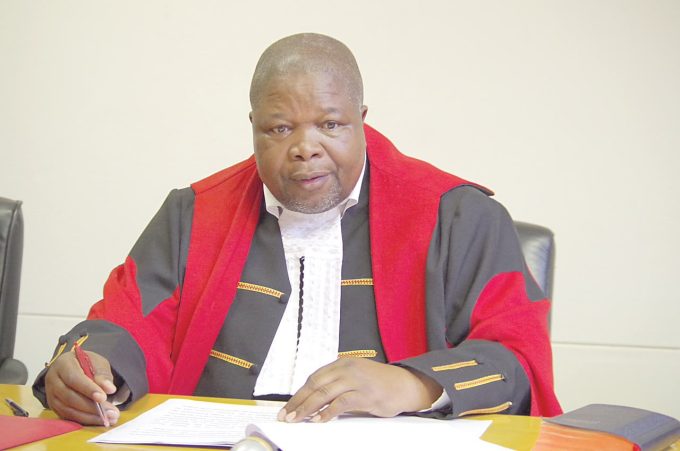
MBABANE – Judge Nkosinathi Maseko yesterday found that there are no extenuating circumstances in Sipho Shongwe’s case.
In fact, Shongwe elected not to make submissions on extenuating circumstances.
Extenuating circumstances, when present, reduce an accused person’s blameworthiness and may result in a lesser sentence.
His representative, Advocate Johan Basson, said they would not be making submissions on extenuating circumstances.
This was after the Crown, represented by Advocate Michael Hellens, assisted by Crown Counsel Macebo Nxumalo, submitted that there were no extenuating circumstances in relation to the murder which the court convicted Shongwe of.
Hellens, in his submissions said under Section 295(1) of the Criminal Procedure and Evidence Act, Act No 67 of 1938 (CPE), when a court convicts a person of murder, it is mandated to state whether any extenuating circumstances exist.
He said should such circumstances be found, they may be specified.
He submitted that these circumstances are crucial because Section 296(1) of Part XVI of the CPE stipulates that the High Court ‘shall pass a sentence of death by hanging’ upon an offender convicted of murder.
Sentence
However, a significant proviso to this section allows the court to impose any sentence other than the death sentence if it is of the opinion that extenuating circumstances are present.
The advocate argued that Section 15(1) protects the right to life, permitting deprivation of life only in the execution of a court sentence for a criminal offence. Section 15(2) states that: “The death sentence shall not be mandatory,” reinforcing the court’s discretion.
“Therefore, before proceeding to sentencing and considering mitigating factors, the court must first determine the existence of extenuating circumstances. When assessing extenuating circumstances, the court must evaluate the convicted person’s conduct from a moral standpoint.
“This involves applying a subjective test, focusing on the convicted person’s state of mind at the time of the offence, rather than the objective unlawfulness of their actions or how a fictitious reasonable person might have behaved.
Factors such as the nature of the crime, if it sheds light on the accused’s state of mind, may influence this decision, but the interests of the community are not relevant at this stage,” said Hellens.
The Crown, in its submissions, pointed out several findings from the court’s judgment that it argues preclude the existence of extenuating circumstances.
The indictment alleged that Shongwe, along with ‘Dzodzo’ Sandile Zikalala, Mbuso ‘Ncaza’ Nkosi and Siphiwe ‘Tata’ Ngubane, killed Victor Gamedze in furtherance of a common purpose. The court found Shongwe guilty beyond reasonable doubt of Gamedze’s murder in January 2018.
Circumstances
Based on the court’s findings, the Crown submitted that no extenuating circumstances exist in Shongwe’s case, asserting that the killing was a contract murder instigated by him.
While acknowledging that no onus rests on the convicted person to prove extenuating circumstances, the Crown expressed doubt that such circumstances could or would be shown by or on behalf of Shongwe, given the established facts.

















Leave a comment