


MBABANE – Citizen empowerment is not just a policy, but a national promise to reshape Eswatini’s economic future.
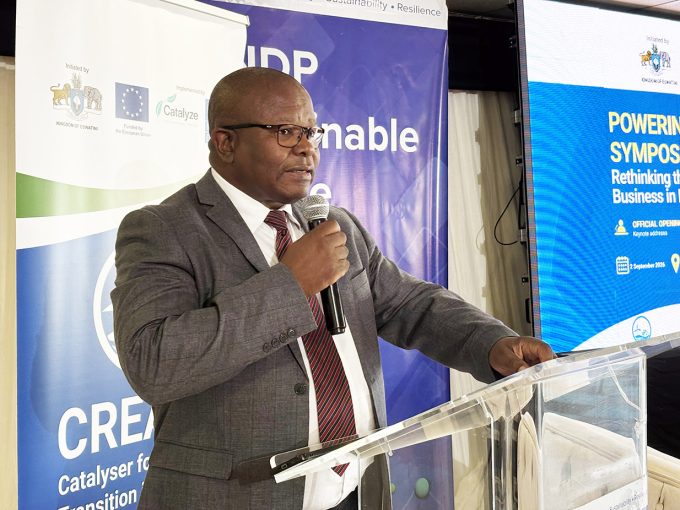
These were the sentiments expressed by Citizen Economic Empowerment Council (CEEC) Chairperson Lincoln Motsa – through his Vice Chairperson, Thuli Dladla – during the second round of the Regulations Development Consultation Meeting for the Citizen Economic Empowerment Act (CEE Act), held at the UN House in Mbabane yesterday.
Yesterday’s session brought together different players in the financial sector including finance institutions and their regulators and the subject matter was their role in providing access to finance for small and medium enterprises (SMEs).
Motsa described the ongoing development of the Act’s regulations as a transformative process that will unlock real economic opportunities for emaSwati and strengthen local entrepreneurship.
“The CEE Act is a landmark piece of legislation that embodies our collective aspiration for a more inclusive and equitable economic landscape,” read the statement delivered on his behalf.
“It is a promise to our people – a commitment to ensure that every citizen has the opportunity to participate in and benefit from our nation’s economic growth.”
Implementation
The Act officially came into effect on July 1, 2024 and aims to address historic economic imbalances, while fostering broader participation of indigenous emaSwati in business. Since then, the CEEC has been tasked with overseeing its implementation, promoting inclusive economic participation and shaping enabling policies and support strategies – especially for micro, small and medium enterprises (MSMEs).
The CEEC chairperson noted that the Council will act as the “guardian of our economic empowerment agenda, a catalyst for change and a beacon of hope for MSMEs.”
Among its core responsibilities is ensuring collaboration between government, the private sector, and civil society. Motsa said the council would also monitor implementation progress, develop empowerment programmes, advocate for policy reforms, and recommend adjustments where necessary.
Crucially, the regulations being developed will operationalise empowerment measures such as preferential procurement, regional development incentives, supportive business environments and increased investment – both domestic and foreign.
“These measures are designed to create a more inclusive and equitable economic environment in Eswatini, nabling local businesses to thrive and contribute to the country’s sustainable development,” Motsa said.
The chairperson called on big business to partner with smaller enterprises, encouraging a mentorship culture where corporates support MSMEs with guidance, access to markets and capacity-building.
“This not only provides MSMEs with valuable business opportunities but also helps build their capacity and credibility.
Large corporations can help small businesses navigate challenges and achieve sustainable growth,” the statement emphasised.
Motsa also lauded the United Nations Development Programme (UNDP) for its pivotal support throughout the drafting and enactment of the Act, as well as for facilitating the stakeholder consultation sessions.
“The success of the Citizen Economic Empowerment Act and the empowerment of our MSMEs depend heavily on the active participation and support of all stakeholders,” he said. The first round of consultations was held in May 2025, engaging players from agriculture, construction, ICT, health, infrastructure and retail sectors.
Business culture, attitudes under scrutiny
MBABANE – Adding to the conversation, Umelusi Capital Executive Director Thabo Magagula lamented the high cost of doing business in the country and called for structural reforms.
“It is extremely difficult to be in business in Eswatini. The operating environment is harsh and the cost of doing business is high,” Magagula said.
He also expressed frustration over what he termed negative societal attitudes towards successful entrepreneurs, particularly those who attain wealth.
“When businesspeople succeed, instead of being celebrated, they are gossiped about — ‘he bought a car, he will fall soon,’” Magagula said. “This culture of pulling down entrepreneurs must stop if we want to grow a strong SME sector.”
Furthermore, participants at the consultation also raised the issue of high and inconsistent interest rates charged by financial institutions, which are often pegged on top of the prime lending rate.
They argued that while access to capital is technically available, the cost of borrowing remains prohibitive for many aspiring business owners, particularly start-ups and youth-led enterprises.
As consultations continue on finalising the regulations of the CEE Act — which came into effect on July 1, 2024 — stakeholders appear united on one thing: A functioning and inclusive economic empowerment framework must go beyond legislation and into practical, behavioural and cultural change.
… SMEs ignoring export scheme opportunities
MBABANE – Central Bank of Eswatini (CBE) Deputy Governor Felicia Dlamini also raised concern over the underutilisation of the Export Credit Guarantee Scheme (ECGS).
Dlamini pointed to a worrying trend: Local SMEs are not producing for international markets but are instead over-concentrated in the retail sector.
“Eswatini’s SMEs are not taking advantage of opportunities to produce for export,” she said. “This tells us there is an urgent need to empower local businesses to look outward, towards regional and global markets.” The CBE currently manages two Credit Guarantee Schemes under the Development Finance Division — the ECGS and the Small Scale Enterprise Loan Guarantee Scheme (SSELGS) — both of which were established by government in the early 1990s.
Under ECGS, up to 90 per cent of pre- and post-shipment loans (to a maximum of E3.3 million) can be guaranteed, while SSELGS offers guarantees of up to 98 per cent for youth-owned start-ups and 95 per cent for youth-owned existing businesses.
Venturing
Yet, despite these generous guarantees, the take-up remains worryingly low — a signal that local SMEs are still shying away from venturing into value-added manufacturing and export-focused industries. In a notable shift from common public sentiment, the deputy governor emphasised that employment growth should not be seen as the sole responsibility of government. “Jobs are created by a growing economy — not by government itself,” she said. “The role of government is to create an enabling environment for businesses to thrive, reduce the cost of doing business, and foster conditions where jobs can be created organically.”
She encouraged ministries and regulatory bodies to streamline processes and reduce barriers to entry for businesses, especially for young entrepreneurs seeking to innovate or expand into new markets.




















Leave a comment