

Eswatini’s Prime Minister Russell Mmiso Dlamini is poised to unveil a 30-year Grand Plan aimed at transforming the country into a First World nation. The ambition is bold and the stakes are high. As the adage goes, failing to plan is planning to fail. I firmly believe in the power of planning—especially when the vision stretches across generations.
Sir Isaac Newton once wrote: “If I have seen further, it is by standing on the shoulders of giants.” This sentiment resonates today. The prime minister stands at a pivotal moment, drawing inspiration from those who dared to dream before him. Yet, one concern looms large: Will this Grand Plan be built with the people, or merely for them?
Any long-term national strategy must be owned by the citizens it seeks to serve. Without public engagement, even the most visionary document risks becoming a top-down directive rather than a shared roadmap. Emaswati deserve a stake in this future. We await clarity from the architects of the plan on how ordinary people will be involved—not just as beneficiaries, but as co-creators. A plan of this magnitude must reflect the lived realities, aspirations and voices of the people it is meant to uplift. Public participation is not a bureaucratic formality—it is the lifeblood of democratic development.
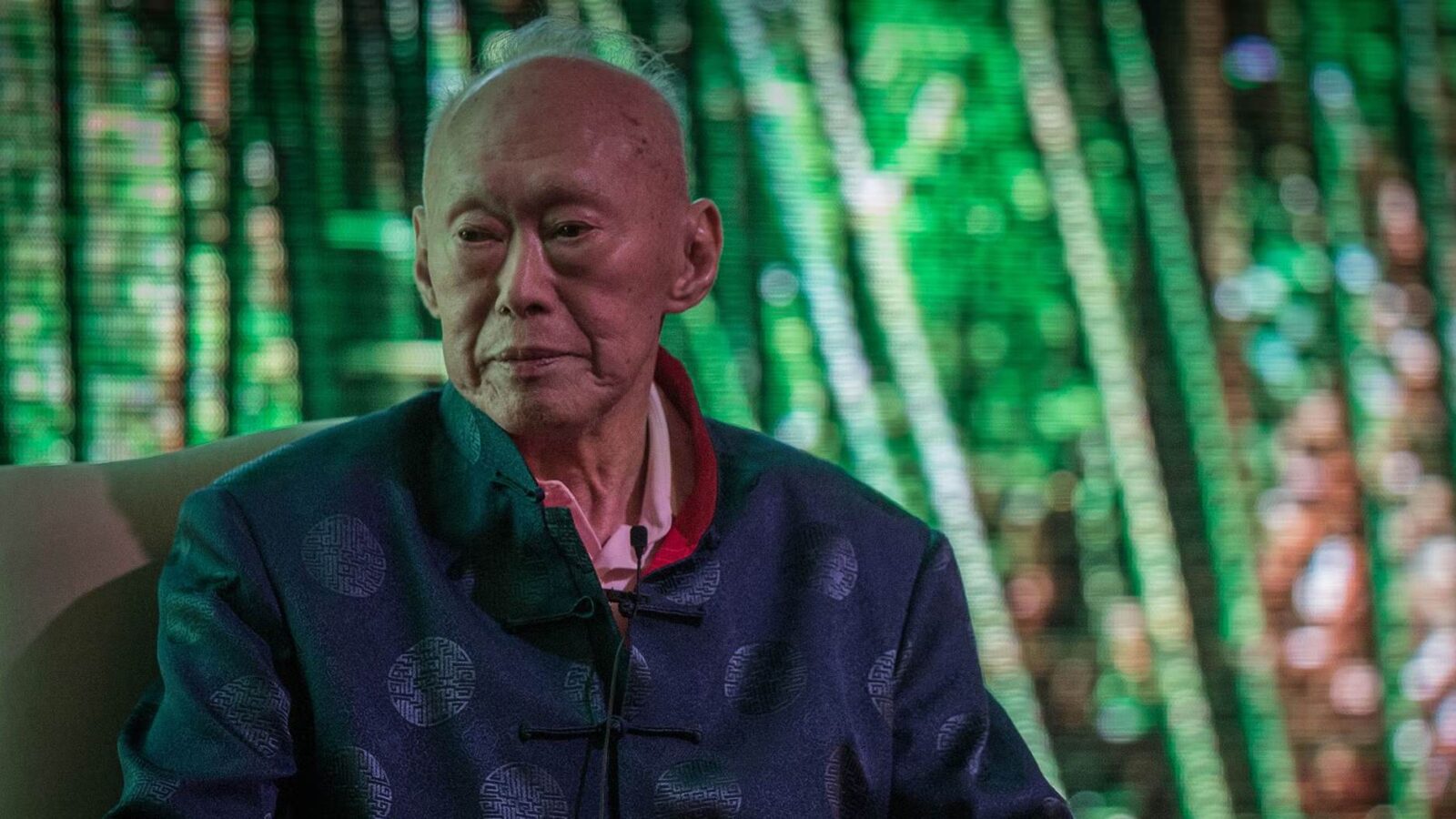
My admiration for Singapore’s founding Prime Minister, Lee Kuan Yew, is no secret. His leadership transformed a struggling island into one of the world’s most advanced economies. Lee was no ideologue; he was a pragmatist. His decisions were guided not by rigid doctrine but by what worked. He understood that development required discipline, foresight and a relentless commitment to results.
Glenn Maguire, Chief Economist for South Asia, ASEAN & Pacific, once reflected on Singapore’s development miracle. He noted that few economic transformations have been as rapid, enduring and successful. Singapore’s rise was born of necessity after its expulsion from Malaysia in 1965. Lee’s policy choices and pragmatism were inseparable from the country’s success.
In the 1970s, Singapore shifted from textile production to high-tech industries like electronics. Lee emphasised excellence in public service and recruited the best minds to drive the country’s progress. He believed in paying ministers well to ensure integrity and accountability in government. This approach fostered a clean, efficient and corruption-resistant administration- an essential foundation for sustainable development.
At independence, Singapore was a third-world country with one of Asia’s lowest income levels. Unemployment was rampant, housing was scarce, and infrastructure was virtually nonexistent. Two-thirds of the population lived in slums or squatter settlements. The economy relied entirely on entrepot trade—importing, storing and re-exporting goods—without any domestic value addition.
The transformation that followed is now considered one of the most remarkable in modern history. Lee’s vision guided Singapore from poverty to prosperity. His policies ranged from urban greening to aggressive industrialisation and global engagement. He understood that development was not just about economics—it was about dignity, opportunity and national pride.
After the Malaysian Parliament approved Singapore’s expulsion on August 9, 1965, Lee’s immediate priority was international recognition. The United Nations dispatched economist Dr Albert Winsemius to conduct a feasibility study. His recommendations led to a 10-year development plan focused on turning Singapore into a manufacturing hub.
Lee acted swiftly. Labour-intensive industries were prioritised to address unemployment. To attract foreign investment, government offered ‘pioneer status’ to companies, along with tax holidays and tariff protections. By the end of the 1960s, manufacturing accounted for nearly 20 per cent of Singapore’s GDP.
By the early 1970s, Singapore had achieved full employment—less than a decade after separation. By the 1980s, it was recognised as one of Asia’s Newly-Industrialised Economies. Yet even among her peers, Singapore surged ahead. By 1980, its per-capita income was second only to Japan, a dramatic rise from one of Asia’s poorest nations.
Eswatini’s transformation must be equally bold. We must make decisive political, social, and economic choices. Corruption must be confronted with unwavering resolve. Without integrity and public trust, no plan—no matter how grand—can succeed.
The Grand Plan offers a rare opportunity to chart a new course. But its success will depend not only on vision and leadership, but on the collective will of the people. Let it be a plan that reflects our shared aspirations, built on transparency, inclusion and courage.
Eswatini has its own strengths to build upon—its cultural heritage, resilient communities and youthful population. If these assets are harnessed with the same pragmatism and clarity of purpose that guided Singapore, the Grand Plan could become more than a document. It could become a legacy.
Let us hope that the unveiling of this plan is not the end of the conversation, but the beginning of a national dialogue. Let it be a moment, where leadership meets listening and where ambition is matched by action.













Leave a comment