


The Universal Declaration on Human Rights (UHDR) proclaimed by the United Nations on the December 10, 1948, heralded a new and hopeful era where respect for the dignity of humans, as embodied in the Universal declaration on Human Rights, was affirmed. Article one said: “All human beings are born free and equal in dignity and rights. They are endowed with reason and conscience and should act towards one another in a spirit of brotherhood.” This was an affirmation that these rights are God-given and for all humans regardless of status, political opinion, age, sex to mention a few. In order to dispel the critics of human rights as Western, Africans, through the Organisation of African Union, promulgated the African Charter on human and people’s rights, where it is also confirmed that human rights stem from the attributes of being human.
Hence, human rights are universal, indivisible and inalienable. The charter further states that: “It is, henceforth, essential to pay special attention to rights to development and that the satisfaction of economic, social and cultural rights is a guarantee for civil and political rights.”
It is sad that Human Rights Society in Eswatini (HURIS) is relaunched when human rights violations across all nations have reached unprecedented levels. The resurgence of wars, including the war in Ukraine involving a permanent member of the United Nations Security Council. There is also the war that has almost decimated Palestinians in Gaza, where starvation and deprivation, including access to health and access to shelter, has been used as a weapon of war.
In many countries, including Eswatini, the health crisis has undermined the right to life as embodied in the 2005 Constitution; food insecurity, stunting and malnutrition remain a problem in a country that is low-middle income.
Corruption in many countries has deprived governments of resources to invest in development, including health, education and infrastructure.
Legal systems have been weakened and weaponised against political opponents such that civil society activism has been on the decline, as States have closed space for activism.
HURIS background
HURIS is a non-partisan and non-profit organisation that is committed to promoting and protecting human rights. The organisation was established in 2012, but due to structural challenges, including financial constraints, it collapsed; yet human rights violations worsened.
The organisation aims to conduct human rights civic education, defend the vulnerable and develop strong partnerships with government and non-State institutions to advance human rights in Eswatini. HURIS will strive to be a voice of the voiceless and aspires to add value in the civic space. It will complement rather than compete
Challenges that lie ahead for HURIS
What is of serious concern is that a majority of emaSwati in communities have limited knowledge and understanding of human rights. They are also not aware of institutions to assist them, when their rights are violated. Hence, violations with impunity persist in our country, especially from those institutions that should protect emaSwati’s rights.
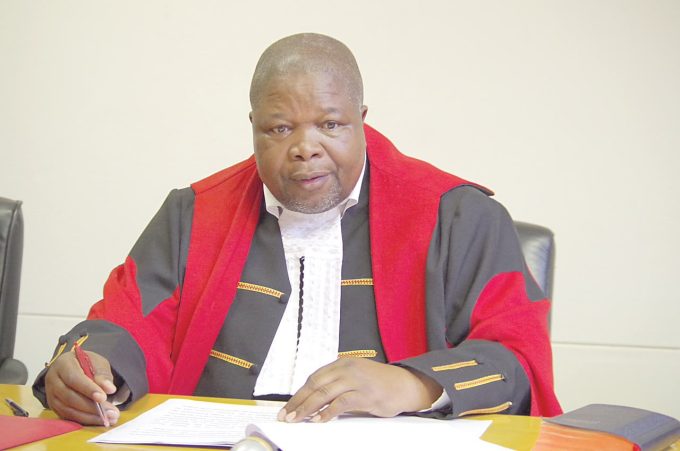
Human rights violations are compounded by the weakness of key institutions, particularly the Judiciary in terms of access to justice. In a democratic society, the Judiciary must be independent, impartial and courageous. It must serve as the final bulwark against abuse of power and the guarantor of rights. Yet in Eswatini, the Judiciary is often perceived as compromised, inconsistent and vulnerable.
This undermines public trust, erodes the rule of law and leaves victims of human rights violations without recourse. Without a strong and independent and trusted Judiciary, justice becomes a privilege, not a right.
Civil society, once a vibrant force for change, now operates under increasing pressure. Organisations working on human rights face surveillance, intimidation and legal constraints. Many are under-resourced, fragmented and forced into silence. The space for advocacy and organising, is narrowing by the day.
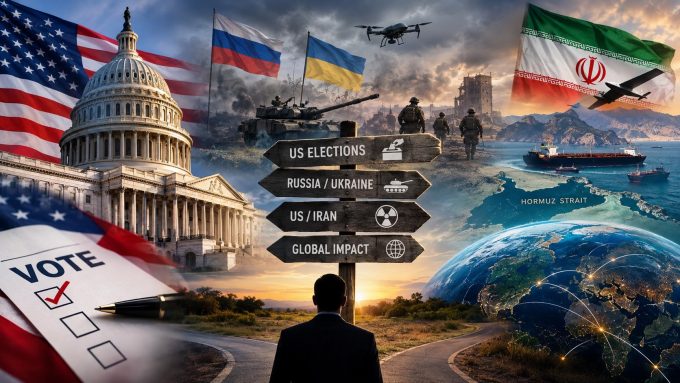
Also, critical is the changing financial landscape that has been caused by the fast-changing geopolitics.
The withdrawal of funding by the new American Government and reduction of official aid by the European countries to deal with existential threats, following the Russia invasion of Ukraine, has left developing countries, in particular the highly dependent non-governmental organisations weak, vulnerable and some closing shop. During the relaunch, the European Union representative, however, assured NGOs of continued funding support.
Human rights globally have been impacted by authoritarianism, geopolitical instability and erosion of democratic norms.
These trends unfortunately, embolden repressive regimes and weaken international mechanisms of accountability. For non-democratic nations, the ripple effects are profound – less scrutiny, fewer safeguards and heightened violation of citizens’ rights.
Government-NGO partnership
Eswatini Government, since independence, has committed itself to advance the rights of emaSwati. To this end, HURIS should forge partnership with State institutions that promote the rights of emaSwati.
MaSwati, dignity cannot be compromised!















Leave a comment