

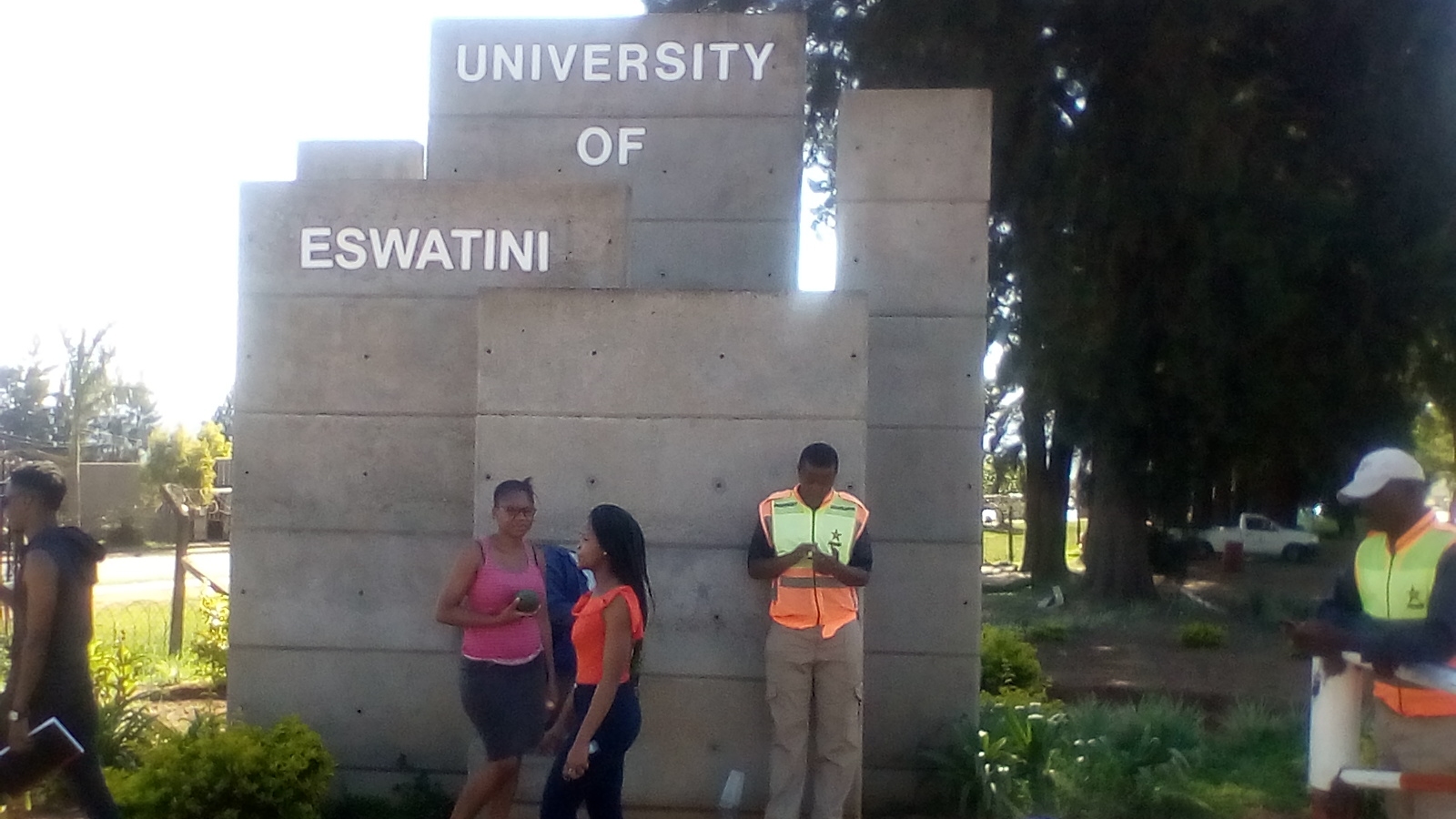
Once a reputable hub of learning and the quiet promise of a better future, the University of Eswatini (UNESWA) now reads like an institution suffering from institutional amnesia: Guards gone, dorms vulnerable, order suspended and last week, a journalist beaten into silence.
If a university is judged by the safety of its lecture halls and the dignity of debate on its lawns, UNESWA is sending a distress signal that should prick every conscience in this kingdom.
Let’s be honest, students do not wake up one morning and decide that vandalism, intimidation or mob justice are acceptable substitutes for negotiation. The proximate spark for the recent fire was mundane – an alleged intruder in a female dormitory, whose plastic excuse that he was ‘looking for a toilet’ did not wash with enraged residents.
The tinder? A shockingly thin security presence, after management cut guard numbers from 35 to 11. When safety is outsourced to alarmed whispers rather than professionals, the campus becomes a theatre for fear and improvisation.
Faced with that fear, students marched, not, in itself, a crime. What is a crime is when protest morphs into a mob, when anger becomes a licence to assault. The scene near the main gate, where a Times reporter trying to document the unrest was slapped, kicked and hauled with sticks by a crowd chanting that he ‘must be taught a lesson’, reveals something uglier than property damage. It reveals a breakdown in civic habits. Journalism is inconvenient, but it is precisely the inconvenient truth-telling we need in moments like these. To see a journalist assaulted on campus is to see the very idea of public scrutiny repudiated.
Management’s decision to close the Kwaluseni and Luyengo campuses reads like a stopgap stitched together with regret: Vacate by 4pm, except international students and academic programmes proceed as scheduled. That mismatched logic – keep teaching, while closing the place where students live – underlines how UNESWA is being run on contingency rather than plan. Closing a university is not a solution; it is a confession that the institution is not in control of its grounds or of the temperament of its students.
There are deeper, quieter failures here too. Overcrowded hostels, delayed furniture deliveries and the dismissal of maintenance staff are not mere grievances; they are cumulative administrative insults. Each unresolved complaint is a small, corrosive betrayal. When students’ basic needs – security, space, sanitation – are ignored, the university’s social contract frays. A campus that cannot guarantee the right to sleep, to study or to walk to the library, without fear, is no longer a university in the full sense. It is a precarious habitat where education is optional and survival is the lesson.
Witty asides aside, the stakes are real. Universities are crucibles for civic life: They teach critical thinking, argument and restraint. If those skills are not modelled on campus, where will they be learnt? The spectacle of students turning to vigilante measures and of members of the press being beaten should alarm parents, academics and policymakers alike. It’s also worth asking how the wider social and political currents in Eswatini – strains of economic pressure and public distrust – filter into campus life. A university does not collapse in isolation; it collapses in the context of a society that has forgotten how to listen and to fix.
So what next? First, UNESWA’s management must stop treating security and maintenance as budget line-items to be trimmed. Restoring a professional security presence, reopening transparent channels for student grievances and investing in residential infrastructure are non-negotiable. Second, students must reclaim protest as a civil act – not as a license for retribution. There is dignity in defiance, yes, but no dignity in beating anyone for doing their job.
UNESWA’s current disorder is not inevitable. It is the predictable outcome of neglect. If we value the idea of a university as a place where arguments are made and minds are formed – not fists or mobs – then the remedy is straightforward, even if politically awkward.
Attention, resources and the courage to restore order without crushing dissent must be focal points. Until that happens, the kingdom’s premier university risks becoming an object lesson in how institutions disintegrate when everyone assumes someone else will hold the line.



















Leave a comment