

KWALUSENI – The Eswatini Communications Commission (ESCCOM) has issued a warning to the kingdom’s broadcasters, urging them to manage artificial intelligence (AI) ethically and transparently to prevent the erosion of public trust through misinformation and deep fakes.
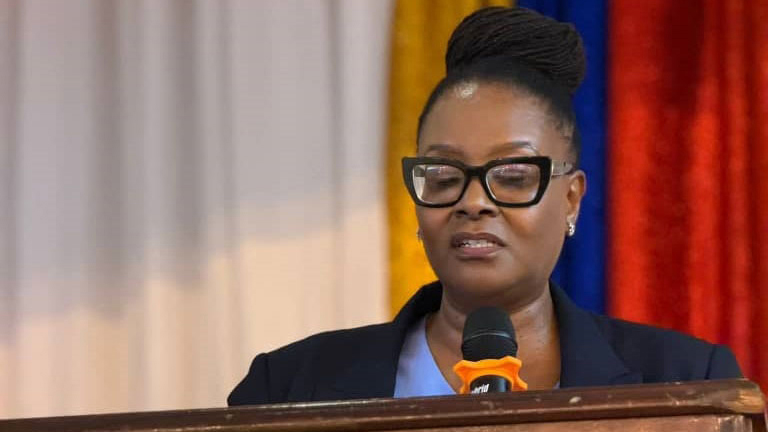
ESCCOM Chief Executive Officer (CEO) Mvilawemphi Dlamini, represented by Chief Financial Officer Fikile Gama said this on Thursday, while addressing stakeholders at the University of Eswatini (UNESWA) during the commemoration of World Television Day.
Speaking on the theme: ‘AI in Broadcasting: Innovation and Inclusivity in the Digital Era’, the CEO acknowledged that AI is more than a technological upgrade; it has the potential to elevate Eswatini’s broadcasting sector to new heights.
Dlamini highlighted that AI offers massive opportunities for efficiency and audience engagement.
“AI brings opportunities to enhance creativity and streamline production. Intelligent editing tools, automated workflows and data-driven insights are enabling teams to produce high-quality content more efficiently than ever,” he stated.
He further noted that AI is a powerful enabler of public service broadcasting, specifically through inclusion. The technology can provide real-time captioning, translation and audio descriptions, making television accessible to people with disabilities and viewers from diverse linguistic backgrounds.
The CEO also pointed out AI’s potential to improve accuracy in audience measurement, refine scheduling and support early-warning broadcast systems that enhance national safety.
Despite the clear benefits, Dlamini shifted to the critical risks, asserting that broadcasters must confront the challenges accompanying the technology.
He specifically warned of misinformation and deep fakes, saying they carry threats that can distort the truth and erode public trust.
They also bear the risk of unintentionally marginalising certain groups or perpetuating stereotypes.
The CEO said these fakes also pose challenges related to data privacy, cybersecurity and ensuring proper attribution for AI-generated content.
Dlamini stressed that AI must be guided by the principles that underpin responsible broadcasting.
“The task before us is to ensure that AI complements human judgment rather than replacing it, and that technology serves the public interest instead of undermining it. The accuracy, authenticity and ethics of the content we produce must remain non-negotiable,” he said.
Addressing the regulatory challenge, Dlamini said ESCCOM is committed to striking a careful balance—creating a framework that protects the public from harm without stifling innovation.
He affirmed that ESCCOM would adopt a proactive and collaborative approach to encourage innovation while safeguarding ethical use and adapting to emerging global standards.
“Our regulatory direction will aim to support broadcasters in integrating AI responsibly, while ensuring that the rights, privacy and safety of citizens remain protected,” he concluded.
The CEO reaffirmed ESCCOM’s commitment to supporting the sector through guidance, capacity-building initiatives and updating regulatory frameworks to ensure a broadcasting ecosystem that is vibrant, inclusive and resilient.
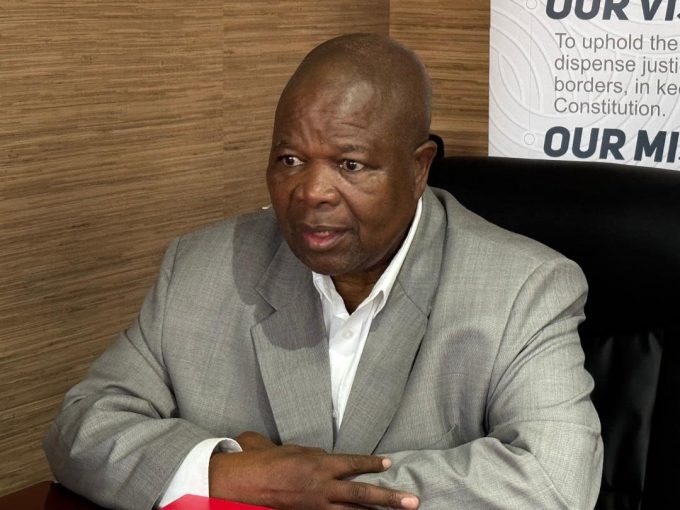
At the same event, Vice Chancellor Justice Thwala said television remains a powerful medium, evolving from traditional broadcast to online streaming and adapting to new technologies such as artificial intelligence (AI). He noted that AI is enhancing creativity and efficiency in broadcasting, offering tools for content production, audience engagement and accessibility.
Thwala highlighted UNESWA’s long-standing collaboration with the national broadcaster, the Eswatini Television Authority (ETA), which began with the launch of the Journalism and Mass Communication (JMC) Degree programme in the 2010s.
He also pointed to opportunities for synergy between the university and the television industry through Generative AI short courses offered by the Faculty of Science and Engineering, which could be tailored to meet industry needs.
The vice chancellor reflected on recent milestones, including the 2021 launch of UNESWA FM (88.2) and the opening of a state-of-the-art content production facility, funded by the Eswatini Communications Commission (ESCCOM) Universal Access Fund and the UNDP. Officially inaugurated by His Majesty King Mswati III during the annual graduation ceremony, the facility is designed to train professionals for the local film and television industry, support entrepreneurship and promote Eswatini’s culture internationally.













Leave a comment