

MBABANE – Eswatini’s economy showed notable signs of stability during the third quarter of 2025, buoyed by easing inflation, improved trade performance and resilient domestic growth.
However, beneath these encouraging headline indicators, the latest Quarterly Economic Bulletin (2025 Q3) reveals persistent structural weaknesses that continue to constrain inclusive growth, private sector expansion and long-term resilience. The July–September 2025 period unfolded against a cautiously improving global economic environment, with Eswatini benefitting from favourable external conditions, stable monetary policy and sector-specific domestic gains.
Yet, declining foreign reserves, subdued business credit and a contracting primary sector underscore the fragility of the recovery.
Globally, the economic environment was more supportive than initially anticipated. The International Monetary Fund revised global growth upwards to 3.2 per cent for 2025, reflecting easing trade tensions and improved financial conditions, although growth remains below pre-pandemic averages.
Advanced economies are projected to grow modestly, while emerging markets and Sub-Saharan Africa continue to outperform, with regional growth forecast at 4.1 per cent in 2025.
For Eswatini, these global developments matter greatly, given its openness to trade and dependence on external demand, especially from South Africa.
*…
Decline in forestry, mining drive primary sector dip
MBABANE – In contrast, the primary sector contracted by 6.1 per cent, dragged down by sharp declines in forestry and mining and quarrying output.
Mining activity fell by a steep 22.7 per cent, reflecting both domestic operational challenges and fluctuating global commodity demand.
*…
Inflation eases, offering consumer relief
MBABANE – One of the most positive developments in the quarter was the continued easing of inflation.
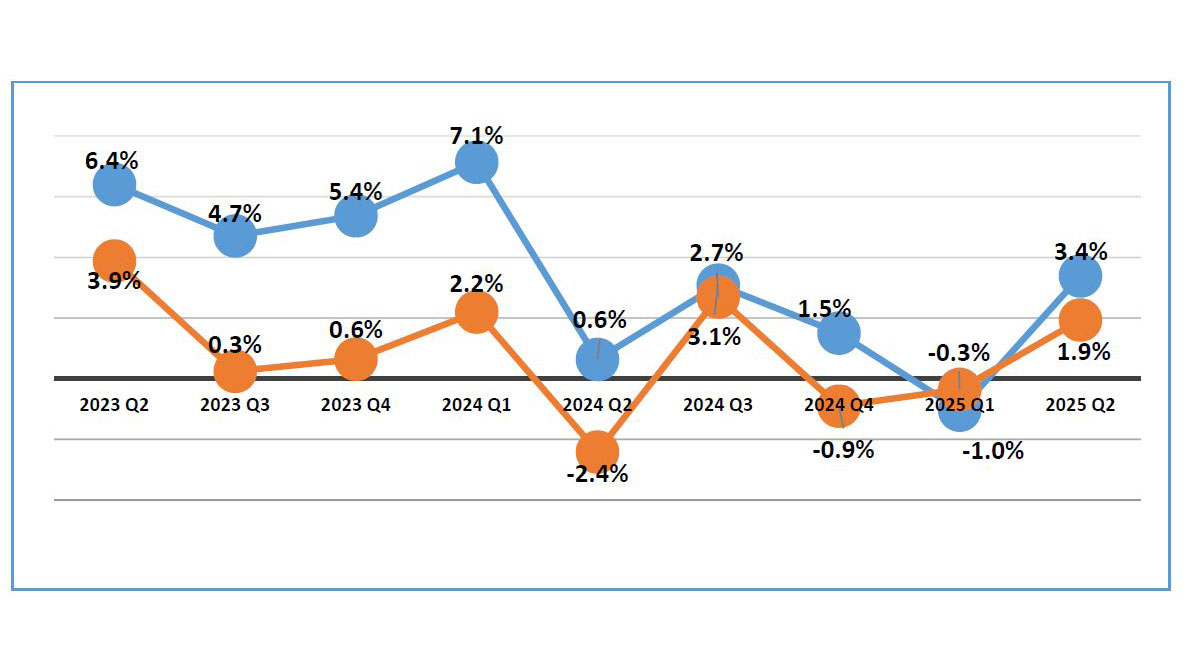
Headline inflation averaged 2.7 per cent in 2025 Q3, down from 3.1 per cent in the previous quarter, remaining comfortably within the Central Bank of Eswatini’s target range
The moderation was largely driven by a sharp slowdown in food inflation, which fell to 1.5 per cent, supported by improved domestic food production and temporary import bans on selected vegetables and sugar beans. This provided some relief to households grappling with elevated living costs over recent years.
However, inflationary pressures in housing and utilities edged higher, reflecting rising costs of building materials and maintenance. While overall inflation is projected to remain subdued in the short-to-medium term, the outlook remains sensitive to global oil prices, exchange rate movements and domestic administered prices.
… domestic growth driven by construction, services
MBABANE – On the domestic front, Eswatini’s real GDP grew by 3.4 per cent year-on-year in the second quarter of 2025, reflecting a broad-based recovery led by the secondary and tertiary sectors
The secondary sector expanded by 6.7 per cent, supported by strong growth in manufacturing and construction.
Manufacturing activity benefitted from increased production of chemicals, grain mill products, animal feeds and textiles, while construction recorded a robust 12 per cent growth, underpinned by major public and private projects such as the Mpakeni Dam, the International Convention Centre and Five-Star Hotel (ICC-FISH), and energy infrastructure developments.
Foreign reserves under pressure
MBABANE – One of the most pressing vulnerabilities highlighted in the bulletin is the decline in gross official reserves, which fell by 9 per cent to E10.7 billion, equivalent to 2.5 months of import cover.
This level is below commonly accepted adequacy thresholds and reflects net outflows related to trade settlements and government’s fiscal obligations. The erosion of reserve buffers heightens external vulnerability, particularly in the event of adverse shocks or sustained capital outflows.
Encouragingly, Eswatini recorded a significant turnaround in its external trade position. The merchandise trade balance shifted from a deficit in the previous quarter to a surplus of E933.5 million in 2025 Q3, supported by strong export growth
Exports rose by 18.2 per cent, driven by higher shipments of sugar, textiles, forestry products, food processing and miscellaneous edibles. The Southern African Customs Union (SACU) remained Eswatini’s dominant export destination, accounting for over 74 per cent of total exports.
*Full article available in our publication





















Leave a comment