

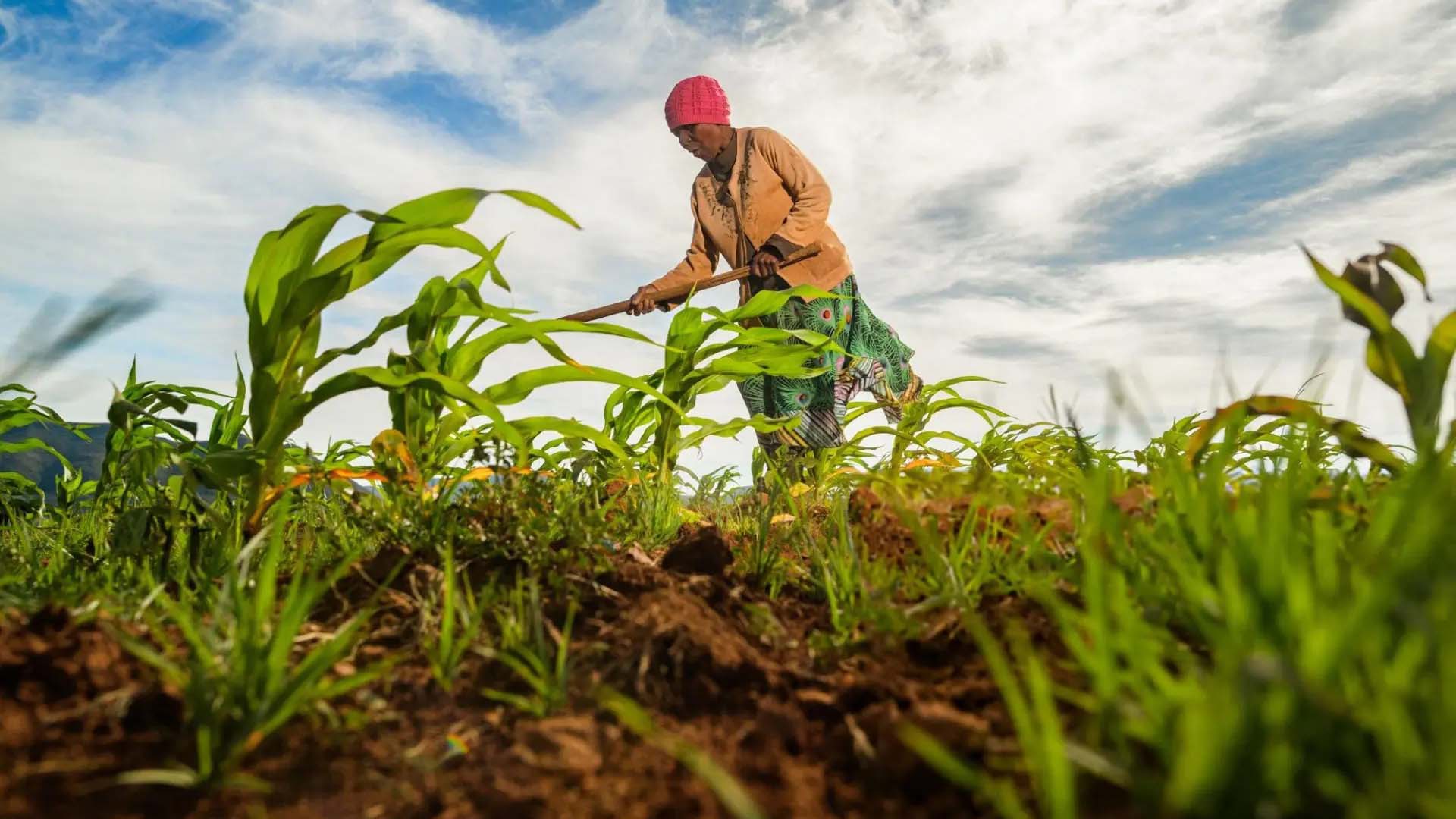
Intercropping is the practice of growing two or more crops together on the same piece of land during the same growing season. Soil Science and Plant Nutrition Research Officer at the Department of Agricultural Research and Specialist Services in the Ministry of Agriculture, Bongani Mvubu, mentions that the crops are arranged in alternating rows, strips, or mixed patterns so that they complement each other in their use of sunlight, nutrients, water and space. “In Eswatini, intercropping is already part of traditional farming systems, especially among smallholder farmers who rely on diverse cropping to ensure food security. Modern climate-smart agriculture now strongly promotes intercropping as a strategy to increase productivity, improve soil health and stabilise yields,” mentioned Mvubu.
Why Intercrop?
Better use of land resources: Different crops exploit soil nutrients, moisture and sunlight differently. Maize grows tall, while legumes spread low; together they make more complete use of space.
Improved soil fertility: Legumes such as beans and groundnuts fix atmospheric nitrogen, enriching the soil and reducing reliance on synthetic fertilisers.
Increased and stabilised yields: When one crop is affected by pests, drought, or disease, the other may still perform well. This spreads risk and ensures consistent harvests.
Reduced pest and disease pressure: Diverse crops disrupt pest movement and lower disease incidence. For example, intercropping maize with beans reduces maize stem borer attacks.
Improved weed suppression: The canopy from two crops provides better soil cover, reducing weed germination and labour for weeding.
Improved household nutrition and income: Intercropping provides multiple food groups (carbohydrates, proteins, oils) and multiple revenue streams from the same field.
Climate change adaptation: Intercropping stabilises production during erratic rainfall and improves soil moisture use efficiency.
- In which agro-ecological zones in Eswatini should intercropping be done?
- Intercropping is suitable across all four agro-ecological zones of Eswatini, but with zone-specific crop choices.
Highveld (cool, high rainfall: 800 – 1 400mm)
- Excellent for maize–bean intercropping due to favourable temperatures.
- Cowpeas do less well here because of cool, moist conditions.
Middleveld (moderate rainfall: 600 – 1 000mm)
- Ideal for a wide range of legumes.
- Maize–groundnut and maize–dry bean systems perform well.
Lowveld (hot, low rainfall: 300 – 600mm)
- Drought-tolerant legumes recommended.
- Cowpeas, jugo beans (bambara nuts) and pigeon peas are the best intercrops with maize in this zone.
Lubombo Plateau (moderate rainfall, warm climate)
Suitable for maize with groundnuts, cowpeas and pigeon peas.
Beans can grow but are sensitive to high heat.
Overall: Intercropping should be practised where rainfall is medium to high or where drought-tolerant intercrops are used in low rainfall regions.
Which crops should be intercropped with maize in Eswatini?
a) Beans– Phaseolus vulgaris)
- Best suited for Highveld and Middleveld.
- Improve soil nitrogen and provide good market value.
b) Cowpeas (Vigna unguiculata)
- Best for Lowveld and Lubombo Plateau.
- High drought tolerance and good for livestock feed.
c) Groundnuts (Peanuts – Arachis hypogaea)
- Perform very well in Middleveld and Lubombo Plateau.
- Improve soil fertility and generate income.
d) Pigeon Peas (Cajanus cajan)
- Suitable for Lowveld and Lubombo Plateau.
- Deep roots help break hardpans and improve soil structure.
e) Bambara Groundnuts (Jugo Beans – Vigna subterranea)
- Highly drought tolerant.
- Important for Lowveld smallholder systems.
f) Pumpkins and Sweet Potatoes (cover crops/sprawling crops)
- Provide soil cover, reduce erosion and suppress weeds.
- Best for homestead fields in all zones.
g) Sunflowers (in more complex intercropping)
Maize–sunflower systems work well in semi-arid Lowveld.
How to intercrop with maize: Practical guidelines
Row arrangement
1:1 pattern: One row maize, one row legume (common in Middleveld and Highveld).
2:1 pattern: Two rows maize, one row legume (used where maize is priority).
Mixed/broadcast: Not recommended due to management challenges.
Planting dates
Plant the legume at the same time or 1 week after maize to avoid shading.
Fertiliser application
- Apply basal fertiliser for maize only.
- Legumes generally perform well with minimal nitrogen fertiliser.
Spacing
- Maintain maize spacing at 90cm × 25cm.
- Legume spacing varies:
- Beans: 30–50cm between rows
- Cowpeas: 45–60cm
- Groundnuts: 30–45cm
Weeding
Critical during the first 4–6 weeks when crops are establishing.
Why intercropping matters for Eswatini
1. Addresses climate risks: With increasing drought frequency, intercropping provides a resilient system that ensures at least one crop survives.
2. Enhances household food security: Produces multiple foods (maize + protein-rich legumes).
3. Reduces production costs: Less fertiliser, less herbicide and fewer pesticide applications.
4. Protects and improves soils: Supports Sustainable Land Management (SLM) practices important for erosion-prone areas such as Middleveld and Highveld.
5. Strengthens livelihoods: Better yields, diversified income and improved nutrition.
Intercropping is a proven, climate-smart agricultural practice for Eswatini’s varied agro-ecological zones. It maximises land productivity, improves soil fertility, reduces pest pressure and stabilises yields, especially under climate change. Maize intercropped with legumes, especially beans, cowpeas, groundnuts, pigeon peas and bambara nuts offers strong economic and food security benefits across the country.
















Leave a comment