

MBABANE – Making DNA testing compulsory before issuing birth certificates could cost taxpayers about E126 million annually, enough to fund free Grade I education for nearly 188 000 children.
An analysis by the Times of Eswatini, based on the country’s average of between 29 200 and 29 600 births annually, according to the population census 2025, shows that universal DNA testing would cost government between E125.5 million and E127.3 million each year if outsourced to private laboratories charging about E4 300 per test.
DNA, which stands for deoxyribonucleic acid, is the molecule that carries the genetic instructions for the development, functioning, growth and reproduction of all known living organisms and many viruses.
The projected expenditure would consume almost 46 per cent of the Ministry of Home Affairs’ annual budget of E274.5 million, exceed government’s E98 million allocation for the School Feeding Programme and cost almost as much as Parliament’s entire annual budget of E157 million.
It would also come at a time when government is projecting expenditure of E36.9 billion, revenue of E31.9 billion and a fiscal deficit equivalent to 4.9 per cent of gross domestic product (GDP).
Under Eswatini’s Free Primary Education Act of 2010, government provides E672 per Grade I learner annually for tuition and stationery. Based on that grant, the estimated DNA bill could finance free Grade I education for about 187 500 children for one year.
The estimated E4 300 required for one DNA test is equivalent to the annual Grade I grant for approximately six children.
The financial implications have intensified debate over whether compulsory DNA testing represents the best use of limited public resources, particularly as government continues investing heavily in education, healthcare, infrastructure and social protection while servicing rising public debt.
Beyond the cost, legislators and citizens have raised concerns that making DNA testing compulsory before issuing birth certificates could have unintended consequences for children’s rights.
Lubombo Region MP Futhi Ngcamphalala warned Parliament that making DNA testing a prerequisite for birth registration could delay the issuance of birth certificates and leave some children without legal identity documents.
She said birth certificates remain essential for accessing education, healthcare and other government services, adding that delays caused by DNA testing or administrative backlogs could expose children to unnecessary hardship.
“I rise to oppose this motion in its totality. Not because I underestimate the importance of truth in family matters, but because I am deeply concerned about its unintended consequences and the risk it poses to the rights of children, women and the stability of families,” she said.
Ngcamphalala argued that DNA testing is already available to individuals who genuinely dispute paternity and questioned why government should compel every family to undergo the procedure.
She further warned that mandatory testing could increase the number of undocumented children if laboratory delays prevent timely birth registration, potentially affecting school enrolment and access to healthcare.
Her concerns echoed those of Deputy Speaker Madala Mhlanga, who questioned whether the country could justify introducing an expensive nationwide programme while continuing to grapple with deteriorating roads, medicine shortages and other pressing development priorities.
Mhlanga also cautioned that compulsory DNA testing could infringe on individual rights and called for extensive consultations involving traditional leaders, communities, child rights organisations and other stakeholders before Parliament considers any legislative amendments.
Home Affairs Minister Princess Lindiwe similarly questioned whether universal DNA testing is justified when international studies suggest disputed paternity accounts for only between two and four per cent of births.
She said courts already have powers to order DNA tests where parentage is disputed.
“Must we enforce compulsory DNA testing simply because of that percentage?” she asked.
Minister for Tinkhundla Administration and Development Sikhumbuzo Dlamini said compulsory DNA testing also raises cultural concerns.
He argued that questions surrounding parentage had traditionally been resolved within families and communities rather than through mandatory scientific testing.
“The DNA testing is a new thing; it is unSwati. As emaSwati, we had our own way of dealing with these matters. We must go back to our values and strengthen how we raise our children,” he said.
The minister further warned that unexpected DNA results could have devastating emotional consequences despite the availability of counselling and suggested that communities should first debate the matter before Parliament proceeded.
Supporters of the proposal maintain that compulsory testing would protect men from paternity fraud.
Mbabane East MP Welcome Dlamini said DNA testing remains the most reliable scientific method of establishing biological parenthood and argued that many men had unknowingly supported children who were later discovered not to be biologically theirs.
He alleged that some women deliberately claim maintenance from multiple men for the same child, describing the practice as financially and emotionally destructive.
Lobamba MP Michael Masilela said compulsory DNA testing could also reduce inheritance disputes and strengthen criminal investigations through more reliable identification systems.
However, he agreed that any reform should be accompanied by comprehensive public consultation and robust legal safeguards to protect citizens’ genetic information.
Outside Parliament, opinion remains divided.
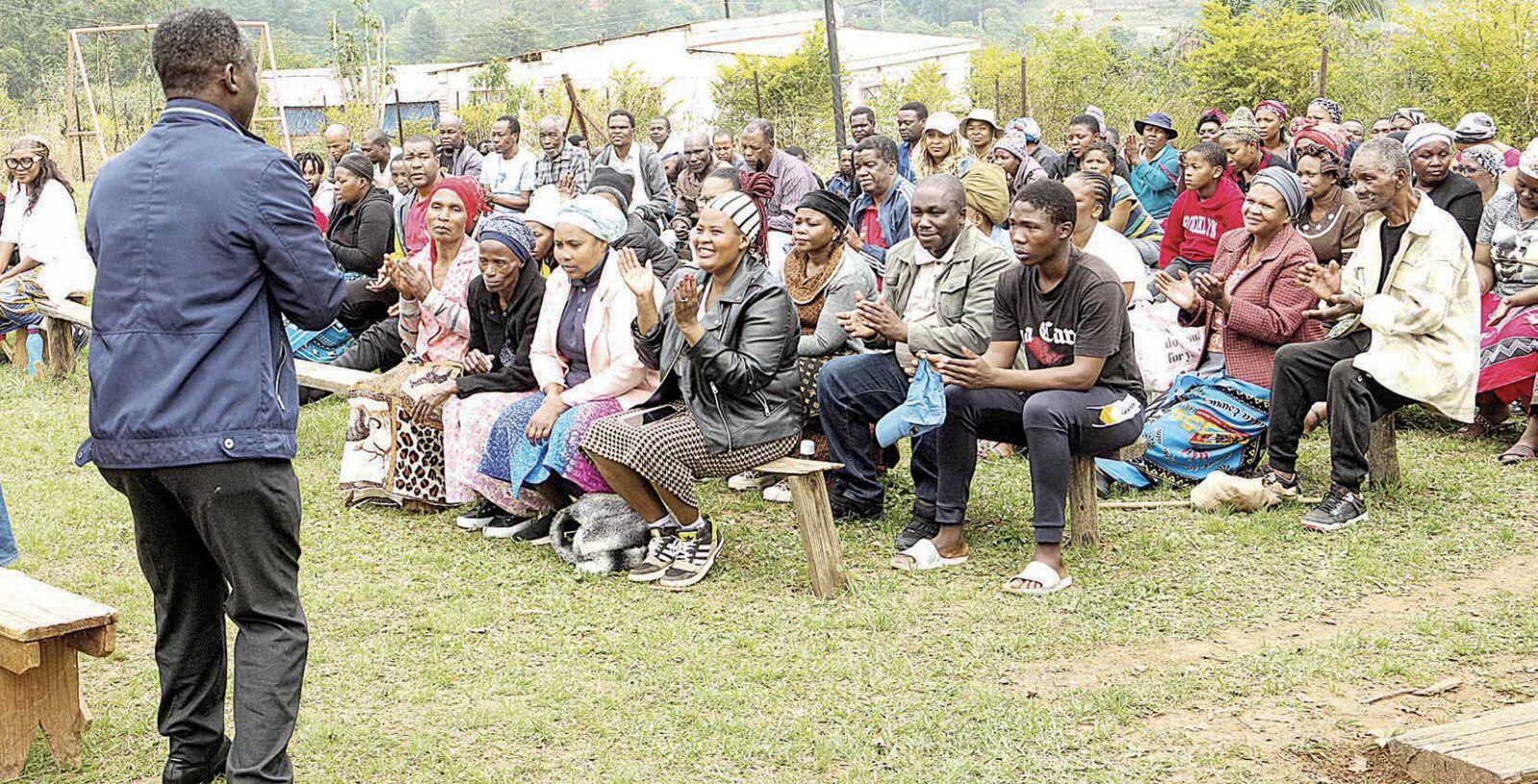
Some senior citizens interviewed by this publication described compulsory DNA testing as a declaration of mistrust towards women and argued that DNA tests should remain available only where paternity is genuinely disputed.
Nene Dvuba said compelling every married couple to undergo DNA testing would undermine trust within families.
He instead proposed that government should provide free DNA testing only where a court is satisfied that reasonable grounds exist to dispute paternity.
Others, however, supported compulsory testing.
Madevabovu Lukhele argued that universal DNA testing would protect men from unknowingly supporting children who are not biologically theirs, while maintaining that DNA results should not necessarily destroy relationships between fathers and children.
The debate gained renewed momentum following several widely publicised paternity disputes and has now reached Parliament, where lawmakers remain divided over the proposal’s financial, legal, cultural and human rights implications.
With government pursuing economic transformation while simultaneously managing a widening fiscal deficit and competing spending priorities, the proposal now presents lawmakers with a broader policy question; whether spending about E126 million every year on compulsory DNA testing represents the best use of public funds when the same amount could educate nearly 188 000 Grade I learners, exceed the annual School Feeding Programme allocation and absorb almost half of the Ministry of Sports, Culture and Youth Affairs’ budget.
The Bongani Nzima-led Ministry of Sports, Culture and Youth Affairs has a recurrent budget of E102 904 398 while its capital expenditure is E50 750 000. This tallies E153 654 398.
Conversely, the Ministry of Home Affairs has a recurrent budget of E274 534 938 which is almost double the cost of the DNA for the average children born annually in the country.
| BUDGET ALLOCATION TO SOME MINISTRIES | |||
| DESCRIPTION | RECURRENT EXPENDITURE | CAPITAL EXPENDITURE | TOTAL |
| Parliament | E157 033 185 | – | E157 033 185 |
| Private and Cabinet Offices | E99 746 728 | E48 466 000 | E148 212 728 |
| Treasury and Stores | E70 234 429 | E0 | E70 234 429 |
| Labour and Social Security | E854 751 507 | E3 500 000 | E858 251 507 |
| Public Service | E327 489 910 | E8 023 000 | E335 512 910 |
| Information, Communication & Technology | E366 401 899 | E47 500 000 | E413 901 899 |
| Elections & Boundaries Commission | E46 080 764 | E0 | E46 080 764 |
| Health | E3 146 585 186 | E92 291 000 | E3 238 876 186 |
| Justice and Constitutional Affairs | E129 415 784 | E23 669 000 | E153 084 784 |
| Anti – Corruption Commission | E29 244 784 | E0 | E29 244 784 |
| Judiciary | E142 861 347 | E8 750 000 | E151 611 347 |
| Correctional Services | E796 186 507 | E24 702 000 | E820 888 507 |
| Home Affairs | E274 534 938 | E0 | E274 534 938 |
| Public Works and Transport | E1 532 727 825 | E1 682 484 000 | E3 215 211 825 |
| Sports Culture and Youth Affairs | E102 904 398 | E50 750 000 | E153 654 398 |
| Audit | E48 281 819 | E4 482 000 | E52 763 819 |











Leave a comment