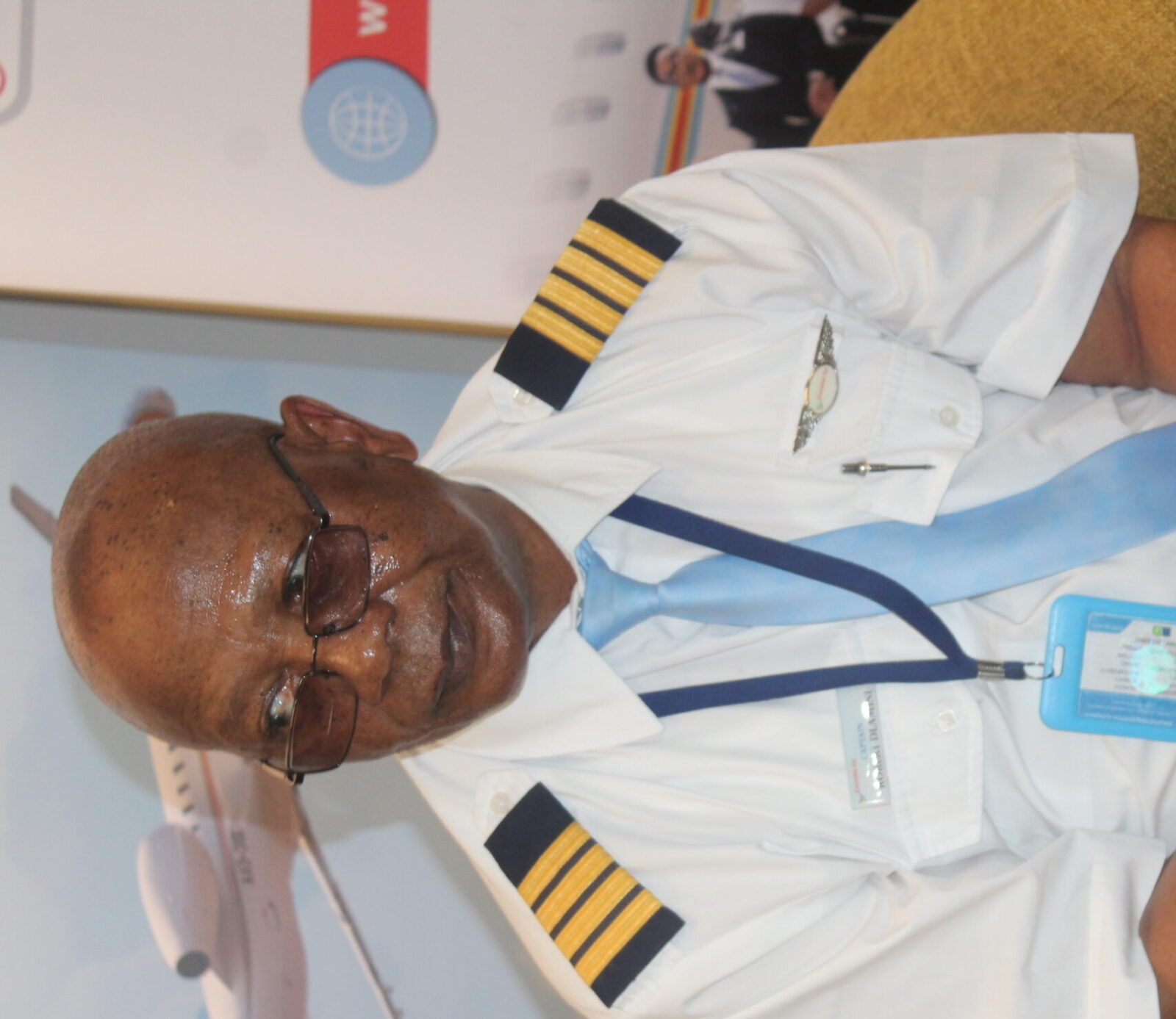
MBABANE – Retired Eswatini Air captain Robert Dlamini still vividly remembers the night an ordinary flight turned into a life-or-death ordeal.
In July 1993, Dlamini was at the controls of an Eswatini Air Fokker 28 when it was hijacked during what was supposed to be the final leg of the day’s schedule.
The dramatic incident ended only after South African security forces stormed the aircraft at Johannesburg International Airport, now known as O.R. Tambo International Airport, fatally shooting the hijacker. Recalling the events, Dlamini said the aircraft had begun its journey in Nairobi, Kenya, with scheduled stops in Dar es Salaam, Tanzania, Matsapha and Maputo, Mozambique. The crew completed the day’s route before departing Maputo for the short evening flight to Matsapha.
It was on that final sector that the nightmare unfolded.
“The hijacker boarded the aircraft in Maputo,” Dlamini recalled. Shortly after take-off, the flight attendant burst into the cockpit with the armed man close behind. At gunpoint, she was forced to lead him to the pilots.
“The air hostess came running to the cockpit with the hijacker following her. When he entered, he pushed her aside and pointed the gun at both of us,” Dlamini said.
The armed man ordered the crew to divert the aircraft to Maseru, Lesotho.
Dlamini explained that the airport had already closed for the night, prompting the hijacker instruct the pilots to fly instead to Johannesburg. At the time, only three passengers were on board.
negotiations
Following negotiations at the Johannesburg International Airport, the hijacker released two of them, leaving one passenger on the aircraft together with the flight crew. The aircraft was running low on fuel and required refuelling. However, delays on the ground agitated the hijacker, who eventually ordered the crew to take off again before the aircraft was refuelled. Dlamini and his captain employed a calculated strategy to buy time while remaining within gliding distance of the airport.
“We decided to fly in a large circle because, on a clear day, you cannot easily tell whether an aircraft is moving forward or simply circling.
We did this so that if we ran out of fuel, we would still be able to glide back and land safely in Johannesburg,” he explained.
The hijacker then instructed the crew to return to Johannesburg. As soon as the aircraft touched down, security forces moved in.
“When we landed, we were stopped on the runway, and the police or soldiers stormed the aircraft and shot the hijacker,” Dlamini recalled. The ordeal ended without any loss of innocent life. The only injury sustained was to the captain, who was shot in the leg by the hijacker during the confrontation. For their professionalism, courage and composure under extraordinary pressure, Dlamini and his fellow crew members were later honoured with the Bravery Medal by His Majesty King Mswati III.