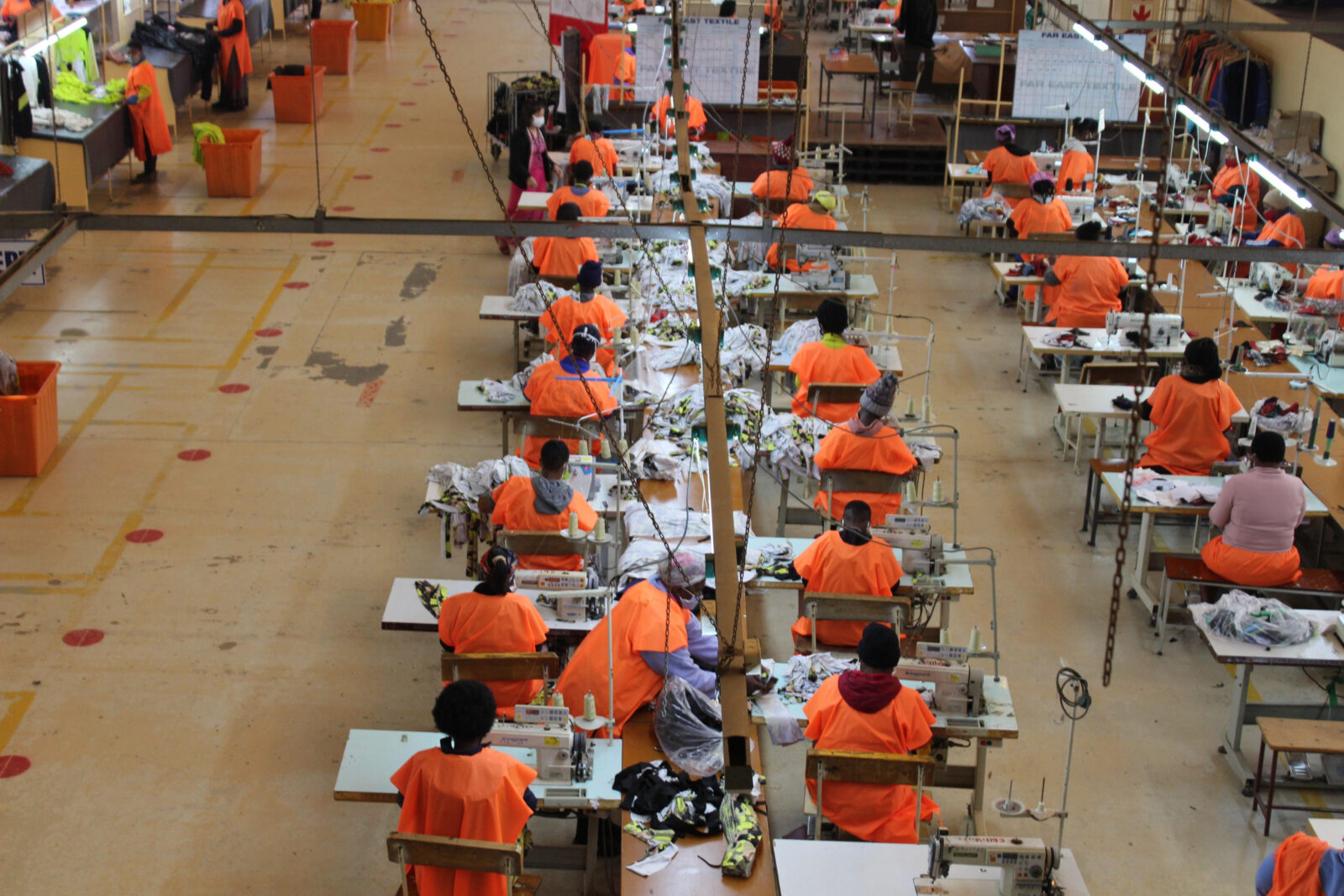
MANZINI – In an effort to restore purchasing power and improve the standard of living for textile workers, ATUSWA has launched a campaign aimed at rallying textile workers around five key demands.
Among these demands, the Amalgamated Trade Union of Swaziland is calling for a minimum wage of E25 per hour, representing a 58.9 per cent increase.
Worth noting is that during the recent announcement of the chairpersons of the Wages Council, the Minister for Labour and Social Security, Phila Buthelezi, urged all parties involved to negotiate for healthy wages.
The minister also noted that the textile firms were a bit behind with the negotiations.
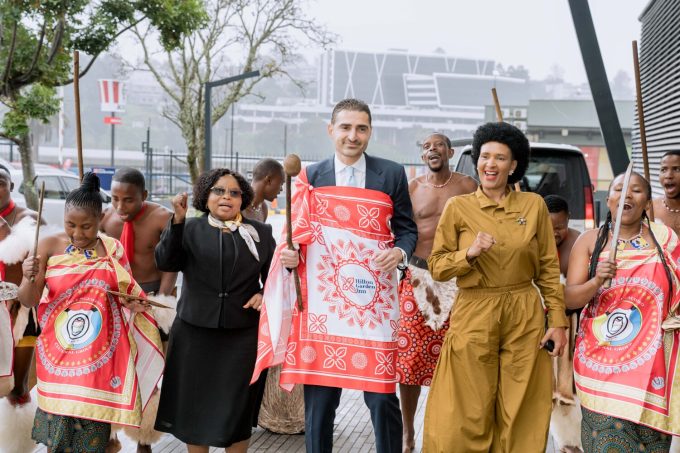
Other demands include; protection of workers’ rights and reforms to the industry’s wage negotiation system. The campaign was officially launched at Zheng Yong Textiles in Nhlangano, Shiselweni Region, last week.
Speaking after the first vusela exercise, ATUSWA Secretary General Wonder Mkhonza said the campaign would begin in Nhlangano before expanding to other major textile centres, including Matsapha and Siteki, where thousands of workers are employed in the garment and textile industry.
Mkhonza said one of the union’s primary objectives is to challenge employers who prevent workers from exercising their constitutional right to freedom of association.
Freedom of association is a fundamental labour right protected under Eswatini’s Constitution and international labour standards. It gives workers the legal right to join or form trade unions of their choice without intimidation, discrimination or victimisation.
Through unions, employees are able to negotiate collectively with employers on issues such as wages, working conditions, benefits and workplace safety. Labour experts argue that where workers are denied this right, they often have little voice in decisions that directly affect their livelihoods.
“Our campaign is intended to ensure that workers are able to freely belong to a union and participate in union activities without fear,” said Mkhonza.
Mkhonza further revealed that textile workers have instructed the union to intensify pressure on both government and employers to urgently conclude this year’s wage negotiations.
His remarks come amid growing frustration among workers over delays in determining the annual Cost of Living Adjustment (CoLA).
Traditionally, salary adjustments in the textile industry are expected to take effect from March 1 each year. Even when negotiations were delayed, workers previously received back pay once an agreement had been reached, ensuring they did not lose income for the months spent waiting.
However, workers claim this practice has largely fallen away in recent years.
They argue that prolonged negotiations without retrospective payment effectively force them to continue working at outdated wage rates despite the rising cost of living. In their view, employers benefit financially from these delays while workers continue providing the same labour without receiving the salary increases they are eventually awarded.
The dissatisfaction has been growing in recent months, with textile workers previously warning that they were prepared to down tools if the wage talks continued to drag on without a resolution.
Another major demand is the introduction of a minimum wage of E25 per hour, as opposed to the current hourly wage of approximately E15.73 (on average). This reflects that the workers are demanding a salary increase of about 58.9 per cent.
According to Mkhonza, the current wage no longer reflects the economic realities faced by workers.
He said the cost of basic necessities such as food, transport, electricity, school fees and housing has increased significantly since the COVID-19 pandemic, making it increasingly difficult for workers to support their families.
“The cost of living continues to rise while workers’ wages remain almost stagnant. Employees believe an increase to E25 per hour is necessary to help restore their purchasing power and improve their standard of living,” he said.
It is worth noting that for the 2025/26 financial year, textile workers got up to a 5.5 per cent salary adjustment, while for 2024/25 and 2023/24, they were awarded up to a 12 per cent pay rise for each. On the other hand, for the 2022/24 and 2021/22 financial years, they pocketed 7.25 per cent and three per cent, respectively.
The union also intends to pursue employers who deduct employees’ Eswatini National Provident Fund (ENPF) contributions, but allegedly fail to remit the money to the Fund.
The ENPF is a statutory retirement savings scheme where both employers and employees make monthly contributions. These savings are intended to provide workers with financial security upon retirement or under specific qualifying circumstances.
Mkhonza said many workers report that although ENPF deductions appear on their payslips every month, they do not receive the SMS notifications confirming that the Fund has received the contributions.
He said when employees enquire directly with the ENPF, they are allegedly informed that their employers have not submitted the deducted contributions.
“This is a serious concern because workers are losing money that has already been deducted from their salaries,” he said.
A number of employers have previously been prosecuted and fined by the courts for failing to remit employees’ ENPF contributions, with some ordered to pay the outstanding amounts.
The union is also campaigning for the establishment of a Joint Negotiations Council or Bargaining Council to replace the current Wages Council.
Mkhonza argued that the existing wage-setting system does not provide workers with equal bargaining power.
He explained that under the Wages Council, government representatives participate in resolving disputes when employers and workers fail to reach agreement.
According to the union, government often votes alongside employers during these deadlocks, making it difficult for workers’ demands to succeed.
A Bargaining Council, by contrast, is generally regarded as a platform where organised labour and employers negotiate wages and conditions of employment directly through collective bargaining, giving both parties greater influence over the final outcome.
“This is why textile workers’ salaries remain so low in the country,” Mkhonza said.