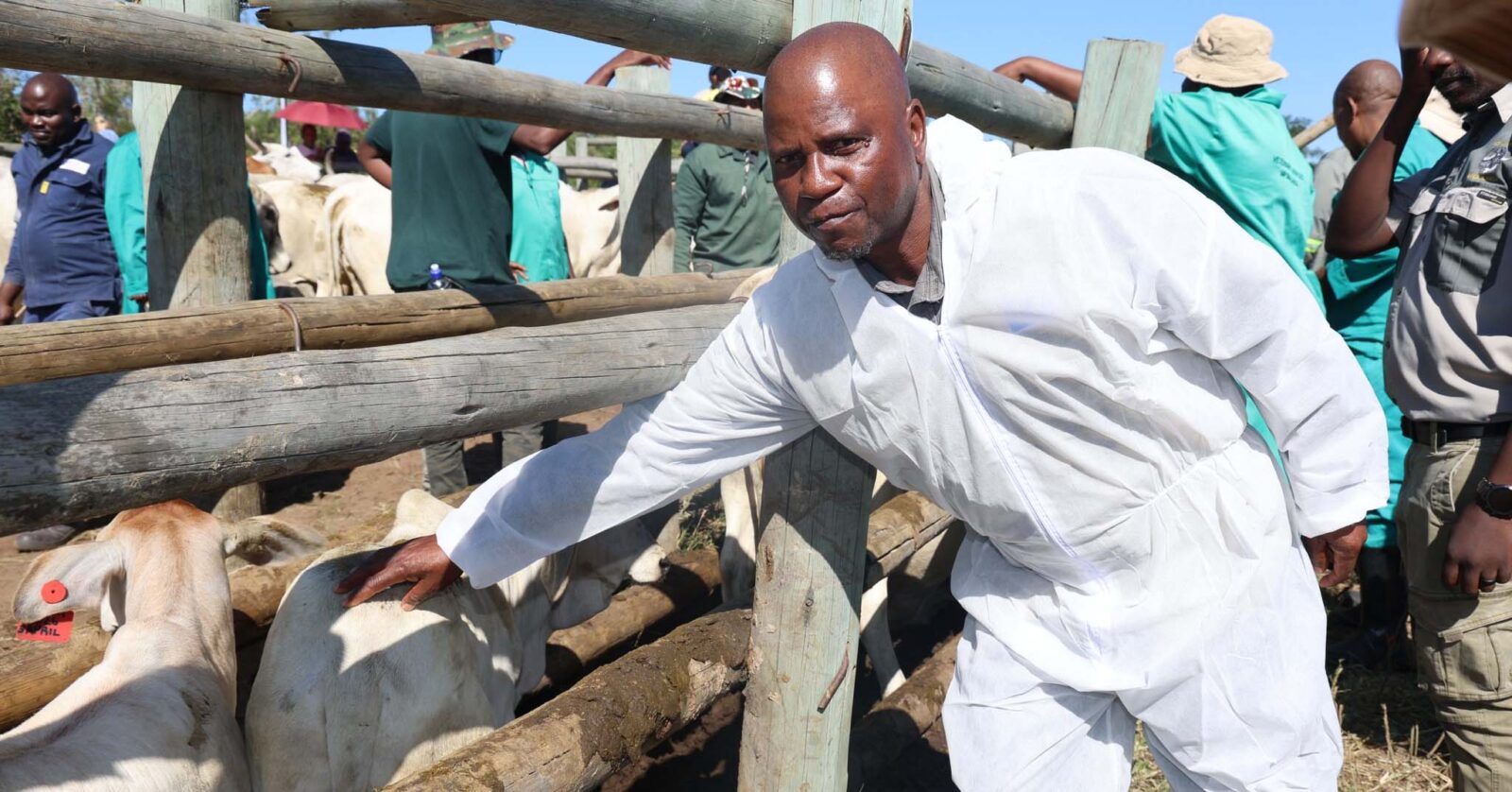
MBABANE – As Eswatini continues the fight against foot-and-mouth disease (FMD), the High Court has issued an order directing that a herd of cattle bought by a liSwati woman in South Africa be taken back.
The herd of six cattle, according to the Principal Secretary in the Ministry of Agriculture, Sydney Simelane, was purchased by Lucy Shongwe of Mashobeni North in the FMD-hit Mpumalanga Province in neighbouring South Africa.
The order was granted by Judge John Magagula following court proceedings instituted by the principal secretary (PS) in the High Court.
In his founding affidavit, the PS detailed the circumstances surrounding the unlawful introduction of the livestock into the country.
According to the affidavit, the matter first came to light on or about March 2, 2026. Freedom Motsa, a Veterinary Officer stationed at Mashobeni North, according to the PS, received information regarding the arrival of a herd of cattle at the homestead of Shongwe.
Acting upon the information received, Motsa visited the homestead and personally inspected the premises, where he observed herd of cattle. During the visit, it was established that the cattle had been brought into the Kingdom of Eswatini from Mpumalanga Province in the Republic of South Africa.
The PS highlighted regulatory non-compliance regarding the movement of the livestock. Mpumalanga Province is classified as an area where FMD is prevalent.
Simelane stated that Shongwe did not possess the mandatory requisite permits, veterinary clearance or official movement documentation required by law for the importation of livestock. “There was no application made to the director of Veterinary Services for a stock removal or import permit, nor was the movement conducted in accordance with Regulation 6 of the Stock Disease Regulations of 1933,” argued the PS.
He noted that the respondent produced only a document purporting to grant permission to move or transport the herd within the Republic of South Africa. However, the document provided no authorisation to cross the international border or register the cattle within Eswatini.
Simelane affirmed that the importation and movement of livestock into Eswatini are strictly governed under national veterinary and disease control laws.
These legal frameworks require prior health certification, proper permits and full compliance with disease control measures to prevent external health risks from reaching the domestic livestock population.
The PS stressed that the unlawful importation of cattle from an FMD-prevalent region presents a serious and imminent risk of spreading the highly contagious disease within Eswatini. He said such an outbreak would lead to severe economic and agricultural consequences, posing a material threat to national livestock health and national food security.
Following the initial discovery at the homestead, Motsa reported the matter to his supervisor. The supervisor advised that the incident had to be formally reported to the police.
Subsequent updates received from the police indicated that Shongwe paid an admission of guilt fine regarding the matter. However, as of the date the affidavit was deposed, no further feedback had been provided by the police concerning the physical disposition of the six cattle.
In formulating the legal application, the Ministry of Agriculture sought orders to address the biosecurity threat. The filed papers contained requests for declaring Lucy’s non-compliance with Regulation 6 of the Stock Disease Regulations of 1933 unlawful and an order under Regulation 18 authorising the destruction of the cattle.
Alternatively, the PS sought an order directing the respondent to repatriate the six herd of cattle to Mpumalanga Province, Republic of South Africa.
The ministry noted that while destruction of imported cattle is often the most decisive measure to eliminate biosecurity risks, repatriation serves as a suitable alternative remedy, provided strict protocols are maintained. The ministry, according to the affidavit, lacked suitable quarantine facilities to detain the herd indefinitely, making court intervention necessary.
The matter was brought to court for hearing on Friday in the High Court. With the respondent providing no objection to application, the court granted the order compelling Lucy to repatriate the herd of cattle back to Mpumalanga Province. The repatriation process is to be carried out strictly at the respondent’s own cost.
The entire movement of the cattle will be under the direct supervision of Eswatini veterinary authorities. Pending full compliance with the order, the cattle will remain under strict quarantine and are forbidden from mixing with any other livestock.
The confirmatory affidavit supporting the ministry’s facts was filed by Freedom Motsa, confirming his role as the field officer who initially identified the cattle and reported the violation to relevant government authorities.