
MBABANE – In an era where global sport is scrambling to streamline operations and cut carbon footprints, EFA has delivered a masterclass in modern governance.
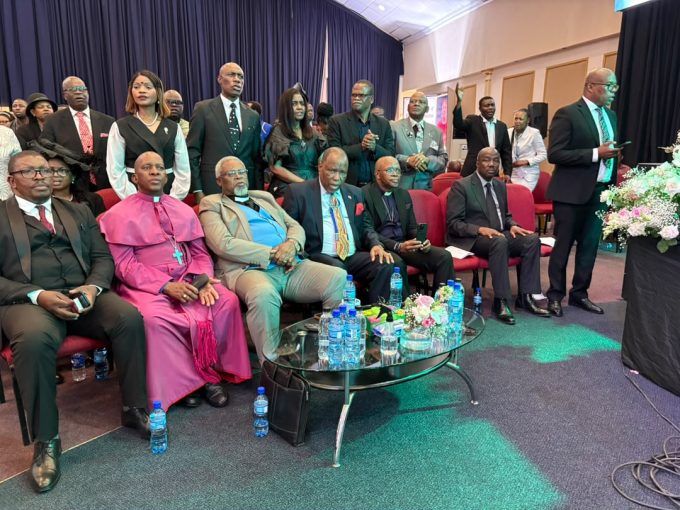
On Tuesday, July 28, the Eswatini Football Association (EFA) officially launched e-Sigwaca, which is a pioneering, paperless digital platform set to overhaul player registration and administrative services for the 2026/2027 season and beyond.
For developing football nations worldwide, administrative friction, endless journeys to capital cities, stack upon stack of paperwork, and human error, has long hampered professionalisation. Eswatini’s in-house solution offers a blueprint for how emerging footballing nations can bypass legacy systems and leap straight into the digital age.
Unveiled alongside the opening of the new transfer window, the platform brings Sigwaca House directly to the grassroots. EFA General Secretary Frederick Mngomezulu highlighted the immediate practical benefits: “Clubs and players will no longer need to travel to Mbabane for photocopying, certification and other manual processes. With only a smartphone, tablet, or laptop, you can complete the entire registration process from home.”
Developed entirely by the EFA’s internal IT team, the system integrates electronic signatures, automates domestic transfer certificates and generates correctly formatted documentation directly for the global FIFA Connect framework. Payments are handled via MTN Mobile Money, with full FIFA Connect payment integration on the horizon.
Live-demonstrated by IT Officer Mduduzi Bhembe (accessible via efaonline.org.sz/eSigwaca), the system virtually eliminates data-capturing errors while dramatically slashing processing times and travel costs for local clubs.
Yet the broader significance extends far beyond the borders of Eswatini. By aligning local grassroots administration seamlessly with FIFA’s overarching digital infrastructure, the EFA provides a compelling, cost-effective model for smaller national associations across Africa and the global South. It proves that world-class, transparent football governance does not require multi-million-pound external software contracts; just vision, local talent, and a commitment to accessibility.
As the 2026/2027 registration window opens, the EFA is not just modernising its own backyard; it is showing the global game how to bridge the digital divide, one smartphone at a time.