

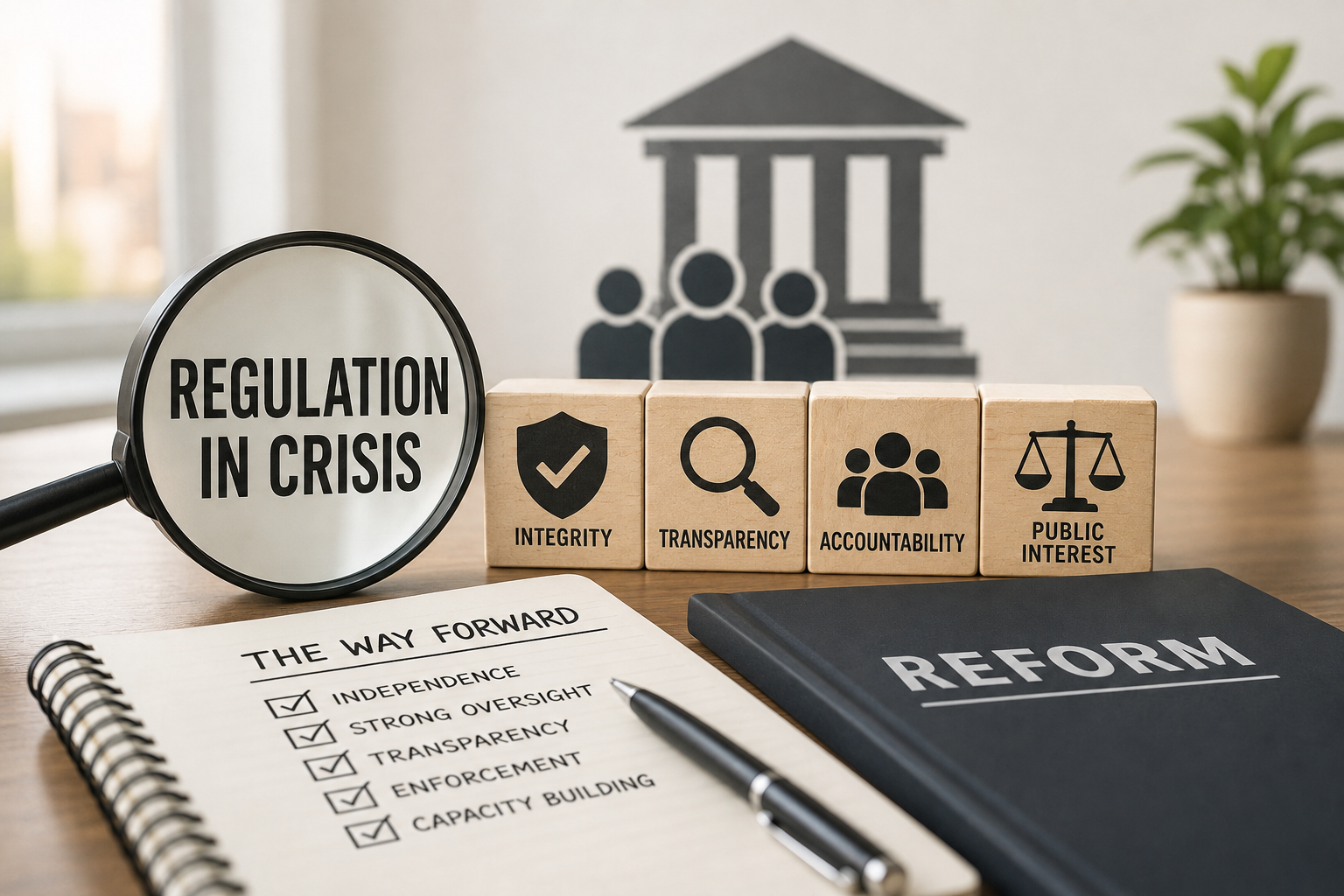
The revelation that E17 million was misappropriated by officials within the Eswatini Communications Commission (ESCCOM) has shocked the public. Yet this scandal is not an isolated incident; rather, it is a symptom of deeper weaknesses in Eswatini’s regulatory framework. It must be regarded as a learning curve as we strengthen our regulatory frameworks as a kingdom. Regulators are meant to safeguard public interest, ensure transparency and enforce accountability. When they fail, the consequences ripple across the economy and society.
Role of regulators in modern economies
Regulatory bodies are the backbone of governance in sectors ranging from energy and telecommunications to finance and competition. Their mandates are clear: Protect consumers, ensure fair markets and uphold standards. In Eswatini, institutions such as ESERA (energy), ESCCOM (communications) and the Competition Commission were created to modernise oversight and align with global best practices. However, their effectiveness depends not only on legislation but also on integrity, independence and enforcement capacity.
ESCCOM and trust deficit
The ESCCOM scandal erodes public trust in regulators. Citizens expect these bodies to act as impartial guardians, not as conduits for personal enrichment. Misappropriation of funds undermines confidence in the very institutions meant to regulate critical sectors such as telecommunications, broadcasting and digital services. Without trust, compliance weakens, businesses cut corners and consumers suffer. The scandal, therefore, raises urgent questions about how regulators are staffed, monitored and held accountable. Governance gaps across regulatory landscape ESCCOM’s failure is not unique. Other regulators have faced challenges ranging from underfunding to political interference. For example, energy regulation has struggled to balance investor confidence with consumer affordability, while rising risks of money laundering and weak enforcement capacity have tested financial oversight. These gaps point to a systemic issue: Eswatini’s regulatory architecture is strong on paper but fragile in practice. Without robust governance, even well-designed frameworks can collapse under pressure.
Cost of weak regulation
Weak regulation carries heavy economic and social costs. In telecommunications, mismanagement can stifle innovation, inflate prices and reduce access to digital services. In energy, poor oversight can lead to unreliable supply and inflated tariffs. In finance, regulatory lapses can trigger crises that wipe out savings and destabilise markets. The ESCCOM scandal is, therefore, more than a financial misstep; it is a warning that regulatory failure can undermine national development goals.
Towards stronger oversight and reform
What can be done? First, regulators must be insulated from political and personal interests. Independence is not a luxury; it is a necessity. Second, transparency must be strengthened through regular audits, public reporting and open stakeholder consultations. Third, accountability mechanisms must be sharpened; misappropriation should lead not only to dismissal, but also to prosecution. Finally, capacity building is essential. Regulators need skilled professionals, adequate funding and modern tools to keep pace with evolving industries.
Building a culture of integrity
At the heart of regulatory reform lies culture. No amount of legislation, however well-crafted, can substitute for integrity. Laws and policies provide the scaffolding, but it is the values and ethical standards of those who enforce them that determine whether regulation succeeds or fails. Regulators must embody professionalism, fairness and accountability in their daily conduct. This requires leadership that is genuinely committed to ethical standards, not merely paying lip service to them. Leaders set the tone: if they tolerate corruption or prioritise personal gain, the entire institution becomes compromised. Conversely, when leaders model transparency and accountability, they inspire staff to uphold the same values. Integrity must also be cultivated among staff through deliberate training and capacity building. Regulators need professionals who are not only technically competent but also resilient against corruption pressures.
This means equipping employees with tools to identify conflicts of interest, resist undue influence and understand the broader social consequences of regulatory failure. Integrity is not innate; it is fostered through education, mentorship and consistent reinforcement of ethical norms.
Civil society and the media play an equally vital role in sustaining integrity. Regulators cannot be left to police themselves. Independent watchdogs, investigative journalists and civic organisations provide external scrutiny, ensuring that misconduct is exposed and accountability enforced.
Public participation in regulatory processes, through consultations, hearings and transparent reporting, creates a culture of openness that discourages malpractice.
When citizens feel empowered to question regulators, integrity becomes a shared responsibility rather than an internal aspiration.
Ultimately, building a culture of integrity is about embedding values into the DNA of regulatory institutions. It is about creating an environment where corruption is socially unacceptable, transparency is routine and accountability is non-negotiable.
Only by cultivating this culture can Eswatini’s regulatory bodies regain public trust and fulfil their mandates as impartial guardians of the public interest.
The ESCCOM scandal is not a trivial embarrassment but a wakeup call for Eswatini to strengthen regulatory institutions. Effective regulation underpins governance, stability and consumer protection. Without reform, scandals will recur, trust will erode and development will stall. With decisive action, regulators can transform from weak links into pillars of accountability. The choice is stark: Regulation must shift from crisis to credibility, ensuring integrity, transparency and lasting public trust.


















Leave a comment