

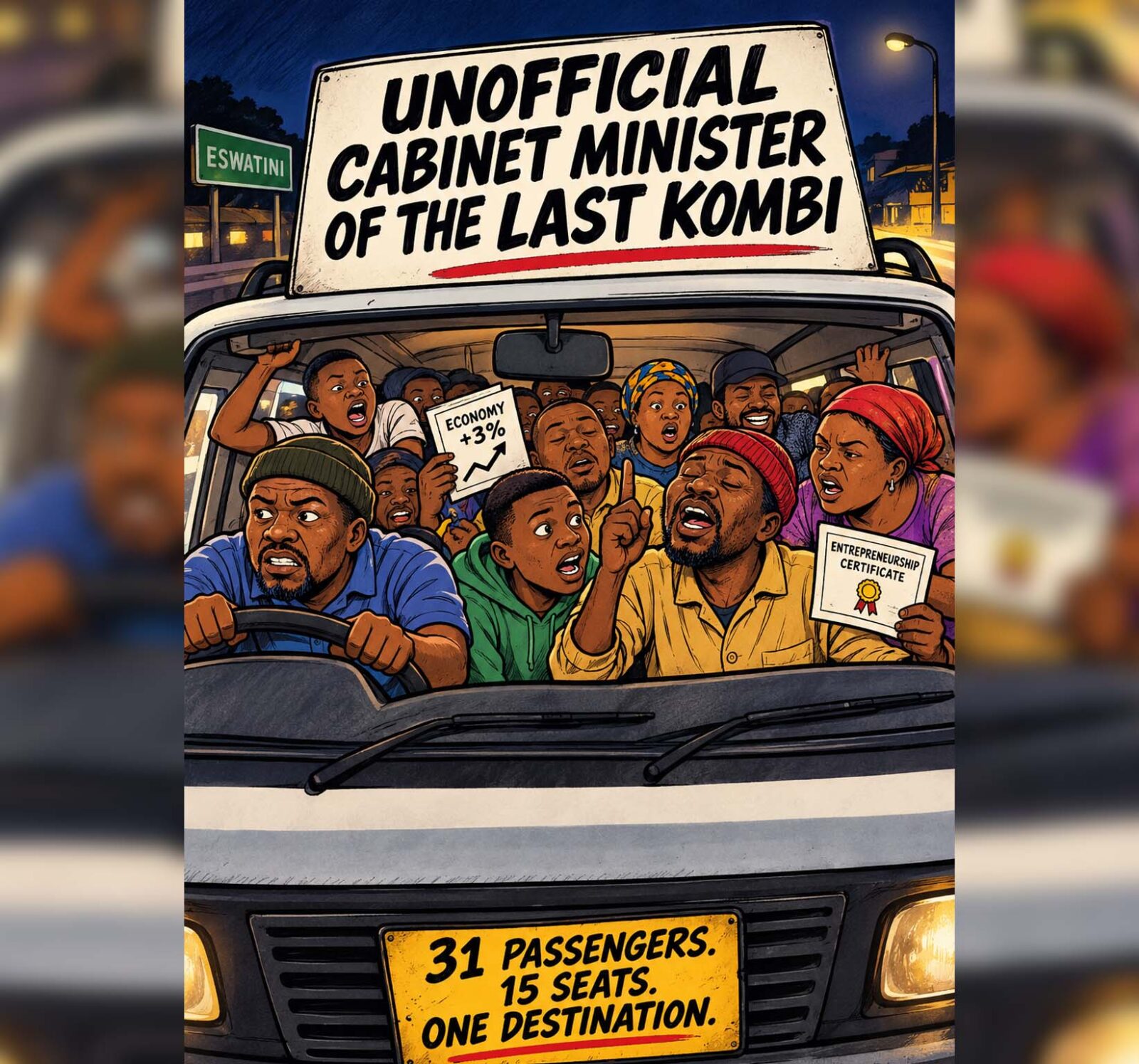
If you have never ridden the last kombi of the night, you have not lived. In Eswatini, suffering is basically civic participation.
On paper, according to the law, traffic officers and physics, a Quantum carries 15 passengers. But Friday night in all towns of Eswatini operates under custom, not physics.
Space and time file for divorce at the rank.
Our kombi had 31 people. Thirty-one. Some were seated. Others stood at a desperate angle or folded into space reserved for emergency luggage. One man sat on another’s lap with the confidence of a child visiting gogo and the exact same expectation of gifts. At every bus stop, the conductor shouted into a solid wall of human bodies, “Sondzelani, ikhona indzawo! Just one more!” Complaining was a luxury, like air-conditioning or oxygen.
The atmosphere was another government department altogether; cigarette smoke, cheap liquor, sweat, roadside sausage, roasted groundnuts and one mysterious smell declared a national heritage site. The windows were shut tight.
Halfway through, the driver abruptly took a bumpy dirt shortcut nobody requested, throwing us into each other’s laps.
I was fighting for survival when a drunk man cleared his throat. Every last kombi has one: The Philosopher General.
Swaying with the turn, he delivered a State of the Nation Address: “Life dealt me a raw deal! My parents could not pay school fees. I hustled, petty crime, jail time… now society cancelled me!”
He wiped sweat or sausage grease from his face and raised his voice. “When life is tough, you are on your own! Family abandons you! But make E10 and the phone rings: “Hey brother, send money for flour!’ Black tax is killing me!” Suddenly, the kombi became Parliament. “Remember the 90s?” shouted a man hanging on like a human roof rack. “Bread was 95 cents! You left school and found a job! Foreigners came here for education!”
A woman squeezed between passengers yelled: “And now government says service delivery improved from 22 to 48 per cent! Forty-eight per cent of WHAT?”
The kombi went silent. Statistics are now motivational speeches. Someone says the economy grew by three per cent and you check your bank balance to see if it went into someone else’s account.
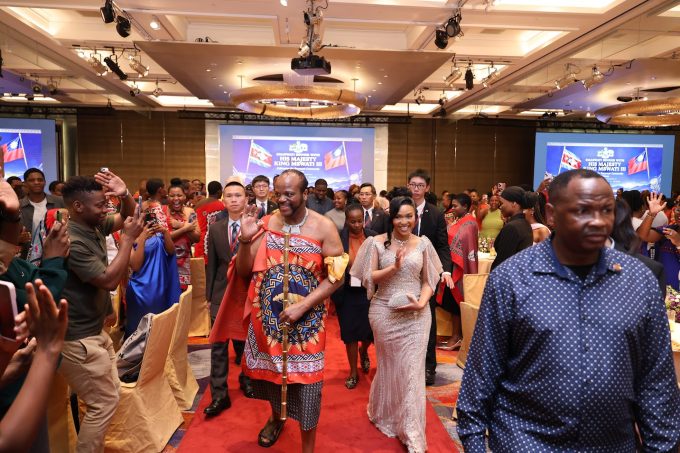
A young man near the door joined in: “They invite youth to fancy hotels, give us a chicken sandwich and a certificate in entrepreneurship, then send us home! What do I do with the certificate? Fry it with the chicken?”
We keep telling young people to become entrepreneurs, as if entrepreneurship begins with confidence and ends with paper. “Congratulations! You are an entrepreneur.” “Where is my market?” “No, we only promised the certificate.”
The conversation turned to local business. Why import basic construction items like nails and spades? A nail is just metal aggressively straightened at one end. Can Eswatini not make one? We import nails, spades, machinery and expertise, then congratulate ourselves when someone digs a hole.
A street vendor clutching tomatoes like a newborn spoke up: “The problem is ministries do not talk to each other! Scrap the useless Wages Council! Let people earn better wages. When emaSwati earn more, they spend more and pay VAT and PAYE. Instead, companies liquidate over unpaid taxes on money they have not even made!”
It was the best Cabinet reshuffle I had ever heard.
A sleeping man woke up: “EXACTLY!” He contributed nothing for 40 minutes yet found the exact moment to vote. Classic politician energy.
Another passenger shouted that government must pay local suppliers within 24 working days, because paying a supplier should not be a pilgrimage. Another demanded making 80 per cent of project supplies local.
Forget economic summits. The best policy discussion in the country happened inside a 15-seater carrying 31 people and enough sweat to qualify as an industrial emission.
Suddenly, the driver slammed the brakes. Up ahead stood blue lights and a traffic officer holding a torch. For three glorious seconds, 31 squished, sweaty people held their breath in absolute solidarity. Nobody moved. The vendor hid her tomatoes. We were a criminal syndicate operating as one. The officer waved us through and the kombi exhaled in unison.
These were completely different people: A vendor, a jobseeker, an ex-offender, commuters, a drunk philosopher, yet when faced with a roadblock, they cooperated instantly.
Government ministries have offices, computers, policy documents and directors, yet cannot agree on who does what. The kombi had 31 passengers and one steering wheel. Government has numerous ministries and enough steering wheels to open a dealership, yet the kombi was better coordinated.
Near my stop, a guy shouted: “Ngicela ungehlise lapha!” at the last microsecond, sending everyone sliding across the floor as the driver slammed the brakes. I squeezed past three knees, two elbows and a bag of cabbages, jumping into the night air as I had just escaped a budget meeting.
I looked back at those passengers, packed together, arguing, surviving roadblocks and moving in the same direction. If 31 dysfunctional human beings can squeeze into a 15-seater, diagnose government policy and arrive at the same destination, surely our ministries can sit at the same table.
Maybe government does not need another conference. Maybe it needs a ride in the last kombi. One steering wheel. Thirty-one seats that do not exist. And, most importantly, no room for saying: “That is not my ministry.” Good day. Mind the gap and please, for the love of humanity, open the windows.












Leave a comment