

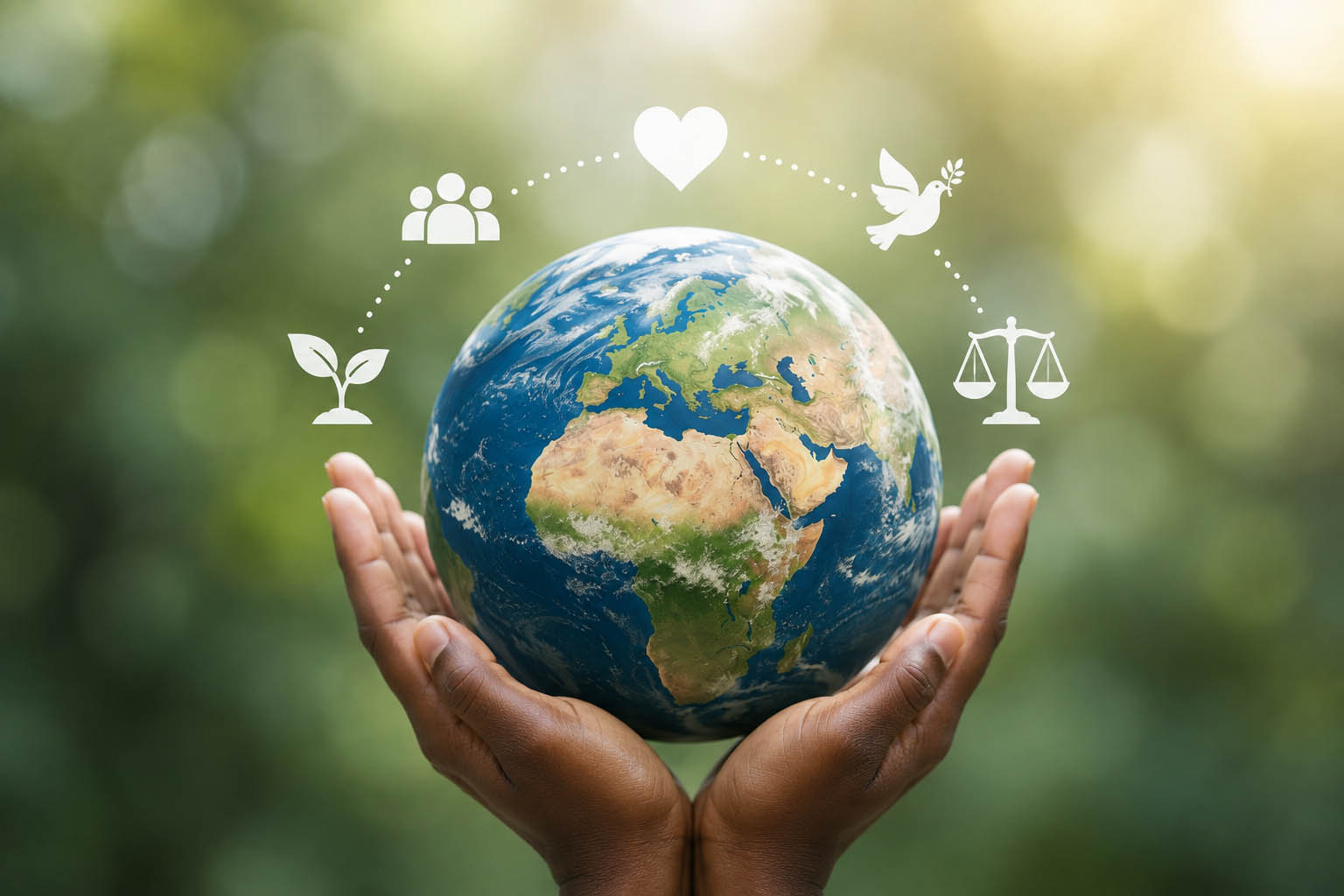
The question being: Is our world a better place than any period within, say, the past one hundred years? For this article, the jury is out on that question until we have identified the criteria and have made an informal assessment. We can use some statistics but can still obtain a reasonable conclusion by use of the ‘broad brush’. Let us first set out a list of the suggested criteria and then assess the progress or regression in each. Proposed are: Life expectancy, medical care, poverty reduction, literacy, technology, human rights and political cooperation.
The first issue is – how long are we living? There is quite a difference there. At the start of the 20th century, the broad average life expectancy was 35-40 years. It is now 70. No, there won’t necessarily have been massive birthday celebrations in 1926 on a person’s 41st birthday. It varied across the world; much lower in many countries, with disease, diet, high infant mortality rates and weak medical care taking a very heavy toll, while life expectancy in the First World was around 60 years.
Even in the past 40 years, medical care has improved at an unbelievable rate. Today we have vaccines that protect people from early death, added to the invention of CT and MRI scanning, as well as antibiotics and organ transplants. Smallpox was eradicated in 1980 and polio similarly a few years later. The pace of improvement is huge. Today is not the time for predictions, but if you could extrapolate notionally to 2226, you would be ‘gobsmacked’. (Apologies for a dreadful word, but it would capture the moment). Poverty has dropped substantially. Sadly, it does still exist to varying degrees of severity across the world, but the extent has been reduced. The improved diet, better use of the land for food growth and vitamin intake for protection, plus greater access to protein strengthening growth in children have all worked.
Literacy has improved substantially as children across the world, especially girls, have greater access to formal education. Affordability is still an issue in many countries and free school education should remain a vital objective for all countries, with a shared priority for both the academic and the practical. Technological advances have, of course, sky-rocketed; with rockets in the sky as well! Everything is made better and lasts longer, while technological newcomers like computers, the internet, smartphones and now AI have changed society in a stunning manner. Not every dimension is good and beneficial, because most aspects of human life and behaviour will carry some downside.
When AI – developed in the last few years – and the internet, which was introduced some 40 years ago, are placed together, the uninformed might view the internet as somewhat antiquated. Especially within the pace of technological innovation. They are, however, very closely interrelated, the internet being the data source for AI. Since AI is the talk of the town at the present time, is it making a better world? It seems to cut both ways. Nevertheless, it provides increased speed and accuracy with functions and data processing and an enormous contribution towards medical and scientific research and information sharing. However, the thought of robots, estimated to run into billions within the next 10 years, is pretty spooky. In short, AI is bringing great benefits to human society, provided it is carefully managed and doesn’t create millions of work redundancies. Apart from natural human curiosity, it has always been ultra-important to us all to increase our knowledge of what lies yonder in outer space. The only problem is that the more work that is done on outer space, the more additional space is discovered. The Exo-Planet Revolution, which started in 1995, found that thousands of planets lay beyond our galaxy, the Solar System; but an even more staggering revelation from recent years is that there are not just a few additional galaxies, in the universe.
There are at least 200 billion other galaxies. The mind simply cannot visualise that. Yet, if there are that many planets and galaxies, it has to be certain that at least one planet is like planet Earth with clever quasi-human beings and many planets are way ahead of us in technological innovation. There I stop; my head is starting to spin.
I believe that, overall, despite the appalling mistakes made with the two main wars that rage at the present time, the human beings of our planet Earth are today more caring of those less fortunate. You get blips where beneficial assistance, once given to developing countries, gets precipitately withdrawn, but generally the donations and other assistance through bilateral and multilateral agencies as well as by individual donors confirms that the human occupants of Planet Earth have developed a greater care for each other.
In addition to increased material assistance for less fortunate fellow human beings, and the stronger support for human rights in most countries, we are now more supportive of measures for more powerful protection of our climates and more determined to formalise peaceful agreements with other countries. Political collaboration is perhaps more energetic but generally more complex, with still too much hypocrisy. Overall, it’s a much better world.














Leave a comment