

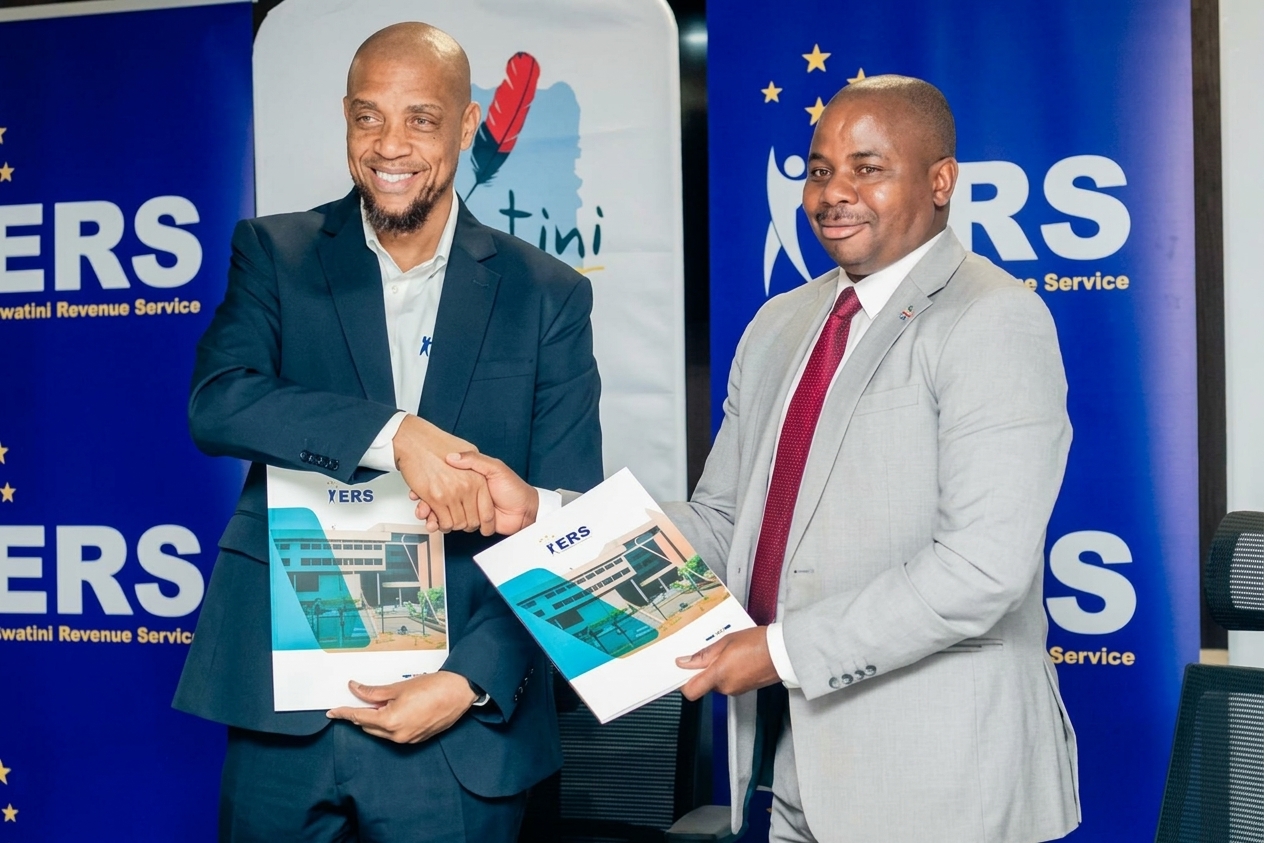
MBABANE- The collection of Eswatini’s 3 per cent Bed Levy is set for closer scrutiny as the Eswatini Tourism Authority (ETA) and Eswatini Revenue Service (ERS) move to strengthen information sharing and enforcement.
The two institutions signed a Memorandum of Understanding (MoU) on Tuesday (September 29, 2026) at the ERS Headquarters in Ezulwini, creating a formal framework for cooperation on compliance within the tourism sector. The agreement is expected to help ETA identify accommodation establishments that may not be meeting their bed levy obligations, while enabling closer coordination with ERS on businesses’ wider tax compliance. The bed levy is collected from accommodation establishments and remitted to ETA.
The funds are used for the development, promotion and marketing of Eswatini as a tourism destination. During the MoU signing, ERS Commissioner General Brightwell Nkambule said reliable information would be critical in identifying compliance risks and ensuring that government resources were directed towards areas requiring intervention. He said the MoU would facilitate the lawful sharing of relevant information between the two institutions.
Nkambule said the cooperation would cover compliance education, stakeholder engagement, research, risk identification, referrals, training and technical consultations. He stressed that information sharing would be conducted responsibly and in accordance with the Data Protection Act, 2022, with confidentiality and information security maintained.
ETA Chief Executive Officer Vusie Dlamini said the agreement created an opportunity to strengthen compliance among accommodation establishments and ensure that businesses were properly captured within the relevant government databases. He said the focus would extend beyond the bed levy to other tax obligations, including income tax, pay as you earn (PAYE) and value added tax (VAT).
Dlamini said the growth of the tourism sector made it increasingly important for authorities to know who was operating within the industry and whether businesses were meeting their legal obligations. The partnership will also allow the two institutions to conduct coordinated interventions where compliance risks are identified. These may include referrals, inspections, investigations and enforcement support, where permitted by law.
Nkambule, however, said enforcement should not be the only approach to improving compliance.
He said tourism operators also needed accurate information and support to understand their obligations, particularly given the diversity of businesses operating in the sector. Joint awareness programmes and stakeholder engagements are therefore expected to form part of the partnership.
Dlamini said the MoU should result in practical interventions rather than remain a document without implementation. The agreement comes as the tourism sector continues to expand, creating a larger pool of accommodation businesses whose compliance with the bed levy and other statutory obligations must be monitored.
The two institutions have committed to implementing the agreement within their respective legal mandates, with the aim of improving compliance, strengthening coordination and ensuring that tourism businesses meet their obligations.




















Leave a comment