MANZINI – Eswatini could attract manufacturing companies relocating from South Africa as the neighbouring country’s economic growth slows and uncertainty surrounds its duty-free exports to the United States.
Getaneh Woldemichael, Commercial Director of Eswatini Air, said the Kingdom could turn some of the economic challenges facing the region into investment opportunities, particularly because it retained access to the United States market under the African Growth and Opportunity Act (AGOA).
He said companies operating in South Africa could consider relocating some of their manufacturing operations to Eswatini to maintain access to preferential trade arrangements with the United States.
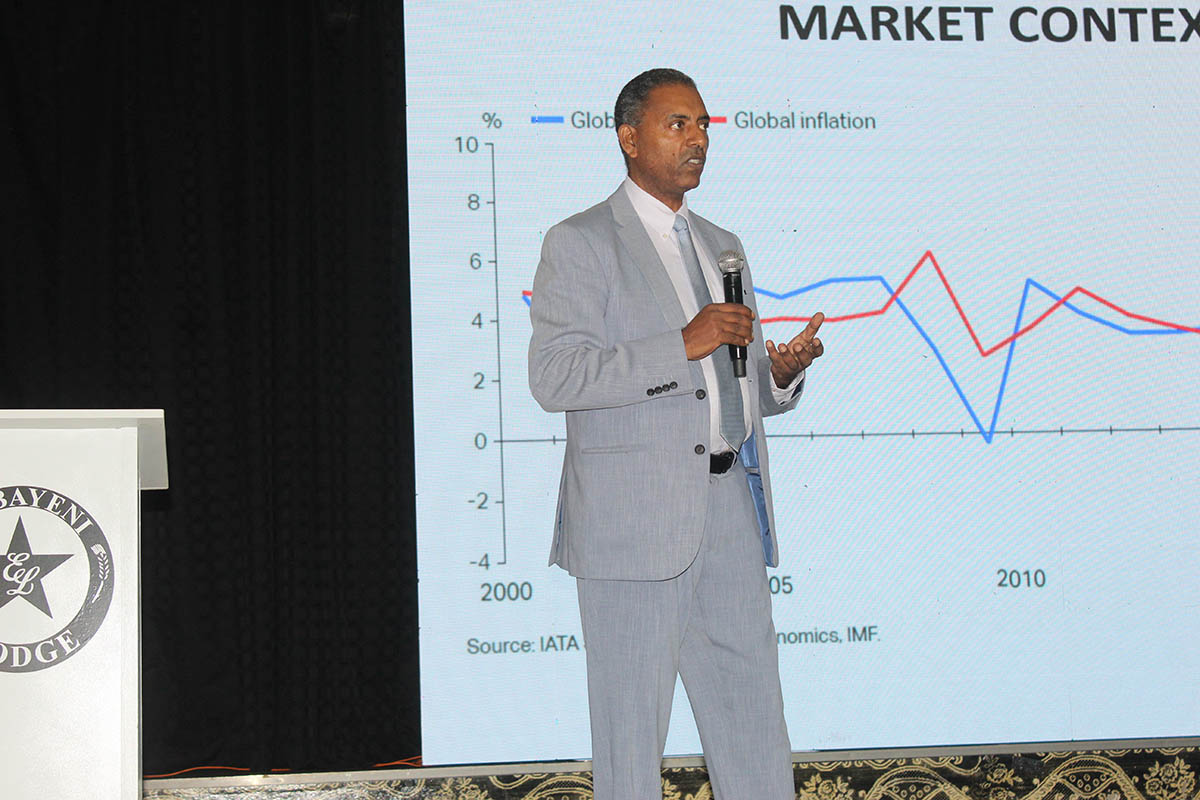
Woldemichael was speaking during a presentation on regional economic conditions and the market dynamics affecting the airline’s operations.
He said the global economic environment remained challenging, with inflation, geopolitical tensions and slowing economic growth affecting several countries.
He explained that the relationship between inflation and GDP growth had been relatively close between 2014 and 2018, but inflation had since overtaken economic growth in many economies.
However, he said Eswatini remained in a comparatively favourable position, with relatively low inflation and encouraging economic growth projections.
Woldemichael referred to the Atlas of Sustainable Development Study, which categorises Sub-Saharan Africa as a region facing very high structural economic risks.
He said the classification reflected the vulnerability of economies to global shocks, including geopolitical conflicts, damaged infrastructure, insecurity and disruptions to economic activity.
Turning to the region, Woldemichael identified South Africa as a major concern because of its subdued economic growth prospects.
He said South Africa’s growth forecast had been revised downwards from 1.6 per cent in April to 1.2 per cent in August, while the International Monetary Fund (IMF) projected growth of one per cent.
He also raised concerns about uncertainty surrounding AGOA and the potential impact on South African companies exporting goods to the United States.
However, he said the situation could create opportunities for Eswatini, which enjoyed preferential access to the American market under the trade arrangement.
Woldemichael said Eswatini’s economic outlook remained encouraging despite the difficult international environment.
He cited inflation of approximately 2.9 per cent and a Central Bank economic growth projection of around 5.6 per cent.
He said the country’s relatively low inflation and growth prospects placed it in a better position than some of its regional trading partners.
He added that businesses needed to understand the changing economic environment and identify opportunities arising from developments in major operating markets.
He warned that elevated international oil prices could continue putting pressure on the airline’s operating costs, particularly because Eswatini is landlocked and incurs additional transportation expenses when importing fuel.
Woldemichael explained that Eswatini’s geographical position added to the cost of importing fuel because it had to be transported into the country by road.
He said Africa was particularly vulnerable to developments in the Middle East because approximately 63 per cent of the continent’s fuel imports came from that region.
He warned that damage to energy infrastructure in the Middle East could prolong the elevated oil prices, meaning airlines might have to contend with increased fuel expenses for some time.
Woldemichael specifically praised the maintenance team for taking care of the airline’s Embraer E145 aircraft, saying their work had contributed significantly to the airline’s operational performance.
He said although the aircraft might appear old, they were being maintained properly and still had considerable operational life remaining.
He emphasised that reliability was not necessarily determined by the number of aircraft an airline operated, but also by the dedication and commitment of its employees.
Eswatini Air passenger load factor rises to 61.7%
MATSAPHA – Eswatini Air has recorded growth in passenger numbers, with its load factor increasing from 50 per cent to 61.7 per cent between September last year and September this year.
The airline’s Commercial Director, Getaneh Woldemichael, said the improvement represented an 11.7 percentage-point increase in the proportion of available seats occupied by paying passengers.
He said although the airline was still below the African industry average load factor of approximately 73 per cent, the growth demonstrated that more travellers were choosing to fly with Eswatini Air.
Woldemichael explained that the airline was not claiming to outperform other carriers in passenger occupancy but was encouraged by its continued growth.
Evisa to promote ease of travel to Eswatini
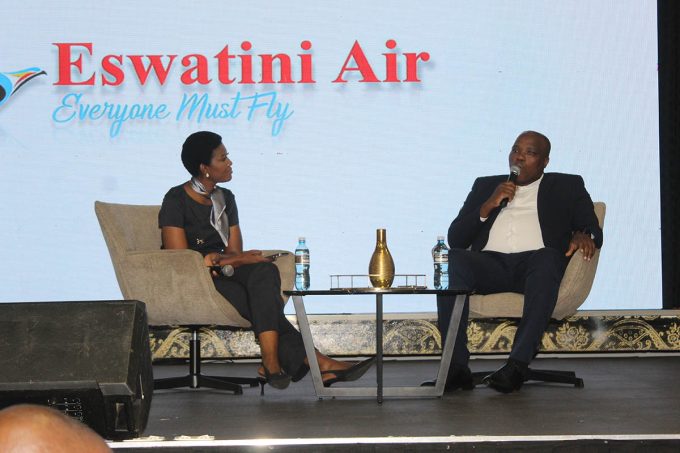
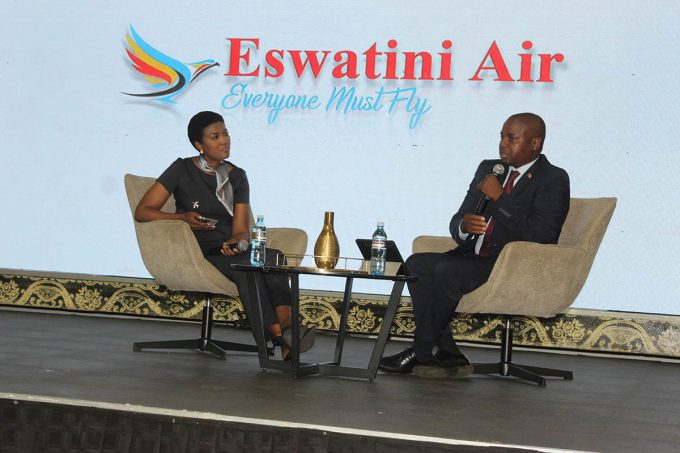
MATSAPHA – The Chief Immigration Officer Mthokozisi Dlamini said the introduction of the eVisa service would provide a quick turnaround time for travellers with urgent travel needs.
He explained that the service was specifically designed for people who needed to travel at short notice, including tourists visiting neighbouring South Africa who might decide to spend a night in Eswatini.
He said such travellers could apply for a visa through the platform and receive a response within 24 hours.
According to Dlamini, the initiative was expected to stimulate tourism by making it easier for visitors to include Eswatini in their travel plans, even when the decision to visit the Kingdom was made at short notice.
He acknowledged that providing the service would come with additional operational costs, as immigration personnel might be required to attend to applications beyond normal working hours, including weekends and during the night.
He said discussions were still ongoing regarding incentives for officers who would be expected to provide the service outside their usual working hours.
On regional cooperation, the chief immigration officer said the movement of people across Southern Africa was interconnected, making collaboration among countries essential in managing migration and facilitating travel.
He said no country could effectively address migration challenges without working closely with its neighbours.
He identified the harmonisation of immigration systems, information sharing, technological cooperation and joint training as some of the key areas requiring attention among SADC member states.
He also called for greater cooperation in promoting tourism across the region, saying the approach should be to encourage tourists visiting South Africa to also explore Eswatini, Mozambique and other SADC countries.
He said sharing information and harmonising technology would help strengthen the tourism sector while improving the overall passenger experience across the region.
When he was asked by a guest in the gallery about the breakdown in network affecting speedily release of the evisa, he said this was not only a Home Affairs responsibility but ministries responsible for the network. He also assured that the concerns were being dealt with.