

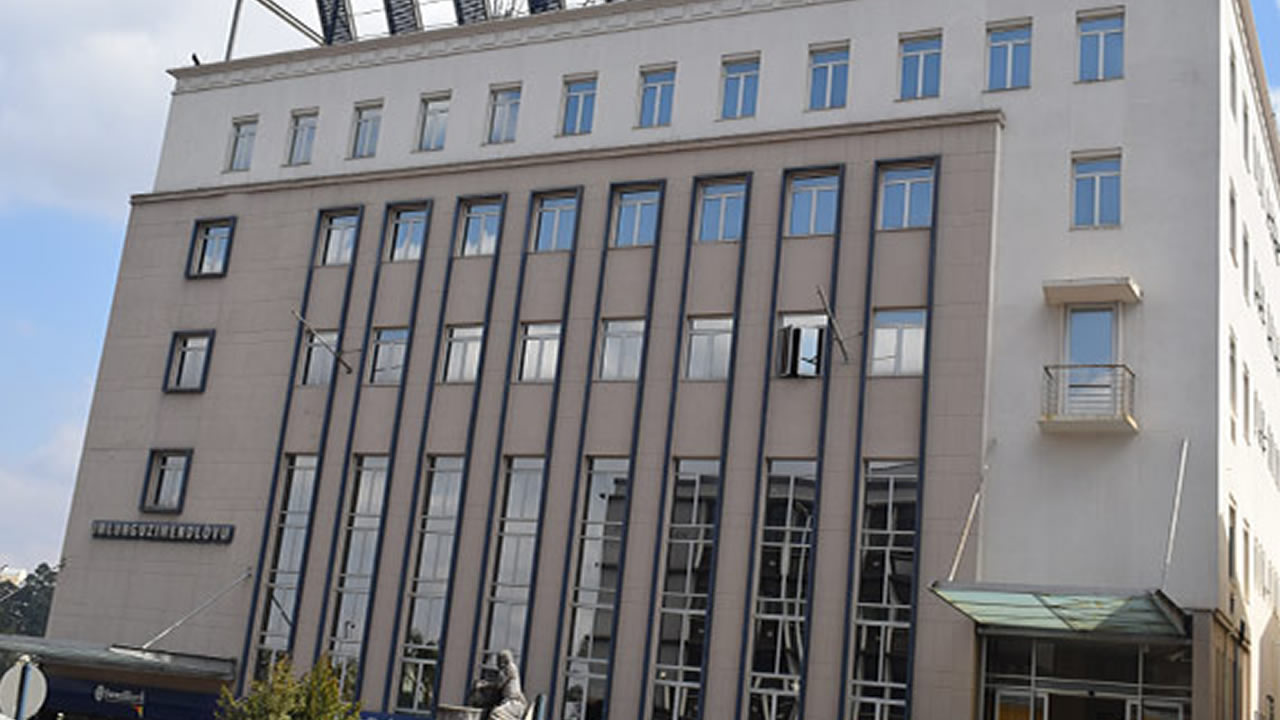
MBABANE – EswatiniBank and the Eswatini National Provident Fund (ENPF) are co-owners of Oracle Health Eswatini, a prominent player in the country’s medical aid sector. Together with Vunani Limited, a Johannesburg Stock Exchange-listed asset management group, these institutions have established Oracle Health as a significant provider of medical insurance in the kingdom.
Oracle Health Eswatini, operating under the broader Oracle Group Eswatini, offers medical aid products alongside other insurance services, such as life and short-term insurance. The group’s brands include Oracle Life, Oracle Insure and Oracle Health, positioning it as a key provider of financial and health security for both individuals and corporate clients in Eswatini. Vunani’s 2019 acquisition, in conjunction with management from Momentum Metropolitan Holdings, brought extensive South African insurance expertise to the local industry.
Partnership
It is understood that Oracle Health’s management and operational functions are carried out in partnership with the Medical Services Organisation (MSO). MSO is part of the Discovery Group, which is South Africa’s leading provider of healthcare risk management and administrative services. This collaboration ensures high standards of administration and member service, and the partnership is believed to support a seamless experience for Eswatini members both locally and in South Africa.
On the other hand, EswatiniBank, a parastatal wholly owned by the Government of the Kingdom of Eswatini, has held its 33 per cent share in Oracle Insurance Eswatini since 2012. Financial statements show that as of December 31, 2019, EswatiniBank valued its investment at E19.2 million, an increase from E17.1 million in 2018. In 2020, the bank received a dividend of E10 million from Oracle Insurance. Lindiwe Shongwe, EswatiniBank’s Executive Manager for Marketing, confirmed: “Yes, we can confirm that EswatiniBank is a shareholder in Oracle Eswatini, holding a 33 per cent equity stake. The shares were purchased as early as 2012.”
Investment
It must be said that this long-standing investment highlights EswatiniBank’s strategic role in the nation’s health insurance sector. The context for this scrutiny is a legal dispute between EswatiniBank and Eswatini Medical Aid Fund (EswatiniMed), one of the country’s largest and oldest medical aid schemes. The dispute traces back to a request from EswatiniBank employees for a split in their group medical aid subscriptions, which EswatiniMed denied.
Following a High Court order, which EswatiniMed did not implement, the fund was subsequently placed under curatorship due to regulatory concerns. It has rejected the curatorship. This situation impacted 165 EswatiniBank employees whose memberships with EswatiniMed were terminated. To provide continuity, EswatiniBank facilitated their transition to Oracle Health, offering them access to the full range of Oracle’s healthcare benefits.
Speaking on the transition, Shongwe explained:“We prioritised giving our staff the freedom to choose their preferred healthcare provider, which led to the decision to offer split membership. As a result, a portion of our team opted to move to Oracle Eswatini. The majority, however, have remained with EswatiniMed.” This indicates the bank’s stance in supporting both employee welfare and individual choice, even during corporate disputes.
Oracle Health’s medical aid plans, such as Starter, Growth and Lifestyle, are designed to accommodate various budgets and needs, an indication that EswatiniBank’s company competes with EswatiniMed.
This is evidenced by the health plan offerings such as –
- Major in-patient benefits, including hospitalisation and specialist care
- Coverage for serious chronic and acute conditions, including oncology, organ transplants and dialysis
- Access to preventive care such as screenings and vaccinations
- Comprehensive out-of-hospital cover
- Emergency evacuation benefits for critical situations.
It has been learnt that members use a prepaid ‘Health Wallet’ card for seamless payments both in Eswatini and South Africa. EswatiniBank’s medical aid company claims its programmes add value through discounts at healthcare, wellness and retail partners.
Recent developments, such as Montigny Investments (Eswatini’s largest private employer) moving over 600 employees from EswatiniMed to Oracle Insurance, highlight a shift in industry dynamics. Montigny cited substantial ongoing losses to EswatiniMed in its decision but did not comment on any involvement or intentions regarding EswatiniMed’s assets.
Predicament
The genesis of EswatiniMed’s current predicament lies in a court case where EswatiniBank sought an application to allow a split in group medical aid subscriptions for its employees at EswatiniMed. This followed a request by EswatiniBank employees to EswatiniMed to unbundle their subscriptions, which were previously grouped together. EswatiniMed rejected this request, leading to Justice Mlangeni ruling against the company.
However, EswatiniMed notoriously ignored this court order, which had sought to prevent the arbitrary termination of medical aid memberships for 165 employees of EswatiniBank. This controversial and defiant action by EswatiniMed directly precipitated its subsequent placement under curatorship, highlighting the severe instability within the fund. Amidst this backdrop of legal battles and uncertainty, a significant and timely truth has emerged, offering a powerful beacon of hope and stability for the affected EswatiniBank employees, An independent observer said EswatiniBank, the very institution embroiled in this bitter dispute with EswatiniMed, holds a substantial ownership stake in a competing medical aid scheme.
The Times SUNDAY can further disclose that the 165 EswatiniBank employees, whose medical aid memberships were abruptly severed by EswatiniMed, have since found a crucial lifeline by joining Oracle Health. This immediate transition provides much-needed continuity of healthcare access amidst the ongoing uncertainty with their previous provider.
Facilitate
Providing additional context to the bank’s decision to facilitate this transition, Shongwe explained the rationale behind offering split membership to their staff. “We prioritised giving our staff the freedom to choose their preferred healthcare provider, which led to the decision to offer split membership. As a result, a portion of our team opted to move to Oracle Eswatini.” Shongwe insisted: “Majority of our employees, however, have remained with EswatiniMed.”
This involvement offers a compelling and stable alternative for medical aid coverage, particularly in light of the current instability surrounding EswatiniMed, thereby ensuring its employees retain access to vital healthcare services. “The immediate consequence of EswatiniMed’s unilateral termination was the profound anxiety experienced by the affected employees. “The very thought of falling ill or requiring urgent medical attention without adequate coverage is a daunting prospect, underscoring the indispensable role of medical aid in a nation’s social fabric,” said an employee who spoke to us on condition of anonymity because he was not tasked to speak on behalf of the company, nor the employees.
Court Battles
Seeking comment from EswatiniMed was not legally possible as it is still embroiled in court battles with cases related to healthcare provision. Other medical schemes that operate in the country are Lidwala, United Health Insurance, EmaSwati Care, Mpilwehle, among others. Oracle Group was born in Eswatini over 15 years ago under the brands of Momentum and Metropolitan Holdings.
In another development, could EswatiniBank and ENPF move their insurance components to Oracle Group? This question could not be answered, when posed to managers of both entities. ENPF currently provides various products to its members and one product that has become a game changer, is the death policy cover to all members. On ENPF membership, according to their annual report for the financial year ended June 30, 2023, the company had a total membership of 156 732. This reflected a significant increase from 142 023 registered in 2022.
In an interview, a member of management for ENPF who asked not to be identified said the organisation could consider a proposal to migrate its insurance portfolio to Oracle. “ENPF is for emaSwati and Oracle is a company owned by Swazis,” he said. Meanwhile, EswatiniBank offers such insurance as housing and car cover and others to its customers and has moved a significant portion of their employees to Oracle Insurance.
In another development, Montigny Investments, under Andrew Le Roux’s leadership, has confirmed its withdrawal from EswatiniMed, citing a significant E12 million annual loss in subscriptions for EswatiniMed. Montigny’s over 600 employees, who previously contributed this amount, have moved to Oracle Insurance.
Controversy
Meanwhile Le Roux has been a central figure in the ongoing controversy surrounding Eswatini Medical Aid Fund (EswatiniMed), specifically in relation to his role as CEO of Montigny Investments. Peter ‘Samora’ Simelane, the Principal Officer of EswatiniMed, recently made explosive allegations in court affidavits claiming that Le Roux, acting on behalf of Montigny Investments, is the “mastermind” behind an elaborate bid to forcibly seize control of EswatiniMed’s prized asset, the Ezulwini Private Hospital. Simelane alleges that Le Roux offered to buy the hospital for Montigny, and when the EswatiniMed Board rejected a proposed E200 million sale (despite the facility allegedly being worth over E400 million), a concerted campaign to destabilize the fund was initiated. However, Le Roux has publicly dispelled these allegations, stating that there is “absolutely no factual basis” for EswatiniMed and Simelane to make such claims. He asserts that he has no interest in acquiring the hospital and has at no stage expressed such interests.
















Leave a comment