

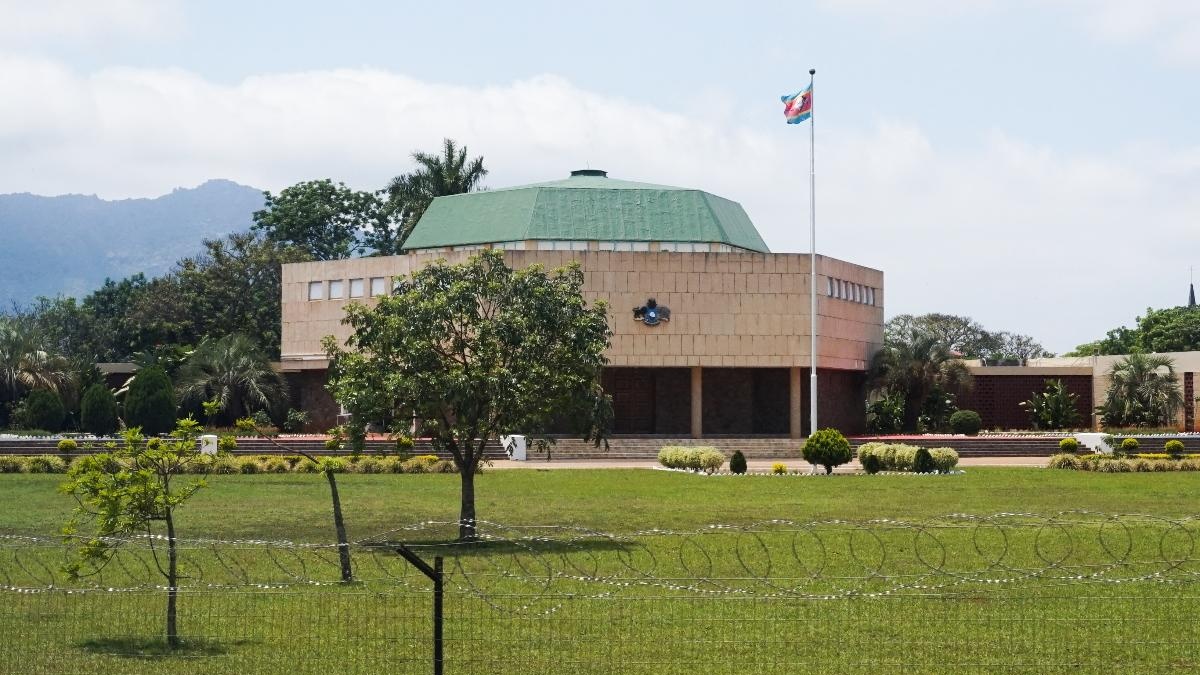
Once again, Parliament has failed the people. A week ago, Members of Parliament (MPs) called for the installation of CCTV cameras in major government hospitals, to curb the theft of medication.
They said closed circuit television (CCVT) cameras would help monitor the movement of medical drugs within public health facilities.
Nhlambeni representative Manzi Zwane posited that these cameras should capture footage from the moment medication is delivered to the hospitals, to their placement in storage units.
They should also record activity within the pharmacy until medication is dispensed to patients.
Legislators wondered what the holdup was because a request had been made for funds to cater for these installations.
They also proposed that an Automated Medication Dispensing System (AMDS) be implemented to improve access to medication and tracking in hospitals. This system apparently uses temperature-controlled, secure cabinets with SMS technology to manage medication distribution.
It also provides patient registration, data tracking and system monitoring.
It was on that Thursday, July 17, 2025 that they reiterated their opposition to the roping of the National Disaster Management Agency (NDMA) into the country’s controversial medical drugs procurement process.
This idea had been touted by Prime Minister (PM) Russell Dlamini a week before, when he delivered his report on the state of the healthcare system in Eswatini.
MPs had demanded this report, giving the head of government 14 days to come up with a comprehensive plan to bring this decades-long situation to an end.
The PM had indicated that the NDMA and National Emergency Response Council on HIV/AIDS (NERCHA) would be engaged to assist with the emergency procurement of medical drugs and supplies, which have only been delivered to health facilities in dribs and drabs in recent years.
Kubuta MP Mzwandile Mamba was vehemently opposed to the idea of engaging the NDMA, saying there was no need for a takeover by another parastatal.
“The prime minister needs to offer support to the Ministry of Health, rather than engaging an organisation that is not under the ministry,” he said.
While we criticise possible solutions, we should be alive to the fact that the shortage of medication has frustrated many patients who cannot afford medical aid or to pay for treatment at private clinics.
Even though specific figures have never been made available, it is believed that this unending shortage of drugs has resulted in the deaths of hundreds of patients who would have otherwise survived after falling ill or getting injured in accidents.
The Times of Eswatini has, on several occasions, published lists of unavailable medication in government health facilities.
These lists would clearly show that the public healthcare system in Eswatini has practically collapsed, as several important drugs would be out of stock.
My concern today is that even though parliamentarians are obviously worried about the prevailing dilemma facing patients who rely on public healthcare, they do not seem to have their finger on the pulse in terms of a lasting solution.
For years, they have simply been condemning government for its failure to address this critical issue once and for all. Granted, the current team of MPs has been in office for only two and half years but still, that is a very long time where lives are concerned.
Instead, MPs keep calling for reports, which are presented but their recommendations never implemented.
It’s a sad cycle of condemnation, delivery of reports and more condemnation.
The public out there used to call on MPs to do something about the shortage of medication in government hospitals and clinics but now, such calls have waned. EmaSwati have lost faith in MPs and do not believe that the solution to this particular challenge will come from them.
It is premature for the legislators to suggest that CCVT cameras should be installed at major government hospitals.
What medication will these cameras monitor because dispensaries are still half-empty? Will they be installed to monitor the frustration of patients who pay consultation fees, get diagnosed (if the equipment for that particular ailment is available and functional) and then given prescriptions to go to private pharmacies?
It would not be farfetched to assume that some of the patients who get such prescriptions simply go home because they know they cannot afford the prescribed medicine.
That MPs are calling for the installation of CCTV cameras in hospitals suggests that they believe that is where the drug shortage emanates from.
With his mentioning of the NDMA and NERCHA, the prime minister is suggesting a possible solution – on a temporary basis – but MPs discard it without offering any plausible alternative. Ironically, these are the same MPs who want the Microprojects department under the Ministry of Economic Planning and Development to monitor and repair certain feeder roads in the kingdom.
This, as the reader is aware, is the responsibility of the Ministry of Public Works and Transport. Microprojects’ main task is the alleviating of poverty and improving the living standard of emaSwati, particularly those in rural areas.
Its projects entail improving infrastructure like schools, bridges and provision of clean potable water. The House of Assembly recently passed a motion giving the responsibility of maintaining feeder roads to the Microprojects department.
They claimed the department had proven to be effective in fulfilling its mandate, adding that the motion they passed was not meant to render useless the Roads department under the Ministry of Public Works.
The new Roads Authority Board, chaired by Gideon Mhlongo, had not been announced at the time. As a result, MPs are pushing for an increased budget allocation for the Microprojects department.
The House of Assembly essentially passed a motion seeking external help, to assist in fulfilling the mandate of another ministry.
However, they are opposed to the roping in of a government agency like NDMA in assisting with the procurement of medication on a temporary basis. Why not give this suggestion by the PM a chance and ensure its proper monitoring by the same Parliament and other agencies?
Otherwise, if they oppose this idea, legislators should come up with a foolproof solution and pass a motion to operationalise it.


















Leave a comment