

An anecdote that may not be well known relates to an interview conducted by a former news anchor of a well-known international television news network who asked an invited guest on a news segment on the question of reparations for slavery.
The invited guest’s response was to the effect that no one could seriously be held liable for any of the negative impacts of slavery caused by the mass displacement of entire Black populations as a result of the slave trade.
Worth noting is the fact that these mass migrations were referred to as the slave trade, implying that certain Africans, most probably tribal authorities, were paid in kind for allowing slave traders to ship their human cargo to foreign lands.
The television news network guest went on to assert and confirm that, in fact, Black people were taken from the shores of Africa, particularly West Africa, with the full consent and cooperation of African tribal chiefs and that in the majority of cases, these chiefs were well compensated.
On the other hand, a widely articulated narrative among many Africans holds that erstwhile colonial powers, following the Berlin Conference in 1884, termed the ‘Scramble for Africa’, should be held accountable for the impoverishment of many countries across the African continent through not only the exploitation of the continent’s natural resources but also failure to equitably share the proceeds from commercial activities, in particular mining, across Africa.
The common argument advanced in support of this view is the fact that colonial administrators’ neglect of the welfare and well-being of various African populations in areas where mining and various other commercial activities took place, can still be seen today and is testament to the fact that colonialism did more harm than good for Africans.
Even basic infrastructure like small bridges, road construction etc., were carried out purely in the interests of facilitating mining and other commercial activities which, in the main, benefitted the colonists more than indigenous Africans, the argument goes.
A counterargument has been advanced which points out those Western missionary societies like the Catholic Church and other protestant church denominations did much in the areas of health and education in the social upliftment and development of a number of African societies.
A counter counterargument to the above narrative is that colonial powers built and established education and health facilities primarily for their own benefit and that similar but inferior infrastructure, school curricula, services etc., were only made available to indigenous populations as an afterthought. And on and on.
Whatever the role of Western adventurism in African affairs in pre and post-independence Africa, what cannot in all honesty be ignored is the role played by some African leaders in the impoverishment of their nations.
It is a well-documented fact that Western entrepreneurs, particularly in the mining industry, with the support of their governments, played a key role in financing the opulent lifestyles of various tribal authorities who, in the main, over time, amassed vast fortunes which they used to benefit themselves and consolidate their power over their subjects.
It is also a well-documented fact that very little of the amassed fortunes were used for the social upliftment of indigenous populations. In fact, the unpalatable truth is that even the modest gains made in education, healthcare, various infrastructure projects etc., have been funded by loans from foreign donors which have proven and continue to be a debt trap for many African nations.
In truth, it is a well-established fact that a significant percentage of the gross domestic product (GDP) of many African countries goes towards servicing debt accrued by these countries while an equivalently significant percentage finds its way into the pockets of the leaders in these countries.
Although Prime Minister (PM) Russell Mmiso Dlamini has been quick to reassure emaSwati that these criminals pose no threat to the safety and well-being of the country’s citizens, in addition to the fact that the bill for their stay in the country will be financed by the US Government, a concern has been expressed about the possibility of emaSwati prisoners falling under the influence of some of these guest prisoners, and even adopting some of their violent ways, to the point of undergoing severe and permanent personality changes.
In the view of others, political expediency and the lure of financial gain by Eswatini’s Government, has blinded officials to the possible repercussions of taking part in a never-before-tried social experiment whose outcome is unpredictable at best.
What should have from the beginning sent alarm bells ringing in the minds of Eswatini’s Governmentofficials is the fact that even the governments in the home countries of these prisoners, refused to take them back.
This is in addition to the fact that prisons in those countries have higher security protocols and facilities than the Kingdom of Eswatini.
The observations made above serve to point to the fact that even in this day and age, some African governments continue to sacrifice the welfare and well-being of their citizens for financial gain from which few, if any, of their average citizens, will probably benefit.
Not only that. From the perspective of diplomatic relations, reports have emerged indicating that the Jamaican Government has expressed surprise, to put it mildly, about Eswatini Government’s decision to enter into an agreement with the government of President Donald Trump, to accommodate prisoners from the US, one of whom is Jamaican.
Although no comments have been reported from the governments of Cuba, Laos, Yemen and Vietnam, the home countries of the remaining four prisoners, it is more than likely that these countries have decided to reserve their comments about Eswatini’s move for the time being.
More significantly, did the Government of the Kingdom of Eswatini consult any of the five countries with regard to:
a) Why these countries refused to take back these prisoners, and
b) If the governments of these countries had any objection to Eswatini acceding to the American Government’s request of accommodating these prisoners.
If Eswatini has diplomatic relations with any of the countries mentioned above other than Jamaica, it is unlikely that these countries will look favourably on the Kingdom of Eswatini with regard to the country’s decision to accommodate prisoners from their respective countries without informing them or consulting with them first.
The above is a safe assumption to make since up to now, government has not indicated whether any consultations regarding the prisoner issue has been made with the governments of the countries of origin of these men.
If Eswatini has diplomatic relations with any of the four countries mentioned earlier, will those countries express appreciation to Eswatini’s Government for taking on a responsibility which should, in reality, have been shouldered by the governments of the prisoners?
The real question is: For how long will the US Government continue paying for the upkeep of these prisoners from foreign countries?
After all, President Trump is known in the world over as ‘the transactional president’. Faced with this reality, what is to stop him deciding that the prisoners dispatched to various countries other than their home countries, be paid for by the governments of their home countries?
If Eswatini were to suddenly find itself in such a pickle, would government demand compensation from the home countries of these prisoners for housing their citizens? What would Eswatini do if those countries simply responded by saying: “Well, we never asked you to accommodate these people. You as a country could have refused to take them, just as we did.” Then what?
The hypothetical situation described above is a prime example of the consequences of making hasty decisions unilaterally without closer examination of all the pros and cons and conducting the necessary consultations with various stakeholders.
This is particularly so since the prisoner issue was not an emergency by any stretch of the imagination. If the Government of Eswatini was hoping to cash in on this arrangement by negotiating a few concessions, this would have been from a position of considerable weakness.
In truth, the US Government is under no obligation to do the Government of Eswatini any favours. In fact, from the beginning of his presidency Trump made it clear that America’s focus would be ‘America First’.
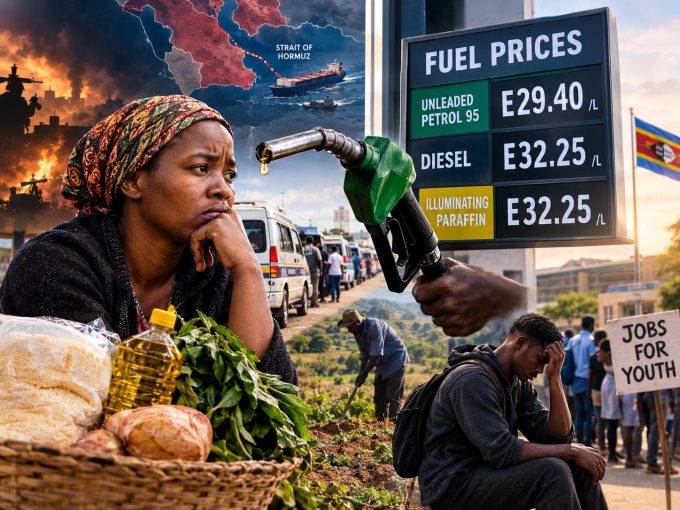
Even the new deals involving Eswatini such as the African Development Bank’s (AfDB) approval of a E840 million loan for job creation for Eswatini’s youth, the pursuit of an energy security partnership between Eswatini and the Baker Group of Companies etc.,(yes, they are all related), may, on the surface, appear to be fortuitous at this time of international economic uncertainty.
The truth, however, is that the groundwork is being laid for a relationship in which Eswatini will emerge second best, to put it diplomatically, in addition to being indebted to AfDB, World Bank etc., for many years to come.
All of this is to allude to the fact that it is ironic that previously colonised countries like Eswatini agitated for independence, citing lofty ideals like self-determination, the right to craft their own destinies etc.
And yet, several decades later, more African countries are not only more dependent on various types of support, initially referred to as aid but more recently referred to as cooperation, by developed countries and have slowly but surely been sucked into the metaphorical quicksand of debt which not only influences the direction of the foreign policies of these countries but also political ideology.
In truth, long before the fall of the Iron Curtain and collapse of the Union of Soviet Socialist Republics (USSR), developing countries in Africa became pawns in a wider game of geopolitical chess between present day Russia and the alliance of Western countries represented by organisations like the United Nations (UN), under whose auspices the World Health Organisation (WHO), UNICEF, UNFPA and several other such agencies operate. Included in this group of agencies is USAID, which was separately funded by the Government of the United States.
Only now, the game has evolved into a much more sophisticated scenario with the emergence of China as a formidable economic competitor in the geopolitical landscape.
In all of this, African leaders have failed to position themselves strategically to benefit meaningfully and collectively from Africa’s mineral resources which provide a formidable bargaining asset.
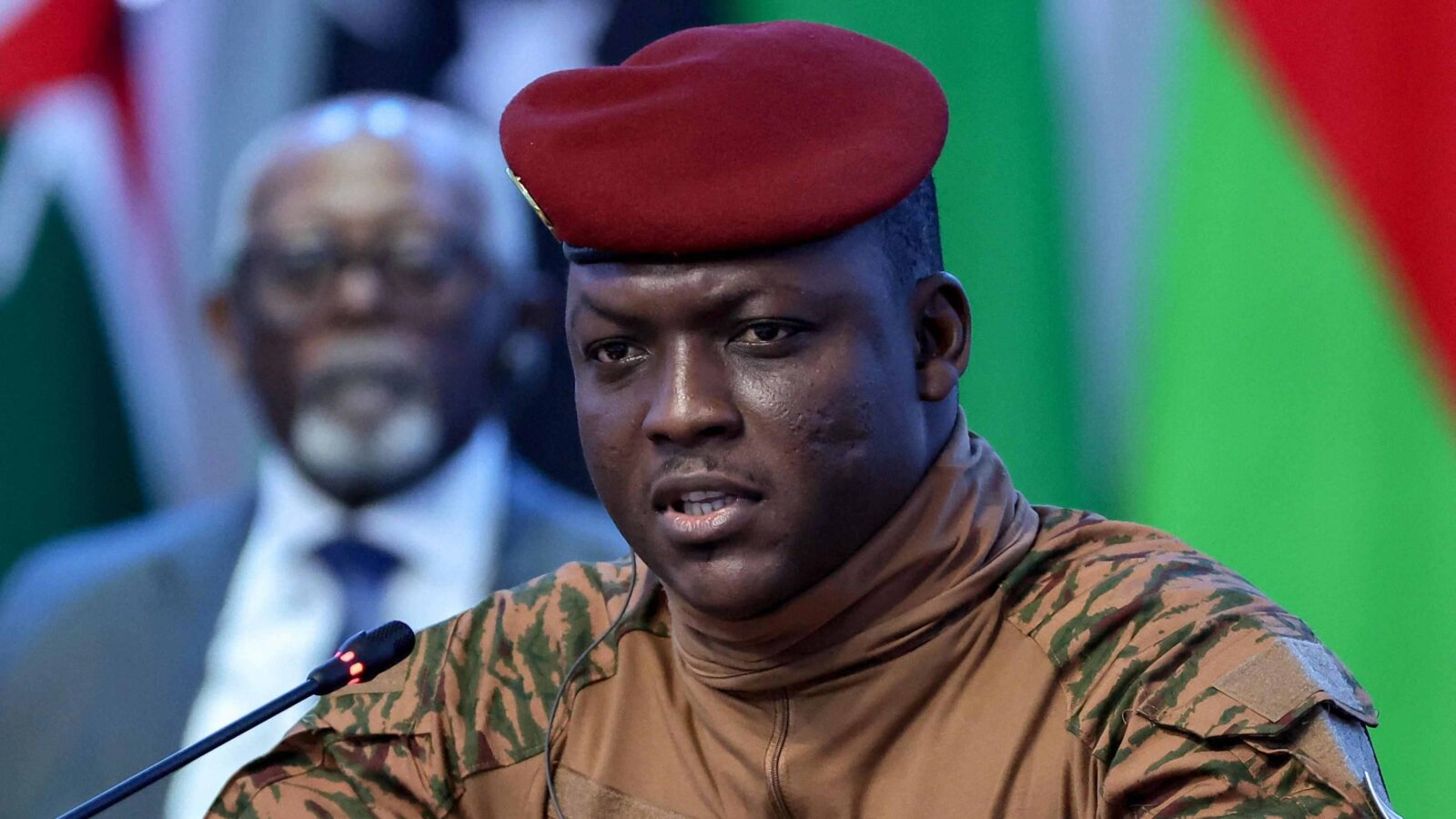
Even as Burkina Faso’s Ibrahim Traore is reportedly trailblazing his way into establishing a new political and economic dispensation for Africa, some African leaders continue to lose the plot by cutting private deals in which the real beneficiaries in the final analysis are not the general populations but the individual leaders in these countries.
As far as the issue of reparations for slavery is concerned, the case for Africa in this regard has been considerably weakened by the many clandestine private deals African leaders have unilaterally entered into with developed countries, as noted earlier, deals from which a majority of African populations have not benefitted.
For this, Africa’s leadership will have to account someday.













Leave a comment