


Constructive criticism, though sometimes difficult to accept, is in most cases necessary if, when and where it is justified.
In addition, where it is accepted gracefully, positively and acknowledged without people going on the defensive, positive criticism can be one of the most effective vehicles of positive change.
It is in this spirit that today, instead of constructive criticism, credit must go where it is due since it appears that past constructive criticism has elicited a positive response in some quarters.
In particular, if our Members of Parliament (MPs) and members of the Executive respond positively to public dissatisfaction and concerns expressed in the country’s various news media and elsewhere, then there is hope that governance in the Eswatini can only improve.
Of course, we are not unaware of the reality that good governance occurs within a bureaucratic system in which, like the human body or car engine, effective and efficient movement is only possible where all relevant parts work in tandem with other parts.
For example, many decisions cannot be made in isolation but need to be coordinated with others. Therefore, cooperation and unity in effective governance are crucial.
This means that the more positive news related to governance, the more efficiently the different arms of government, departments and personnel within those departments are functioning.
In this regard, credit must go to the Ministry of Agriculture with regard to the National Agricultural and Marketing Board’s (NAMBoard) announcement recently that imports of tomatoes and beetroots from South Africa were being temporarily suspended in view of adequate yields in these two vegetables in the country.
For this to happen, it is clear that water availability on arable land was key to the success of farmers in achieving this notable feat of producing sufficient quantities of tomatoes and beetroot in Eswatini. In this regard, entities such as the Eswatini Water and Agricultural Development Enterprise (EWADE) and others must share credit for this impressive achievement.
The Ministry of Agriculture as a whole must also be commended for support of Eswatini’s farmers with regard to expediting provision of the necessary inputs and giving support in other areas to tomato and beetroot farmers. Suddenly, the prospect of growing sufficient quantities of these two vegetables for domestic consumption and export becomes a real possibility.
There have also been reports of more owners of private farmland wanting to enter into lease agreements of their farms with the Ministry of Agriculture. This is positive news without a doubt and portends future higher yields in various crops ocassioned by more efficient use of arable land.
With the Ministry of Agriculture’s sights set on higher yields in the production of maize and beans, it is safe to predict that the Kingdom of Eswatini may be well on its way to achieving food security, barring one or two unpredictable climate change related weather patterns. All in all, kudos must go to the Minister for Agriculture, Mandla Tshawuka, and the dedicated team in his ministry, including parastatals like EWADE, as noted earlier.
Going on to the Funduzi Forensic Audit Report, it was reported in the Eswatini News, July 26, 2025 publication, that Prime Minister (PM) Russell Mmiso Dlamini, had alluded to the fact that this report had proven difficult to implement for a number of reasons, one of which was the standard of the report. It was unclear whether he meant that the report was of a poor or inferior standard, or whether the standard was too high.
However, barely 24 hours later it was reported in the Times of Eswatini SUNDAY July 27, 2025 publication and other news outlets that the Auditor General’s (AG) Office had re-engaged Funduzi Forensic Services Consultancy (Pty) Ltd, whereby the latter’s scope in the investigation of drug supply chain processes in the Ministry of Health had been expanded.
This significant development can only mean that Eswatini’s AG is satisfied with the work done by this consultancy thus far. In addition, reappointment of the same agency is a vote of confidence on Funduzi’s competence, a stark departure from other previously reported opinions, where some entities had expressed scepticism on Funduzi’s professionalism, some even going as far as describing the forensic audit report as ‘a shambles’.
These negative sentiments suggest that the Funduzi report has passed through a few hands, some unauthorised, in all probability and that there seem to be deliberate attempts to discredit the forensic audit report before it even reaches the Office of the Director of Public Prosecutions (DPP) and public domain.
However, it was encouraging to note that Funduzi Forensic Services Chief Executive Officer (CEO), Zenzele Dlamini, had come out boldly to declare that his company was open to engagement with government regarding any area the latter may need clarification on.
Further adding optimism that, finally, the Funduzi Forensic Audit report was going to be implemented in its entirety in addition to being made public, was the pronouncement by the PM that investigations by the Anti-Corruption Commission (ACC) and Royal Eswatini Police Service (REPS) had been completed.
These developments are highly significant when one considers that the Funduzi report was handed to government almost two years ago, around November 2023. While some may question the delay in making the report public, it is, however, understandable that certain pertinent reported facts be thoroughly investigated and confirmed before any charges could be preferred against companies, persons etc., incriminated in what is anticipated to be a far-reaching report.
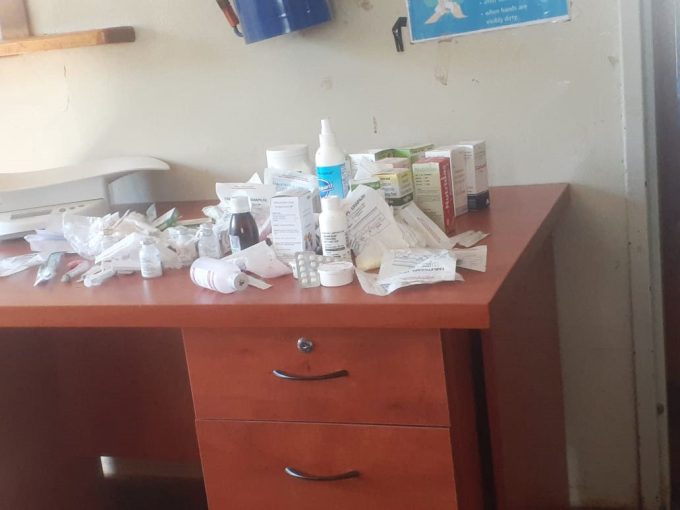
Hopefully, the Funduzi Forensic Audit Report will shed light on why and how the country’s public hospitals have suffered drug supply shortages, which have only worsened over the past five years since the advent of the Covid-19 pandemic.
In implementing whatever recommendations are contained in the Funduzi report, it is hoped that no stone will be left unturned in rooting out once and for all corruption, which has been responsible for the loss of scores, possibly hundreds, of innocent lives over the years simply because life-saving drugs were unavailable, or deliberately withheld where and when they were needed.
Any attempts to conceal the identities of guilty companies, persons etc., obfuscation of pertinent facts, or sabotage of genuine attempts to allow public scrutiny of findings in the Funduzi report, will render the government of the Kingdom of Eswatini complicit in the deaths of its own citizens, which may in turn lead to other more serious accusations against the government of the Kingdom of Eswatini.
The same applies with regard to the Cliff Hoffmeyer Decker (CHD) forensic audit report commissioned by the Central Bank of Eswatini to shed light on who were involved and how investors were misled into investing in the now-defunct Ecsponent Eswatini.
With regard to the recent untimely deaths of Eswatini citizens, suicides of two police officers, one senior and the other junior, were reported within the space of one week. With regard to one of the reported suicides, it is suspected that financial strain may have contributed to the officer taking his own life.
Which is why Minister for Public Service Mabulala Maseko’s report in Parliament regarding pending implementation of the recommendation of a salary increment for junior officers of REPS and His Majesty’s Correctional Service, was a welcome development.
Of particular interest was minister Maseko’s assurance to members of Senate that the report had been completed and would be available soon pending a few consultations. It would be a great pity if the minister for Public Service’s announcement was simply a delaying tactic, especially in view of recent reports that the junior officers of the two abovementioned security clusters had resolved to seek audience with the head of State to try to resolve the issue of the Phase II salary adjustment.
In the interests of fostering a spirit of unity within the three arms of government i.e. the Legislature, Executive and Judiciary, it will be presumed that the Public Service minister’s recent pronouncement was in response to a court order issued by Chief Justice Bheki Maphalala in November 2024 to the effect that it was crucial that the Phase II salary adjustment be implemented to ensure that national security is not compromised in any way.
If this is indeed the case, it probably has not escaped the attention of some of Eswatini’s citizens that it was only after Chief Justice Bheki Maphalala’s landmark judgement that government was prodded into moving towards the implementation of a consultant’s recommendation made more than 10 years ago.
Be that as it may, it is nonetheless a relief to note that government is responsive to a judgement made by its own Judiciary in a matter that has dragged on for an unreasonably extended period of time.
It is equally hoped that Eswatini’s judiciary will be shown the same respect by the country’s Teaching Service Commission (TSC), which was recently ordered to reinstate Swaziland National Association of Teachers (SNAT) President, Mbongwa Dlamini, to his teaching post after a protracted back and forth in which previous judgments were appealed without success and satisfactory resolution of Mbongwa’s case, the details of which we will not enter into at this time.
Suffice it to say that it is in everyone’s interests that Judge Zonke Magagula’s judgment be complied with by TSC and that the Mbongwa Dlamini versus Eswatini’s TSC case be regarded and treated as a closed chapter.
In this regard it is hoped that both parties i.e. SNAT and TSC, can smoke the proverbial peace pipe and that normalisation of relations between the two entities can take place going forward.
In truth, both cases i.e. the Phase II salary adjustment issue and, in particular, the Mbongwa Dlamini vs TSC case, represent victory for the rule of law in Eswatini. Throughout the litigation process in the Mbongwa Dlamini-TSC case, all parties ensured and stuck rigidly to principles of due process. Where there were disagreements or concerns, there was transparency in the manner Eswatini’s courts resolved contentious issues.
In addition, the disciplined manner in which teachers conducted themselves throughout court proceedings in support of their president is, indeed, commendable.
These two outcomes will certainly be reassuring to potential new investors in Eswatini whose positive assessments of a country as a safe destination for foreign direct investment (FDI) include the rule of law.
In summary, vigilance with regard to upholding the rule of law and independence of the Judiciary are critical elements in the practice of jurisprudence in Eswatini.
This is being mentioned here in view of disturbing reports from a certain foreign country that one senior official in the Department of Justice was overhead by a junior official in the same department suggesting that certain court judgments be disregarded where these judgments clashed with unconstitutional positions by an incumbent president.
If there is any credibility to these reports, then it becomes clear that not only will the rule of law be seriously compromised, but that this country may be well on its way to a state of anarchy unless there’s a serious recalibration in the understanding of the importance of the rule of law, particularly in a country that claims to be a constitutional democracy.


















Leave a comment