

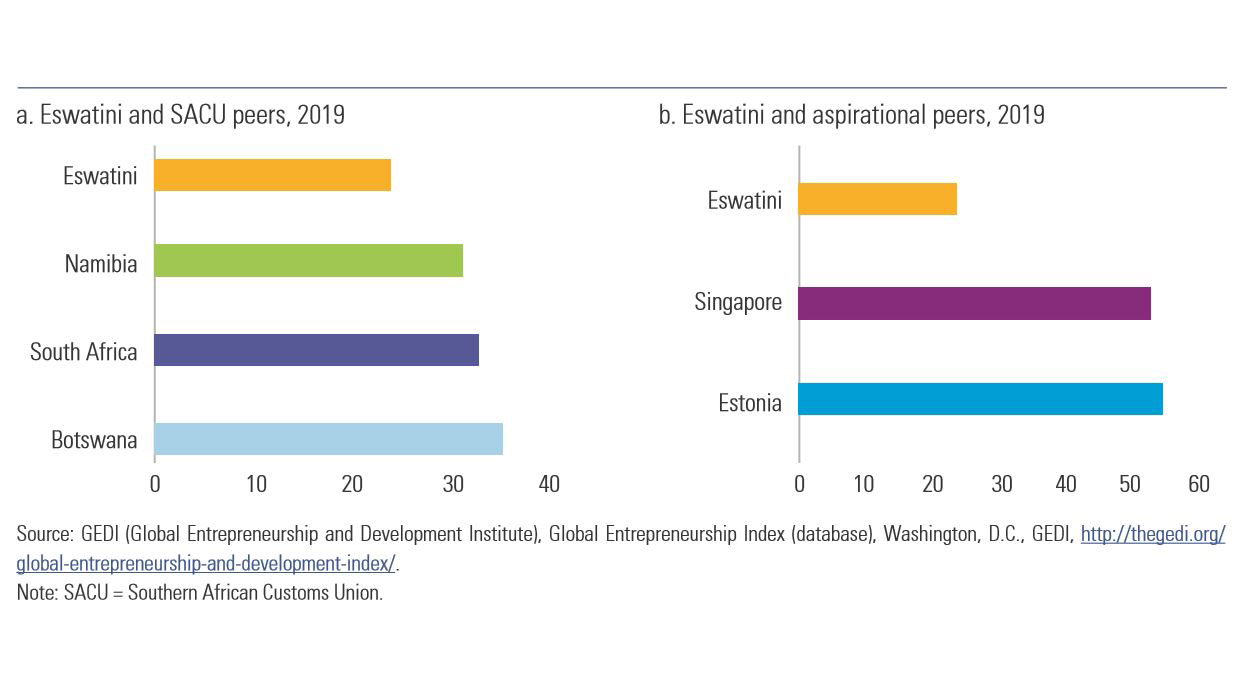
MBABANE – Eswatini needs to create a supportive local ecosystem for digital entrepreneurship by building a conducive regulatory environment, attracting financing and strengthening entrepreneurial support networks.
This is the core message from the World Bank’s 2025 Eswatini Economic Update (EEU) in relation to entrepreneurship, which warns that without a stronger foundation for innovation, the country risks missing out on the job creation and growth potential of its emerging tech sector.
The report argues that digital entrepreneurship — from app developers to fintech start-ups — could play a transformative role in economic diversification and tackling the country’s youth unemployment rate of 56 per cent. But to achieve this, Eswatini must address structural barriers, regulatory gaps and funding challenges that limit the sector’s growth.
At the top of the World Bank’s recommendations is the need for clear, supportive regulation that both protects and empowers digital entrepreneurs.
Currently, gaps in intellectual property (IP) protection discourage innovation by leaving start-ups vulnerable to imitation. Stronger IP laws would ensure that local tech innovators can safeguard their software, designs and inventions — boosting investor confidence and encouraging more people to take entrepreneurial risks.
The EEU also calls for reforms to public procurement frameworks so that start-ups can compete fairly for government contracts.
At present, eligibility criteria and contract terms often favour large, established companies, excluding small tech firms from lucrative public sector opportunities.
One solution lies in maximising the potential of the electronic government procurement (e-GP) system, tailoring it to connect start-ups and SMEs with public procurement opportunities.
The report cites India’s Government e-Marketplace (GeM) as a successful example. By reserving procurement categories and relaxing eligibility rules, GeM has helped over 23 000 start-ups secure contracts worth more than US$1.4 billion as of 2023.
“Adapting similar strategies in Eswatini could stimulate demand for locally developed digital solutions and create a predictable revenue stream for start-ups,” the report notes.
The EEU highlights the Government in Your Hand initiative as an untapped channel for engaging local innovators. If Eswatini’s public digital services were co-developed with local start-ups, it could not only ensure solutions are tailored to local needs but also inject direct business opportunities into the innovation ecosystem.
Beyond regulation, access to finance remains the single largest hurdle for high-growth tech start-ups in Eswatini. While schemes like the Youth Enterprise Revolving Fund exist, their broad focus on all small businesses means resources are stretched thin, diluting their impact on high-growth ventures.
The World Bank recommends diversifying funding sources, including:
- Angel investors – Incentivising the creation of local networks, supported by tax breaks to encourage individuals to invest in early-stage ventures.
- Crowd funding – Developing regulations to legitimise online funding platforms and enable participation from both domestic and diaspora communities.
- Corporate venture capital – Encouraging big corporations such as MTN and Coca-Cola to invest in local start-ups, providing not just capital but also mentorship and access to regional or global markets.
- Institutional investors – Revising rules to allow pension funds and other large institutional players to allocate small, risk-adjusted portions of their portfolios to local tech businesses.
A standout example comes from Rwanda’s Innovation Fund, which blends US$30 million in public capital from the Government of Rwanda and the African Development Bank with private management by Angaza Capital. It also includes a US$3 million technical assistance facility to strengthen entrepreneurial capacity.
The third pillar of a strong digital ecosystem is entrepreneurial support networks — the accelerators, incubators, co-working spaces and mentorship programmes that help start-ups survive and scale.
Full article available in our paper.




















Leave a comment