

It is said that if you fail to plan, you plan to fail.
That is probably why in the past, we have had a few national development programmes and agendas set by each administration that came to office.
Why have they all failed to meet their targets?
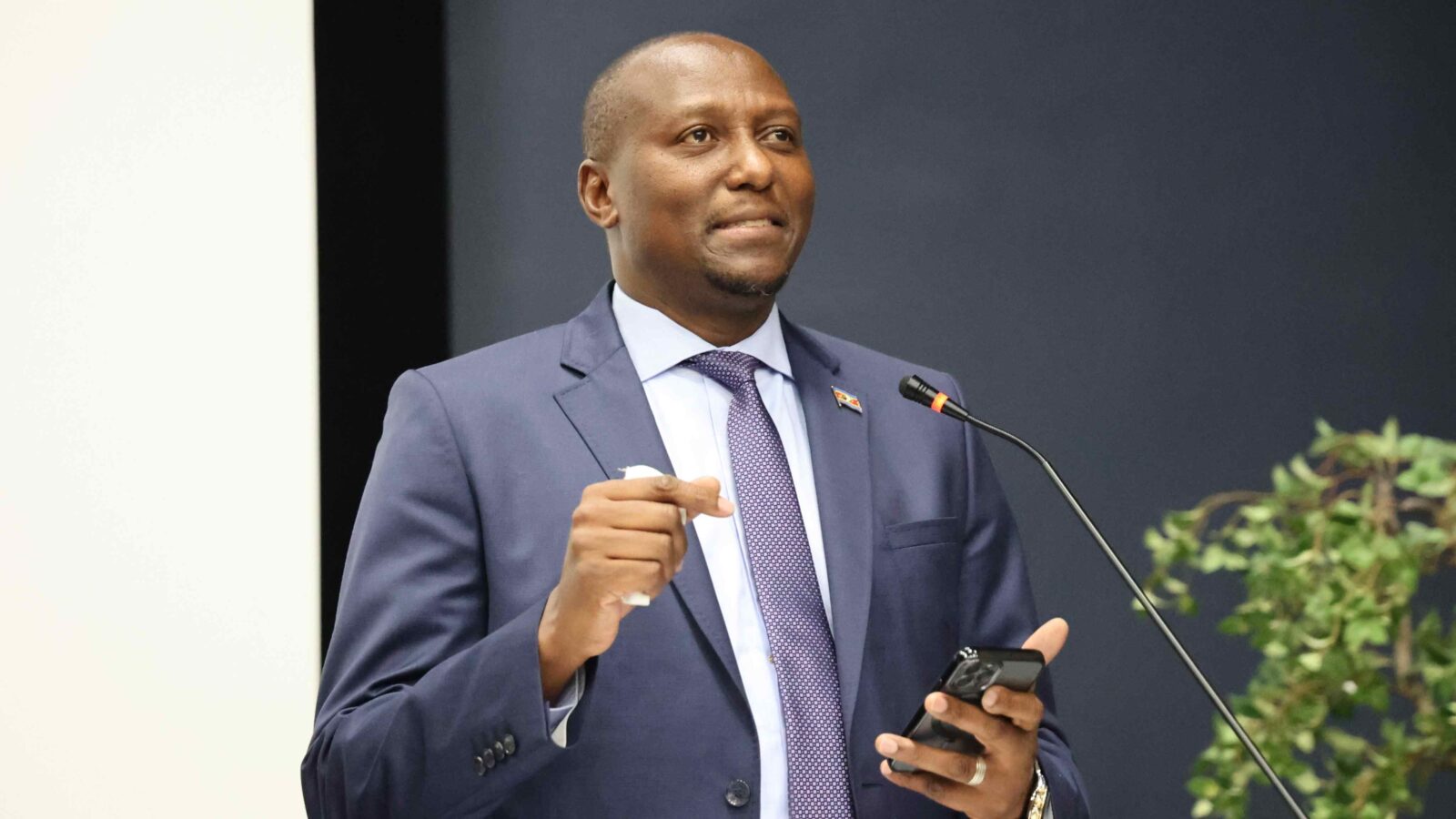
Prime Minister Russell Dlamini seems to have had this question in mind when he came up with the proposed Grand Plan.
Speaking at an opening session during an engagement with Members of Parliament (MPs) in Pigg’s Peak a fortnight ago, Dlamini said the Grand Plan was built on the successes and lessons of past development plans, while addressing their gaps to bring sustainable economic prosperity in the next 20 to 30 years.
The Grand Plan proposes a transformative 30-year agenda anchored around three pillars of economic, social and government transformation.
“Past plans laid an important foundation, with gains in areas such as agricultural productivity, basic education access and SME support, but structural issues such as weak infrastructure, health sector gaps and limited private development have persisted,” Dlamini told the gathering.
He asked a pertinent question: “Will we continue on the path that has led us here today or brave a different path altogether?”
This is the question critics have been throwing around, arguing that past plans came with all the hype but the lives of many emaSwati have not improved much.
Of course, we have to admit that there have been gains in various areas.
Programmes like the Rural Development Fund (RDF), have been quite beneficial to emaSwati who have taken advantage of them.
People have formed income-generating projects after buying trucks, buses, tractors and other equipment with money provided by government through the RDF. However, we still have high poverty levels across the country, with many emaSwati lacking basic necessities like shelter and clean water.
The PM believes it is still possible for Eswatini to reach high income status in the next two to three decades and be counted among developed countries in the world. He said to get there, we need a ‘deliberate and credible’ long-term strategy that corrals the whole of government.
If comments on various reports published by the media with regard to the Grand Plan are anything to go by, the long-term focus is not so popular.
Some commentators have said it would be better to plan for the next five years or so, as that would make it easier to measure the targets in real time.
Another argument is that in these times of rapid technological advancements, the plan could be obsolete in the next few years, let alone 30 years.
The fortunate part is that the PM has alluded to the current document of the Grand Plan being only a draft and not a final manuscript.
It is at this stage that comments around the timeframe and other nitty-gritty issues should be addressed, so that when the Grand Plan becomes final, all emaSwati, from Cabinet ministers to the ordinary man on the street, feel that they own it. Criticism, if extended constructively, should also be welcome.
We cannot dispute the fact that emaSwati are now weary of roadmaps and strategic plans aimed at mapping a way forward for the country’s socio-economic development.
The apathy is understandable because over the last two decades or so, we have had similar ambitious and colourful plans, replete with promising facts and figures, but no measurable outcomes.
In fact, some emaSwati could say the socio-economic situation has actually deteriorated, especially over the last decade.
They could cite the fact that the country’s population keeps rising, while social service delivery falters and the economic situation of individual families stagnates.
The collapse of the healthcare system, human resource and infrastructure challenges in the education sector and the rising rate of unemployment could also be cited. It is specifically these and other challenges that previous roadmaps and plans have been marketed as trying to address.
Let us remind ourselves of some of these plans.
In 1997, government of the time came up with the National Development Strategy (NDS) which was a 25-year plan for the country’s development.
It was actually this document that gave us what came to be known as Vision 2022, because it was for the 25-year period from 1997 to 2022.
The NDS aimed to improve the living standard of emaSwati and position Eswatini among the top 10 per cent of medium human developed countries.
The strategy promised to eradicate poverty, create employment opportunities, foster gender equality and protect the environment.
There was a lot of hope among emaSwati that this strategy would take the kingdom to the envisioned status.
The Millennium Action Programme (MAP), which some may have forgotten, was a time-bound action plan for government ministries. It had identified short-term targets to meet national priority targets.
After this, former Prime Minister Sibusiso Barnabas Dlamini came up with the Economic and Social Reform Agenda (ESRA).
Between 1997 and 2001, there were actually two such strategies, known as ESRA I and ESRA II. They were also time-bound and had similar objectives as the MAP. Being time-bound meant that they were expected to meet their objectives quicker than long-term plans.
In 2003, PM Barnabas released a document titled, ‘Swaziland – 35 Years of Economic and Social Development,’ which outlined government’s achievements since independence.
It was a detailed 38-page document that highlighted progress in health (with emphasis on HIV/AIDS), education, poverty alleviation and other areas.
In that document, government was candid enough to admit that there had been a downturn in the country’s economic growth and a reduction in the level of natural resources available for the provision of social services.
That said, logic dictates that any draft document is still subject to changes.
That is why the idea to take the Grand Plan to various stakeholders for discussion before it is made official is commendable.
Taking the top-down approach has not worked for strategies of a similar nature in the past because there was no ownership among stakeholders. At the end of the day, the final document should be clear on the timelines for implementation of the various objectives and targets. Implementation, might I add, is the key word.


















Leave a comment