

‘Operation Dudula’ is a sign of the times
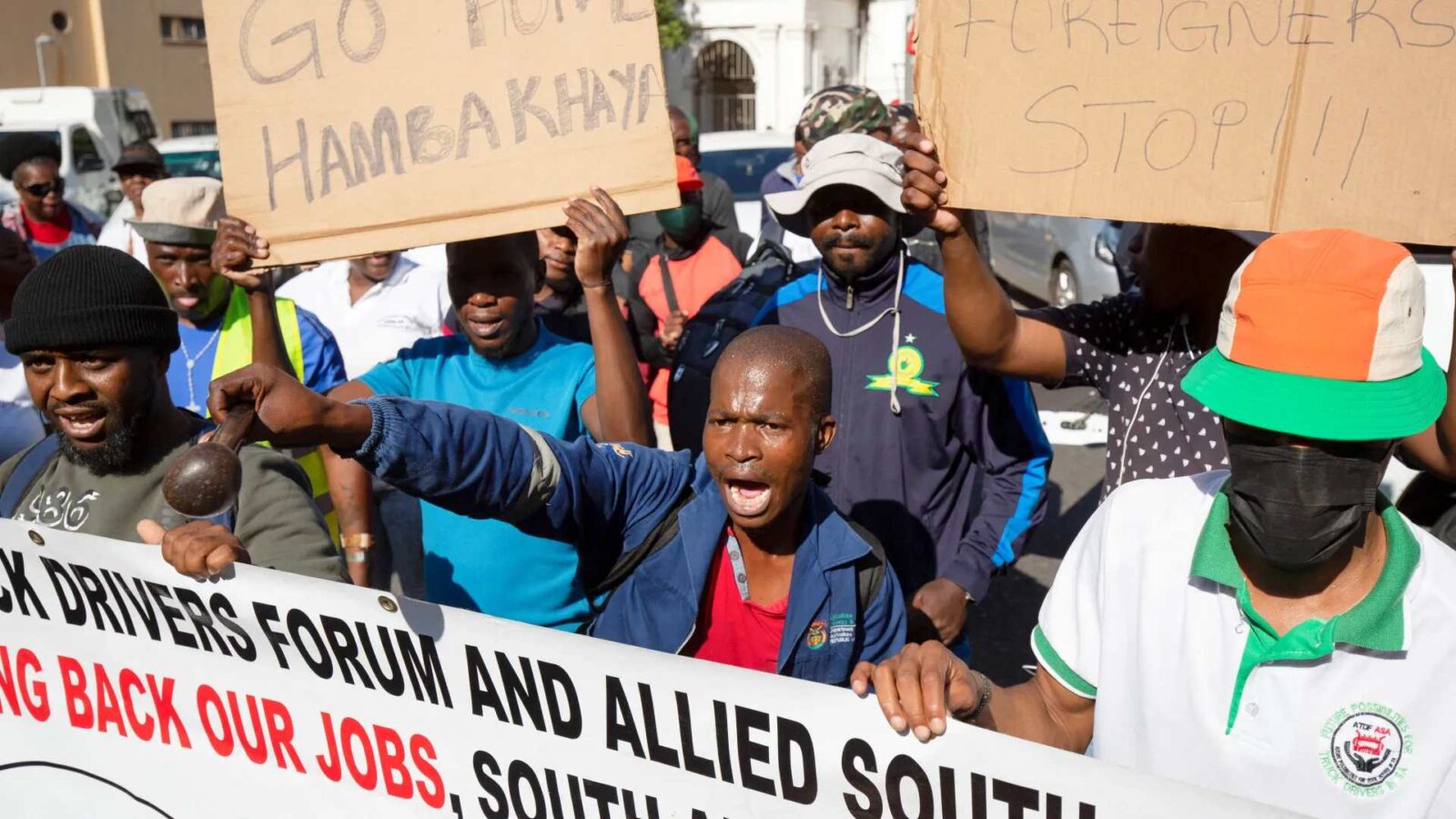
In the Times of Eswatini of August 11, 2025 (last Monday), it was reported that defiant members of the South African movement ‘Operation Dudula’ forcefully removed people from institutions like hospitals, clinics and other public service places in a move to purge these areas of people who could not produce South African Identity (IDs) documents or cards.
In other cases, non-SA ID holders were prevented from accessing these public service areas, thus preventing them from receiving medical attention and other forms of public assistance in various government- operated public facilities.
The word ‘Dudula’ in the isiZulu language means ‘to forcefully remove’. And so it was that some emaSwati residents working in South Africa found themselves caught up as victims of ‘Operation Dudula’ in South Africa despite warnings by South African President Cyril Ramaphosa, discouraging members of this radical group of activists from harassing foreigners who did not possess South African IDs.
This development, which in reality is not new in SA and is a source of some concern to a number of Eswatini’s citizens, comes at a time when anti-migrant sentiment in other countries, notably in Europe and the United States of America (USA), has sparked global concern while, at the same time, more and more countries, particularly in the West, as noted earlier, are in fact signing agreements with various third countries to repatriate immigrants to their home countries indirectly.
Let’s, however, backtrack a little with regard tos the anti-migrant sentiment in SA which seems to have escalated to a point where some concern is being expressed about ‘Operation Dudula’ having developed a new unexpected dimension.
Based on previous reports, the ‘Operation Dudula’ movement was born in 2022 as a form of protest against the employment of undocumented foreigners in SA who were seen as taking jobs away from ordinary South Africans.
Crackdown
Initially, emaSwati and other foreign truck drivers were reported to have been affected whereby trucks were forcefully stopped on major highways and these drivers were harassed and forced to flee into the bushes, abandoning their trucks.
Other targeted groups included foreign nationals like Somalis, Ethiopians and others who owned Spaza Shops in some South African townships.
Spaza Shops are small retail outlets that sell everyday household and other items like bread, toilet paper, soap, sweets, etc.
In a crackdown following the deaths of several children in 2024, who reportedly bought and consumed food items sold at some Spaza Shops in Johannesburg, authorities temporarily shut down these outlets, some of which were subsequently determined to have sold food items tainted with poisonous chemicals which may have led to the untimely deaths of those children.
After a ranging registration blitz of these Spaza Shops by government officials whereby new health protocols were instituted, many of these informal business outlets were allowed to resume operations.
For about a year or two since the beginning of ‘Operation Dudula’ protests, there was a lull in activism by SA’s youth to express disapproval of employment of undocumented foreign nationals on the one hand, and the mushrooming of small mostly foreign-owned and unlicensed businesses, on the other, a development many unemployed South Africans saw as a threat to their ability and prospects of owning their own small businesses.
South Africa’s slow economic recovery after the COVID-19 pandemic did not inspire much confidence among the unemployed that jobs would become available anytime soon. A relatively slow but palpable sense of desperation set in whereby competition for jobs reached unprecedented levels.
It is this sense of desperation which has precipitated a survival of the fittest ethos among South Africa’s unemployed youth. This is mentioned to emphasise the fact that emaSwati were probably collateral damage in the expression of frustration by SA’s youth regarding widespread unemployment in that country, meaning that it is highly unlikely that emaSwati were specifically targeted for harassment.
After all, relations between emaSwati and South Africans, at both formal and informal levels, have always been cordial. This is unlikely to change anytime soon. In fact, relations between the Kingdom of Eswatini and South Africa, on the one hand, and the Kingdom of Eswatini and Mozambique, on the other, have been consolidated in recent times.
This is the result of the daughter of former South African President, Jacob Zuma, Nomcebo Zuma, marrying King Mswati III, and Princess Sibahle recently being betrothed to Mozambican businessman, Yassin Monteiro Nunes.
Worth also keeping in mind is the fact that relations between Eswatini and the Zulu Kingdom in KwaZulu-Natal were cemented during the reigns of King Sobhuza II and King Zwelithini KaBhekulu, respectively, both of whom are deceased.
The marriage of Queen Nozizwe Mulela to King Misuzulu KaZwelithini, the son of King
Zwelithini KaBhekulu and Princess Mantfombi, daughter of King Sobhuza II, further resuscitated and strengthened the Zulu, emaSwati alliance.
As it is, a powerful alliance by marriage exists between Eswatini and KwaZulu, Eswatini and South Africa, and the Kingdom of Eswatini and Mozambique, as alluded to earlier.
Be that as it may, what should probably concern many citizens of Eswatini is not knowing when Eswatini’s youth will reach breaking point regarding high youth unemployment in the country and what the fallout, if any, will be of ‘Operation Dudula’ as far as Eswatini is concerned. More pertinently, what will our young people do if, and when, they reach breaking point?
This is not to suggest that no efforts are being made to create jobs in Eswatini. The problem is simply that jobs are not being created fast enough. The problem is further complicated by a greater use of artificial intelligence (AI) and redesigning of work processes by a number of companies.
To circumvent the possibility of future activism where the eruption of violence cannot be discounted, bold leadership is called for. In this regard, one bank manager recently suggested that at some point, government will have to consider providing stipends to unemployed persons, because sustainability in business is largely dependent on consumer spending, which acts not only as a part of an economic stimulus package but also keeps businesses in business, so to speak.
In the meantime, two ministries i.e. the Ministry of Home Affairs, and the Ministry of Foreign Affairs
and International Cooperation, are key in playing pivotal roles in not only mitigating unemployment, but also in helping to build technical capacity in certain ministries such as the Ministry of Health.
For example, Foreign Affairs Minister Pholile Shakantu was reported to have been critical of some emaSwati who sought asylum in Ireland, citing political persecution and instability in the Kingdom of Eswatini. No comment will be made regarding these claims.
It is, however, important to note that, as is the case in South Africa, unemployment has forced many emaSwati into committing acts of desperation like crime, showing up unannounced in foreign countries in the hope of securing jobs, etc.
All such acts under the current climate of economic uncertainty, which is a global phenomenon, call for empathy and compassion instead of criticism. Some people simply are greater risk takers than others. In addition, there have been a number of reports in several foreign media of entire families from some African countries risking their lives by crossing shark-infested oceans and channels in search of better lives.
Many citizens of Eswatini are no different from those people who arrived on foreign shores in search of better lives in rickety boats and were accepted by governments in the host countries. These people were ultimately able to find jobs and build new lives for themselves.
While Minister Shakantu’s concerns about the danger of unauthorised international travel which could expose emaSwati to dangers such as exploitation by human trafficking rings etc., are acknowledged, the truth of the matter is that citizens of Eswatini are constrained in their ability to acquire legal documentation to travel to other countries in search of jobs which their own country is unable to provide.
Another factor to consider is that as the world changes, new states of the human condition become evident, where a new lexicon is developed to describe the new human state. In this regard, while we have had political refugees for decades, we now have what we may call ‘economic refugees’.
We may describe ‘economic refugees’ as those who flee their home countries as a result of economic hardship. In truth, many emaSwati are suffering economic hardship, a state which is not unique to Eswatini. Therefore, citizens must not be deprived of the opportunity to seek relief from economic hardship elsewhere.
In this regard, the reality is that there are jobs available in a number of industries in several countries around the world, including the United States of America, which has reportedly found itself short of workers in the agriculture, hospitality and other industries after mass deportations of migrant labourers.
The truth is that migrant labourers performed tasks that American citizens did not want.
It is in this regard that the minister could use her position to engage with American authorities by negotiating a labour exchange deal which would work as follows:
Farmers, hotel operators, airports and other such industries would engage Eswatini workers.
In exchange, the US would send American workers, paid for by the American Government, particularly in the health sector, where many highly qualified nurses and other health professionals are out of jobs because of cuts in several health programmes in the US.
These Americans currently unemployed health professionals, particularly in administration, would play a critical role in the resuscitation of Eswatini’s public health sector, which totters dangerously on the precipice of total collapse.
In truth, the Kingdom of Eswatini is left with little choice in view of past ineffective interventions by health authorities, Parliament and Cabinet members whose endless debates have not provided any lasting solutions to the health services crisis in Eswatini, as noted by others.
Also, failure by the World Health Organisation (WHO) to assist in shoring up Eswatini’s public health system, has fuelled speculation that cuts in this organisation’s funding by the US, has contributed significantly to WHO’s lack of capacity in assisting the Ministry of Health improve healthcare delivery in Eswatini.
If shoring up weak health systems was never part of WHO’s mandate, then this organisation’s mandate was fatally flawed from the beginning. Enough said.
With regards to labourers to be exported to foreign countries, Eswatini embassies must be equipped to cater for the needs of emaSwati in those foreign climes.
Minister Lindiwe Dlamini must be encouraged to relax the rules pertaining to Eswatini citizens wishing to seek employment independently in foreign countries, such as requiring aspiring job seekers to produce bank statements before being issued with international passports.
All these proposals are in the interests of emphasising to Eswatini authorities the need to seriously address the unemployment gunpowder keg and that there are practical interventions which can be applied.
As alluded to earlier, the above mentioned initiatives, with all due respect, call for bold leadership from an executive which has not been known for capitalising on opportunities which suddenly presented themselves, to say the least. And the labour exchange initiative is one opportunity not to be missed by the Kingdom of Eswatini. We need to act fast in this regard.


















Leave a comment