

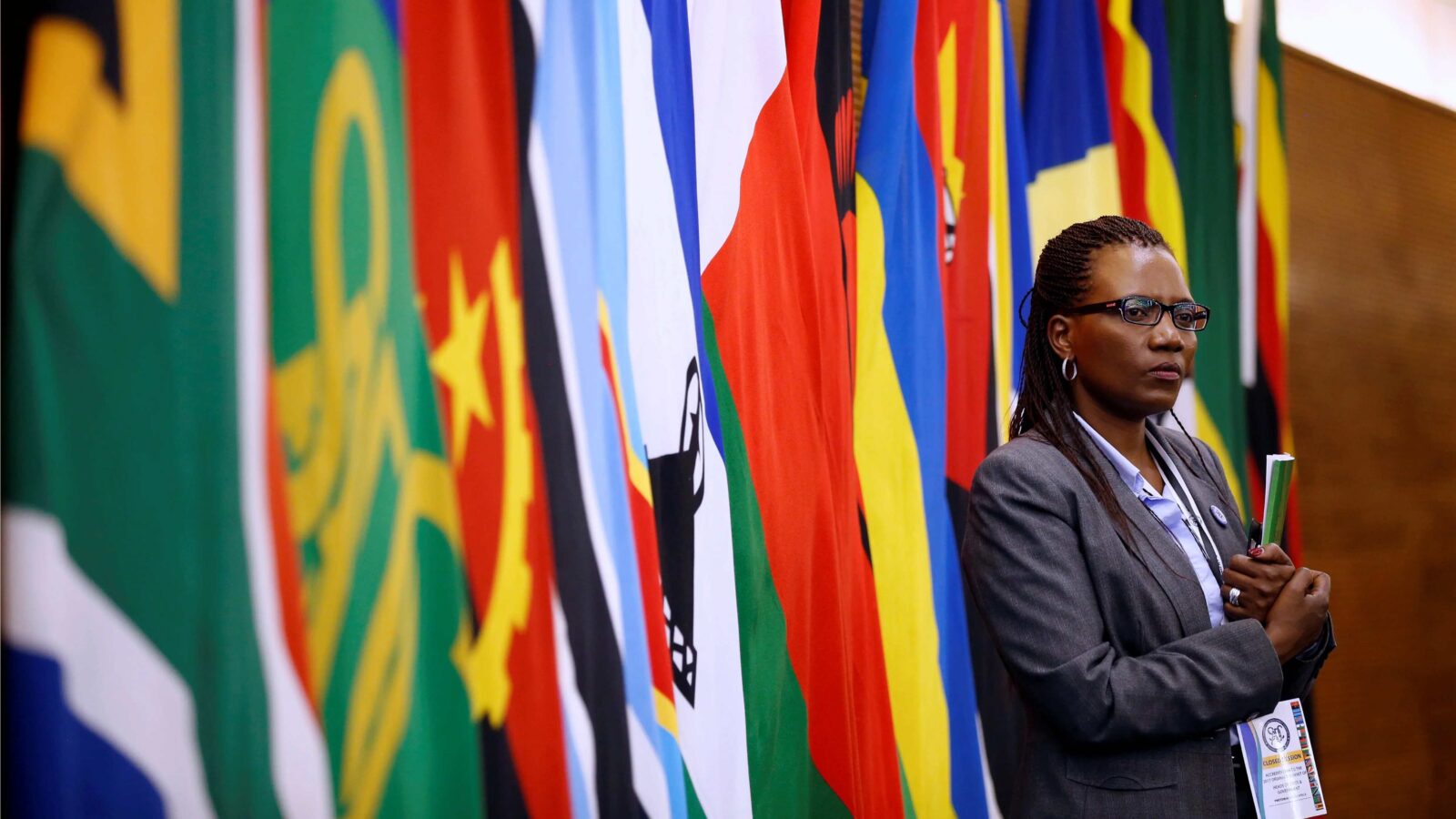
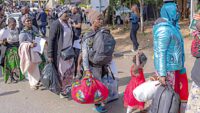
Last week, we reflected on the historic announcement made by the presidents of Namibia, Botswana and Zambia, who boldly declared the removal of border restrictions between their countries. Citizens of these three nations can now move freely using only their national identity cards.
This was not the product of years of endless debates in Parliament, bipartisan consultations or expensive referendums. Instead, it was the decision of three leaders who demonstrated the political will and resolve to act decisively.
The world is entering a new phase of geopolitical alignment. If Africa is to survive and thrive, unity is no longer optional; it is a necessity. It is about populations and domestic and international markets, not just land. Southern Africa has both land and a young population.
Regional interaction as the key
The Southern African Development Community (SADC) has long acknowledged the importance of integration. The Regional Indicative Strategic Development Plan (RISDP) 2020–2030, adopted in Gaborone in 2020, reflects the region’s intellectual capacity. It is a thoughtfully developed document; however, there is a noticeable overly academic tone. It is shaped by economists trained in Western neoliberal frameworks, that have historically failed Africa. It does not feature a strong radical de-colonisation programme.
Peace, security and governance
SADC’s track record in ensuring peace and good governance has been mixed at best. Election-related conflicts erupt with disturbing regularity across the region. Too often, these conflicts are treated as temporary crises, rather than symptoms of a deeper malaise, rooted in colonial mental slave indoctrination.
Ecclesiastes 10:16 states: “Woe to you, O land, when your king is a child or a slave …”. When a slave has power, they still think like a slave. We went through the era of liberators ( Mabuto, Banda, Mugabe, Gaddafi, etc) who became just like the oppressors, living in palaces as dictators. Nothing is worse than a powerful former slave because their mentality destroys the people and progress. They secretly still fear and admire their oppressors. This is the problem of BDP, FRELIMO, SADC and the ANC, to mention a few. Radical change in mindset is required, even the death of a whole generation. God allowed all the slaves who left Egypt to die before getting into the Promised Land.
One of such is the Berlin Conference of 1884 -1885, which carved up Africa into artificial territories, forcing Africans into the wrong States; dividing families and tribes, but we keep that going because we fear change and it benefits a few.
Today’s multiparty systems, imported wholesale from the West, often deepen these divisions rather than heal them. In theory, multi-party democracy is about representation; in practice, it is divisive and has become a system of financial control politics. Campaigns are expensive and foreign sponsors buy political parties. Politicians, in turn, buy votes.
Meanwhile, the voting citizens are left wondering why they remain in poverty. Every election is a war because government is the only source of income, as there are no industries. The few industries present demand all the tenders because they paid the for political parties’ campaigns.
Africa had its traditional forms of governance before colonialism.
Disputes were resolved through consensus led by traditional leaders, ensuring no group was excluded. Instead of blindly copying Western winner-takes-all political structures, we must ask whether current systems truly build unity or whether they fuel fragmentation and conflict. China is now a superpower because it chose what worked for it.
The vision of Azania
Now, let us imagine an even bolder move: If SADC leaders announced tomorrow that the region with its 340 million Bantu population would be renamed Azania. Azania is not just a poetic term; it is a name with deep historical resonance. Ancient Greek and Roman sources referred to parts of South East Africa as Azania. Arab traders referred to Azania.
In modern times, liberation movements adopted the name as a symbol of resistance against colonialism and apartheid.
The Pan Africanist Congress (PAC), for instance, envisioned South Africa as Azania. Even today, political movements such as the Azanian People’s Organisation (AZAPO) keep the name alive. As a Hebrew name, it means ‘God has heard’ or ‘God is listening’, which would be welcomed by the vast Bantu Christian population. Our true name, Bantu, has been derogated to that of slaves or oppressed people, so it cannot help us mentally.
The unity project requires identity
Renaming the region Azania would provide a unifying identity; one rooted in the positive trading history of Africa, rather than colonial impositions. It would signal a decisive mental break from colonial borders and names and it would give people of the region a shared identity as Azanians.
Integration is also about psychology. Many Africans have yet to unlearn the divisions drilled into them by colonial powers. The myth of the ‘better’ house slave versus the ‘field’ slave was a tool of control and its legacy endures in the way some countries look down on their neighbours. Some Azanians think they are better than others, but all are still slaves. Mozambique, yet underdeveloped now, would soon supply natural gas and power to all Azania. Angola, with vast oil reserves that could supply Azania, Zimbabwe, becomes the food basket again, with steel and gold. Why then would these Azanians want to leave their State? The region, including the Democratic Republic of Congo (DRC), the richest in minerals, has abundant resources, enough to ensure prosperity beyond imagination for Congolese and the rest of Azania, if harnessed collectively by all Azanian states.
The DRC conflict is a product of the divisive Berlin Conference and Western greed that fuels it. Critics have the misplaced fear that integration will lead to mass migration to South Africa. In a truly integrated and industrialised southern Africa, people would prefer to live and work in their territories, travelling only for trade, education or leisure. Once all the countries within the Azania Federation are economically free (from colonial Economic oppression) and prosperous, then free movement will not mean forced economic migration. It means two-way choice and opportunity migration throughout the Azanian Federation, just as an American would move within the United States.
Conclusion
The bold step taken by Namibia, Botswana and Zambia should not be underestimated.
If SADC can move from endless strategies on paper to decisive actions in reality, the dream of a united southern Africa- Azania, can be realised. It would be the richest federation (bigger in land mass than Russia or the USA) with a shared identity, free movement, equitable development and governance systems that reflect African traditions rather than imported models. The time for hesitation has passed. Southern Africa must seize its unity now or risk being permanently sidelined in a rapidly integrating global order.
Comment septembereswatini@gmail.com














Leave a comment