

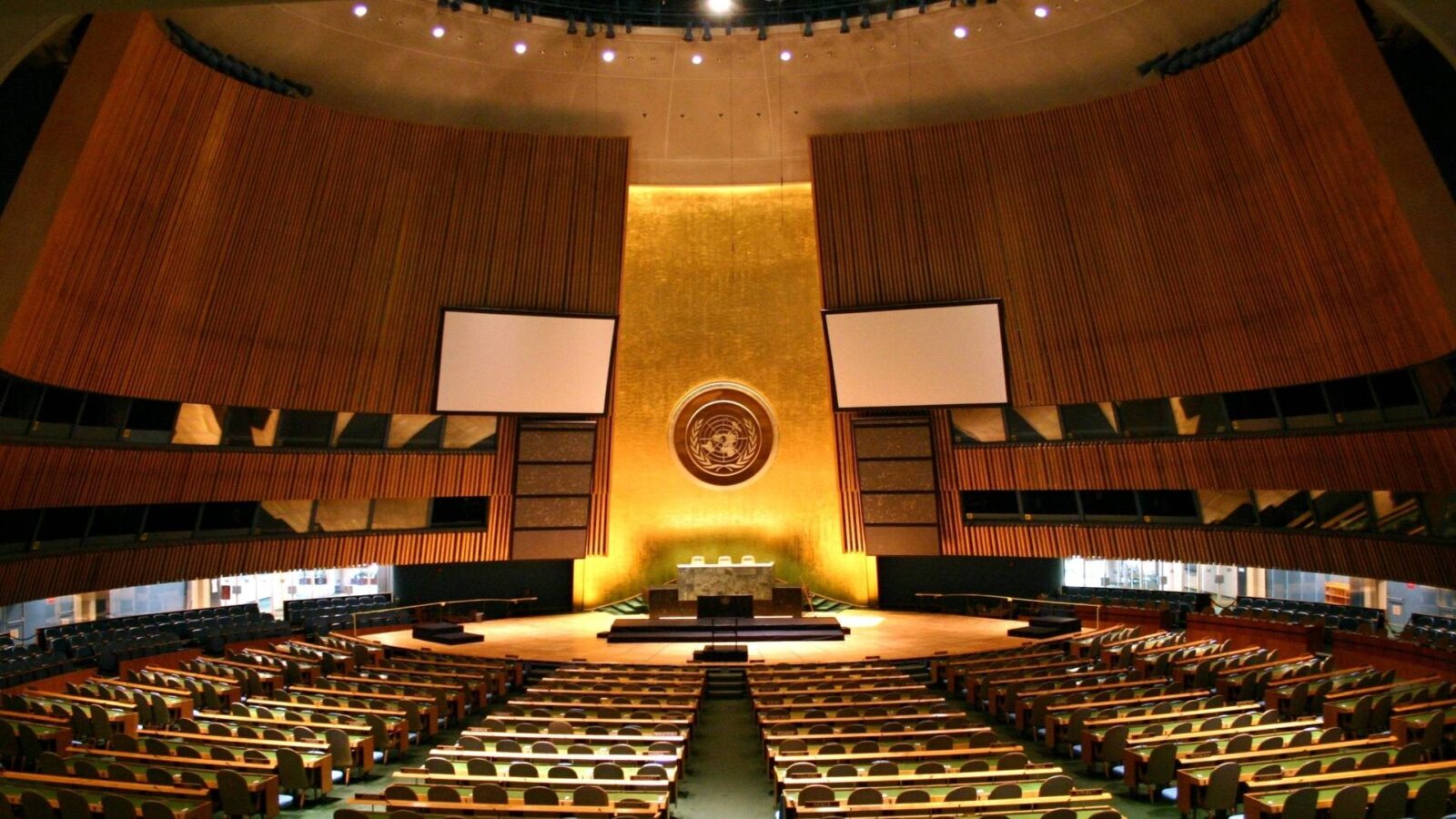
All roads lead to New York next week for the 80th session of the United Nations General Assembly (UNGA), whose outcomes could either shape the world for the better or worse; or simply maintain the status quo.
Undoubtedly, the agenda will be dominated by war, economic instability and stalled development. The outcomes of these issues will be crucial for middle-income southern African nations, like Eswatini and Lesotho, that desperately need global peace to shift their focus back to socio-economic development support issues.
For that to happen, though, there would need to be a binding resolution on the Israel-Palestine and Ukraine wars – now in their second and fourth years, respectively.
There would also need to be a lifting of the US tariffs announced by President Trump in January, aimed at protecting his country’s industries, but threatening export-dependent economies like ours and neighbouring countries.
South Africa faces a 30 per cent rate, the highest in sub-Saharan Africa; risking up to 100 000 jobs in agriculture and the automotive sector and billions in lost export revenue. Some of these workers are our fellow citizens who face the prospect of returning home to a saturated job market.
Lesotho, initially threatened with 50 per cent, saw its rate reduced to 15 per cent in August, yet the garment industry, which employed around 30 000 workers and accounted for 15 per cent of GDP, has already suffered factory closures and an estimated 12 000 job losses; prompting the government to declare an economic disaster. Reports suggest that some emaSwati are also among those affected.
Eswatini has been given a slightly lower tariff at 10 per cent, which is retained under the African Growth and Opportunity Act (AGOA). It offers relative advantages over our neighbours, potentially boosting competitiveness in textiles, sugar and processed food exports to the US market.
The country could use this slight advantage to capture redirected trade flows and sustain AGOA benefits, but one is yet to see the urgency on the ground.
The International Monetary Fund (IMF) Managing Director, Kristalina Georgieva, has cautioned that these trade shifts risk strangling growth in nations already battered by external shocks. That is true, particularly because the uncertainty of these global conflicts has seen developed countries redirect their resources towards defence. Global military expenditure hit a record US$2.7 trillion (about E46.8 trillion) in 2024 – a nine per cent increase from the previous year, driven by wars in Ukraine and Gaza.
This has coincided with sharp cuts to foreign aid, which is projected to fall 18-26 per cent in 2025, equating to US$40-60 billion (E696-1 044 billion) annually less for development and humanitarian needs, according to UN reports.
Compounding the gloom, the continent continues to receive fewer promises. For instance, earlier this year at the Fourth International Conference on Financing for Development (FfD4) in Spain, US$500 billion (E8.67 trillion) annually was pledged for developing nations, yet only 20 per cent has materialised.
These are some of the funds that southern African nations desperately need to bridge the development divide between third and first world economies. Given the collective predicament, it remains to be seen if southern Africa will speak in one voice at this year’s UNGA or if they will even be entertained.
However, it’s important to acknowledge that the collective voices from the continent have yet to yield the intended impact. For several years now, the African continent, under the auspices of the African Union (AU), has been pushing for the adoption of the Ezulwini Declaration, from 20 years ago.
This is a call by African countries to have a permanent seat with veto powers in the UN Security Council (UNSC), the ultimate decision-making body on matters of global security. At best, the Ezulwini Declaration established a single and unanimous African position on this issue.
However, the demand for veto power for new permanent members has been a major obstacle, with the existing permanent member countries – the USA, Russia, China, the United Kingdom and France – reluctant to share this power. Consequently, the global deadlock has stalled the UNSC reform process for decades. These chambers decide the fate of African conflicts and global wars.
So, as the UN celebrates its 80th anniversary, the fanfare may be dampened by major powers focusing on their rivalries. For the smaller nations like Eswatini and Lesotho, the celebrations may be muted, until and unless global stability becomes an economic necessity to enable investment, job creation and meaningful progress on the SDGs.
Eswatini, guided by its foreign policy of ‘being a friend to all, an enemy of none’, should not despair, but continue advocating for diplomacy as a path to the desired stability. Lesotho and all our southern African nations have no option but to do likewise.













Leave a comment