

As we ponder ideas and apply our minds to the question of how best we can promote the unity of the southern African States, through SADC, we need to examine the system we have chosen to use to represent the will of the people; which is multiparty democracy. We need to go even further and ask even the difficult questions, like whether people are capable of making sound decisions. Many still believe the Western-style multiparty democracy is the hope for Africa. I disagree. The reality is that the political party system, taken wholesale to represent the will of the people (what democracy stands for), has failed dismally.
The fall below 50 per cent of the African National Congress (ANC) and the manipulation of the South African economy by white monopoly capital – through breaking down the ANC, using energy manipulation (load shedding), financial control (control of banks, including the Reserve Bank), the control of mineral wealth and finally the control of the narrative through the white controlled media – is not a mistake.
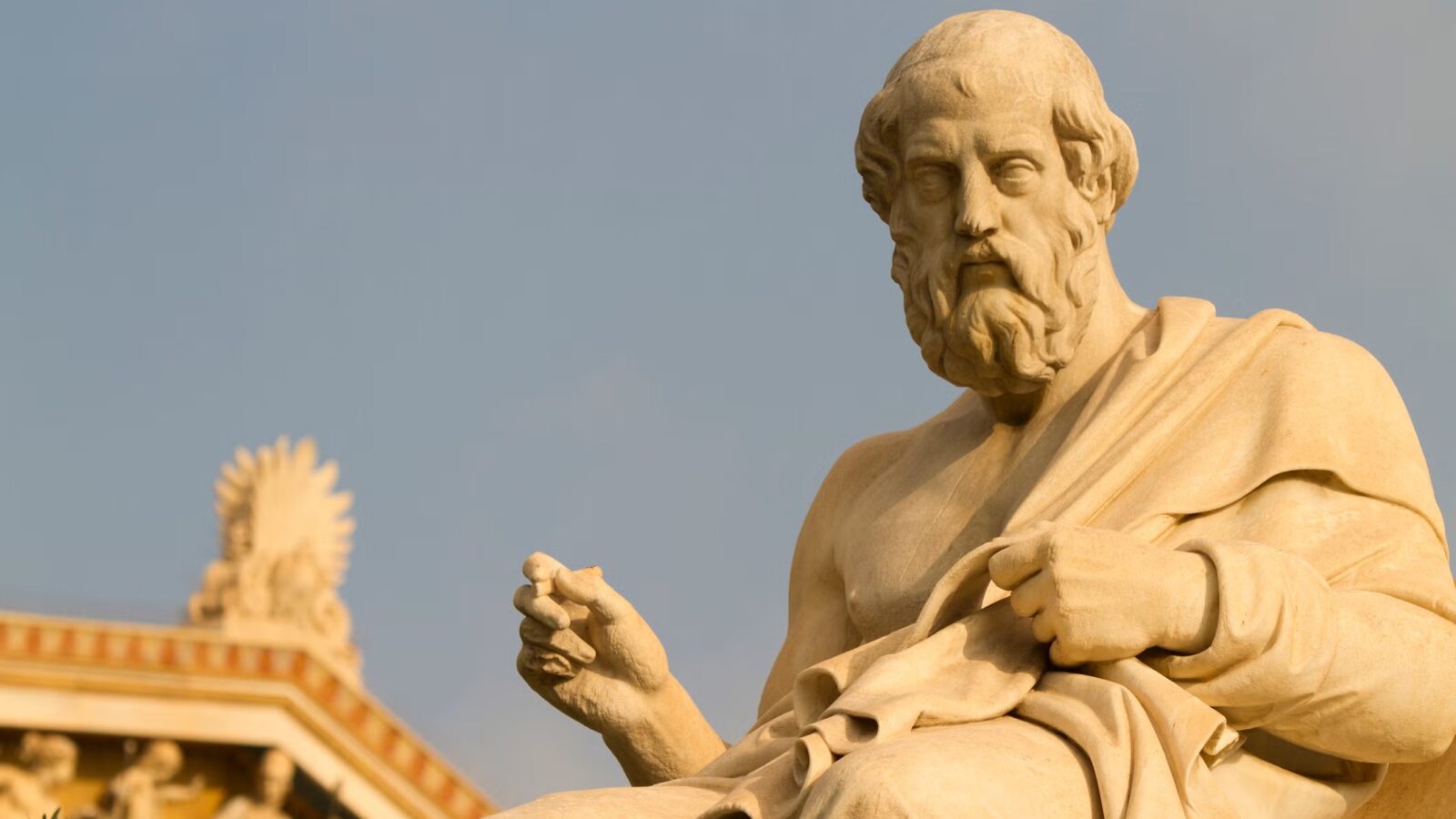
Plato, the father of Western philosophy
To truly understand democracy or the power of the people, we need to talk to Plato, who was the father of Western philosophy. Plato asked, ‘what if choice is what they used to keep the masses in line without needing chains?’ This is a man who lived through the demise of democracy in Athens. The masses murdered his teacher, Socrates, a man of wisdom, logic and a philosopher, because of the manipulation of the masses by a few. They have used us, the masses, to kill our leaders. Today, people think they have a choice – the right to vote, they think their vote counts, but what if the vote was never theirs?
What if the greatest illusion of control was letting them pick between two or three options someone else designed and controlled? People think democracy protects them, but in reality, democracy protects the system that funds it. Democracy plays on popularity and charisma, not truth. The masses live on feelings, perceptions and trends, not truth. The crowd does not know the truth, but needs comfort, reassurance and sugar-coated lies encased in national slogans and pride.
Through political parties, we elect performers, influencers, men and women who sell us what we already believe; and what we want to hear. In the age of social media, the crowd does not think, but it reacts to stimuli. You write a protest on social media and you feel good. I told them. True freedom dies when the masses are manipulated into decisions not of their own making, good people are destroyed by the media and the unwise are lifted into positions of power because they can be controlled. Plato did not trust democracy, as he called it a performance or a seductive lie. He saw the collapse of Athens and what happens when a nation trades wisdom for popularity, truth for entertainment, self-restraint for emotional chaos.
Mistaking freedom for wisdom
There is this assumption that all the freedoms and rights the people of southern Africa have over the last 50 years will automatically translate to wisdom. Former President Jacob Zuma once said the problem with South Africa is that it was so very oppressed that when it got its independence, it gave too much freedom.
The laws protected the criminals more than they protected the citizens. Democracy gives an illusion of too much choice. Plato made an example of democracy as a ship at sea, where each sailor can be captain regardless of his training.
Political parties are like those sailors all fighting to be the captain. A man woke up and decided that he would form a political party to lead the country. There is no real qualification needed, but charisma, money and the ability to convince the masses. The captain of the ship with the training in navigation. Knowledge of the sea is pushed aside, as every sailor convinces the other sailors to give him a chance, until they realise that he has failed and another takes over. This goes on until they are shipwrecked.
The Academy of Azanian Guardians (AAG)
If the United SADC, or what I call the Federation of Azanian States, is to be more than rhetorical, it requires institutions that operationalise Plato’s vision of organised political leadership, while binding it to African democratic values, tradition and anti-colonial solidarity.
1. The Academy of Azanian Guardians (AAG) or SADC Youth Guardians: A regional, State-funded academy that recruits youths through a broad-based merit pipeline combining local nominations, competitive examinations and performance in civic-service rotations.
The academy emphasises multi-disciplinary training: philosophy, systems-thinking, public finance, industrial engineering, climate and energy systems, conflict mediation and constitutional law. It is explicitly pan-Azanian; quotas and affirmative measures ensure proportional representation of tribes, clans and regions so the leadership pool reflects the demographic and cultural mosaic of Azania.
2. Early Identification + lifelong training: Plato insisted leadership formation must begin early. The AAG uses standardised cognitive and ethical assessments to identify aptitude for governance, but also invests heavily in civic apprenticeship, local dispute-resolution internships, rotations in technical ministries and exchanges across the federation. Training is continuous: Candidacies for federal leadership positions require 20+ years of a sustained record in public service, problem-solving in complex projects (e.g., regional energy, transport corridors) and completion of formal performance reviews by independent panels comprised of academics, local elders and professional associations. This resists the shortcut of charismatic populism. The Tinkhundla system’s emphasis on local knowledge and China’s focus on early cadre training are referenced as precedents; but Azania’s academy remains distinct by combining civic values, traditional authority and modern public administration.
3. Institutional safeguards and checks: To avoid Platonic elitism turning into oligarchy, Azania must build in safeguards: Strict term limits for federal philosopher-leaders, independent auditing of performance, mandatory rotation of portfolios, public transparency of decision rationales and an empowered Constitutional Court that can check executive excesses. A Citizen Review Council, randomly selected citizens from across Azania serving fixed short terms, can vet major policy platforms once every Presidential term – ensuring a direct, non-electoral accountability layer. These checks are crucial to ensure the philosopher-king model is accountable, reversible and democratically anchored.
4. Integration of traditional authorities: Traditional kings will not be displaced; the Federation codifies their role in a federal chamber of traditional authorities, an institutionalised forum for cultural law land rights adjudication and local social policy. This preserves continuity, honours customary legitimacy and prevents the old vacuum of legitimacy, that historically produced new authoritarian kings.
The result is a layered sovereignty: Local customary governance handles community life, while the Academy-trained guardians steward federal strategy, the common political and economic interest.
Comments: septembereswatini@gmail.com


















Leave a comment