

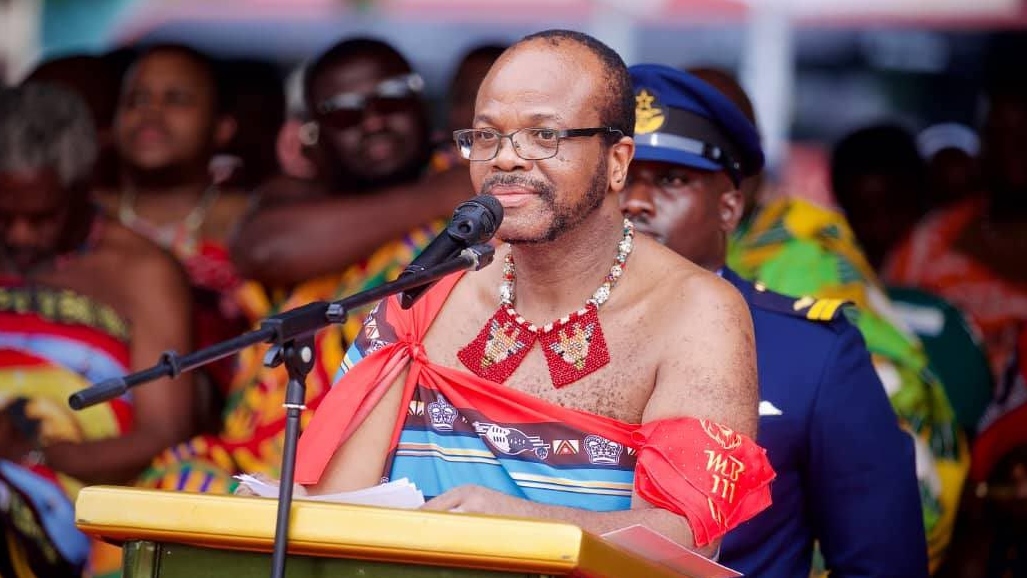
Addressing the 80th Session of the United Nations General Assembly this past week, His Majesty King Mswati III said millions of lives had already been lost to COVID-19 and the world cannot afford to lose any more to conflicts.
He made several other valid points, which should get world leaders thinking, especially about his perceptive approach to finding solutions.
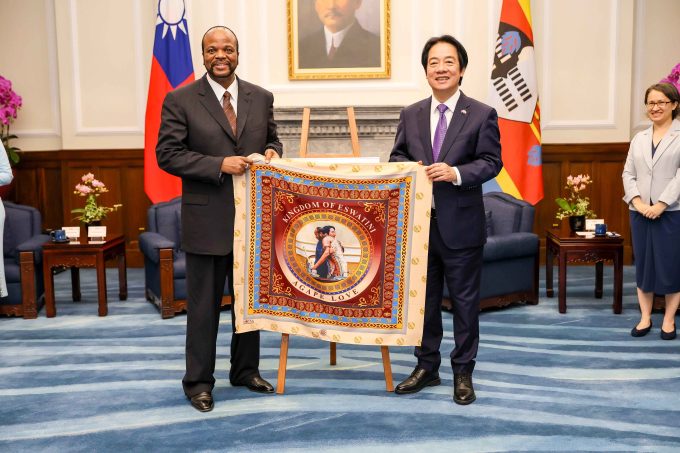
I was particularly drawn to the King’s reference to the Sustainable Development Goals (SDGs). He mentioned them while addressing the issue of the Republic of China (Taiwan).
His Majesty said the UN General Assembly 2758, adopted in 1971, did not address the issue of Taiwan’s representation in the United Nations.
He said this resolution did not preclude the Asian country’s participation in the UN system.
“The United Nations must seek suitable ways of including Taiwan, so that she can better contribute to realising the UN Sustainable Development Goals. In that way, this will fulfil the UN mandate to ensure that no country is left behind,” said the King.
The reader will recall that the 2030 Agenda for Sustainable Development, adopted by all UN members in the year 2015, created 17 SDGs whose aim was to achieve ‘peace and prosperity for people and the planet, while tackling climate change and working to preserve oceans and forests.’
Some of the 17 SDGs are on poverty, gender equality, decent work and economic growth, good health and well-being, as well as quality education.
Nations periodically submit reports on their progressing on the path to achieving these goals.
At this year’s conference, Eswatini actually reported notable progress on several of these goals.
In his speech at the UN, His Majesty the King highlighted advancements in pursuit of Agenda 2030, particularly in the economic sector, health, education and gender equality.
He said through the ‘nkwe’ (speed) call for urgency in sustainable development, Eswatini had improved literacy rates and empowered citizens through targeted programmes.
Even though the King did not mention the programmes in question, every liSwati is aware of the Regional Development Fund (RDF) whose main objective is to alleviate or eradicate poverty in all the four administrative regions of the kingdom.
This is done though infrastructure development, improvements and service delivery. It has also empowered hundreds of emaSwati economically by financing viable commercial projects that create jobs and sustain numerous Swati families at grassroots level.
The RDF funds medium to large scale income generating projects.
We also have the Inhlanyelo Fund, Small Scale Enterprise Loan Guarantee Scheme and the Eswatini Finance Development Corporation (FINCORP), among other poverty alleviation initiatives. The kingdom is definitely on the right track, with visible political will to ensure that we make great strides in pursuit of the noble SDGs.
However, our priorities in budgeting for national initiatives seem to be off-centre, so to speak.
I have noticed that each time Cabinet ministers are asked about glitches or delays in service delivery, they cite budget constraints as the reason.
On Friday, September 19, 2025, the Times of Eswatini reported that 28 new schools that were constructed in the last five years have not been allocated permanent teachers.
Our sister newspaper quoted Minister for Public Service Mabulala Maseko who was responding to a motion moved by Mayiwane Member of Parliament (MP) Sicelo Dlamini.
The motion, seconded by Mbabane East MP Welcome Dlamini, had called on the minister to explain why contract teachers who should be paid on salary grade C3 were being paid on the lower B2 scale. The legislators said this anomaly was causing stress for teachers.
In his response, the minister said the employment of teachers on contract basis was not there in the past. He said this phenomenon was relatively new, as it had only come with the introduction of Free Primary Education (FPE).
Maseko said this programme came with a ‘sudden’ increased demand for the employment of more teachers to meet school enrolments.
He reminded MPs that the Ministry of Education and Training introduced FPE in 2009, in line with Section 29 of the National Constitution, which states that every liSwati child shall have the right to free primary education.
The minister gave a long song and dance on the issue of contract teachers, but he obviously erred when he said the employment of teachers on contract basis only came with FPE.
EmaSwati will know that such temporary engagement of teachers was already in place, long before 2009.
However, my worry was Maseko’s assertion that all the positive developments on infrastructure and otherwise, were not accompanied by an assessment of government’s affordability to sustain the increased demand for more teachers.
Later in his response, he reverted to the issue of teachers being paid on a lower salary grade than they qualify for, saying government had not ignored the matter but was, again, “constrained by budgetary ceilings.” That is where I get concerned.
Why are education and health not prioritised ahead of other budgetary items?
The Public Service minister said each financial year, the Ministry of Education submits requests for the creation, filling and conversion of posts.
The Ministry of Public Service then considers these requests in line with the budget and where resources fall short, engages the client ministry to prioritise critical posts.
This is baffling. Is it even possible that there could be school subjects that are regarded as critical while others are not? Which subjects could those be?
I found it telling that a couple of days later, Maseko’s education counterpart Owen Nxumalo boldly stated that teaching was not taken seriously in Eswatini.
Speaking at Ngwane Park High School in Manzini, Nxumalo said he was on a mission to change that narrative because the teaching profession was essential for the development of any country. I fully concur with the minister, who was there to launch the construction of two teachers’ houses.
At the same event at Ngwane Park, Microprojects Director Sibusiso Mbingo revealed that in the financial year 2025/26, government is implementing infrastructure projects in 427 schools across the country. The total value of these projects is E450 million. This is welcome news, but it is not rocket science that infrastructural development will not do much to improve the quality of education, in line with the SDGs, if there are not enough qualified and permanent teachers.











Leave a comment