

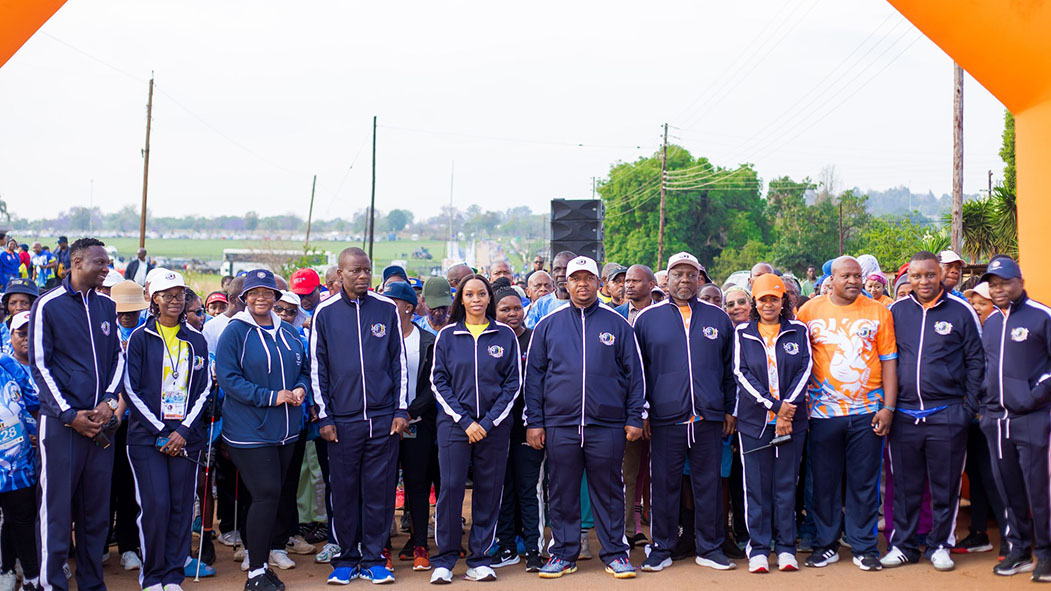
There is something profoundly symbolic about seeing those in power trade their suits for running shoes. At this year’s Imbube Marathon, Eswatini’s most celebrated sporting event, I witnessed a scene that embodied what true leadership looks like. Among the nearly 7 000 participants were dignitaries, business executives and royal family members, all running side by side with ordinary citizens.
As I ran my own 10km, I spotted Prince Hlangabeza, Minister for Public Service Mabulala Maseko, Sigwe Member of Parliament David ‘Cruiser’ Ngcamphalala and Standard Bank Eswatini Chief Executive Mvuselelo Fakudze. They weren’t there for publicity, they were running the full course, sweating like everyone else. In that moment, I realised that this is what leading by example truly means. These leaders were not simply attending an event, They were participating in a national statement: Eswatini can be a healthy nation when its leaders live the message.
Research across the world shows that when leaders model healthy behaviour, they inspire collective action. According to studies published in the Journal of Leadership and Organisational Studies, leaders who visibly engage in positive practices encourage participation and improve group performance. In public health terms, this means that when leaders take part in exercise or promote wellness openly, the population is more likely to follow.
Healthy leadership is not about fitness alone, it’s about mindset. The World Health Organisation (WHO) promotes a concept known as Health in all policies, which calls for every government sector – from transport to education – to prioritise well-being.
Countries such as Finland and Australia have adopted this approach, showing how national health improvements depend on cooperation between departments and communities.
A country’s well-being is inseparable from its citizens’ health. The World Bank and Lancet Commission on Global Health have repeatedly shown that healthier populations are more productive, creative and economically resilient. Conversely, illness and inactivity drain public finances and reduce life expectancy.
That’s why events like the Imbube Marathon go far beyond sport. They are investments in national productivity and social cohesion. The simple act of running together promotes unity and reminds us that a nation’s strength lies in its people’s physical and mental well-being.
This can’t stop at marathons. For a healthier Eswatini, there must be policy continuity. Leaders’ participation must be matched by laws, infrastructure and long-term investment. That means safer walking and cycling routes, more accessible public parks, physical education in schools and stronger primary healthcare.
Globally, nations that take health seriously combine symbolism with structure. Colombia, for instance, introduced a tax on ultra-processed foods and mandatory front-of-pack labelling to fight obesity. In the United Kingdom, policymakers are debating how improving national health could revive the country’s struggling workforce. These examples show that health policy is not a luxury, it is economic strategy.
Eswatini, too, can learn from these successes. We already have the spirit, as shown by the thousands who turned up for Imbube. Now we need policy frameworks that make the healthy choice the easy choice, safe pavements, nutritious school meals and affordable healthcare for all.
It was inspiring to see Standard Bank’s Fakudze running among the crowd.
When business leaders promote wellness, it changes workplace culture and influences thousands of employees. Research by the Harvard Business Review has found that companies investing in employee health experience higher productivity and lower absenteeism.
Partnerships between the public and private sectors can accelerate this movement, from corporate wellness initiatives to sponsoring community sports.
A healthy workforce builds a healthy economy.
Symbolism matters but sincerity matters more. If leaders participate once and disappear, their actions risk becoming performative, but sustained visibility – running every year, supporting school health programmes and allocating budgets to wellness initiatives – will cement the message that Eswatini’s leadership genuinely values health.
A healthy leader is alert, empathetic and visionary. A healthy nation is productive, united and proud. These two are inseparable.
The Imbube Marathon gave us a glimpse of what is possible: leaders, royals, executives and citizens sharing the same road, the same air, the same determination. It was a living portrait of national unity – and a reminder that the strength of our country depends on the vitality of its people.
If Eswatini wants to thrive in the years ahead, health must be more than a slogan, it must be a movement. The leaders who ran this year have shown us the way forward. Now, it is time for the rest of us to keep pace.
For comments, please email khulileb.thwala@gmail.com
















Leave a comment