

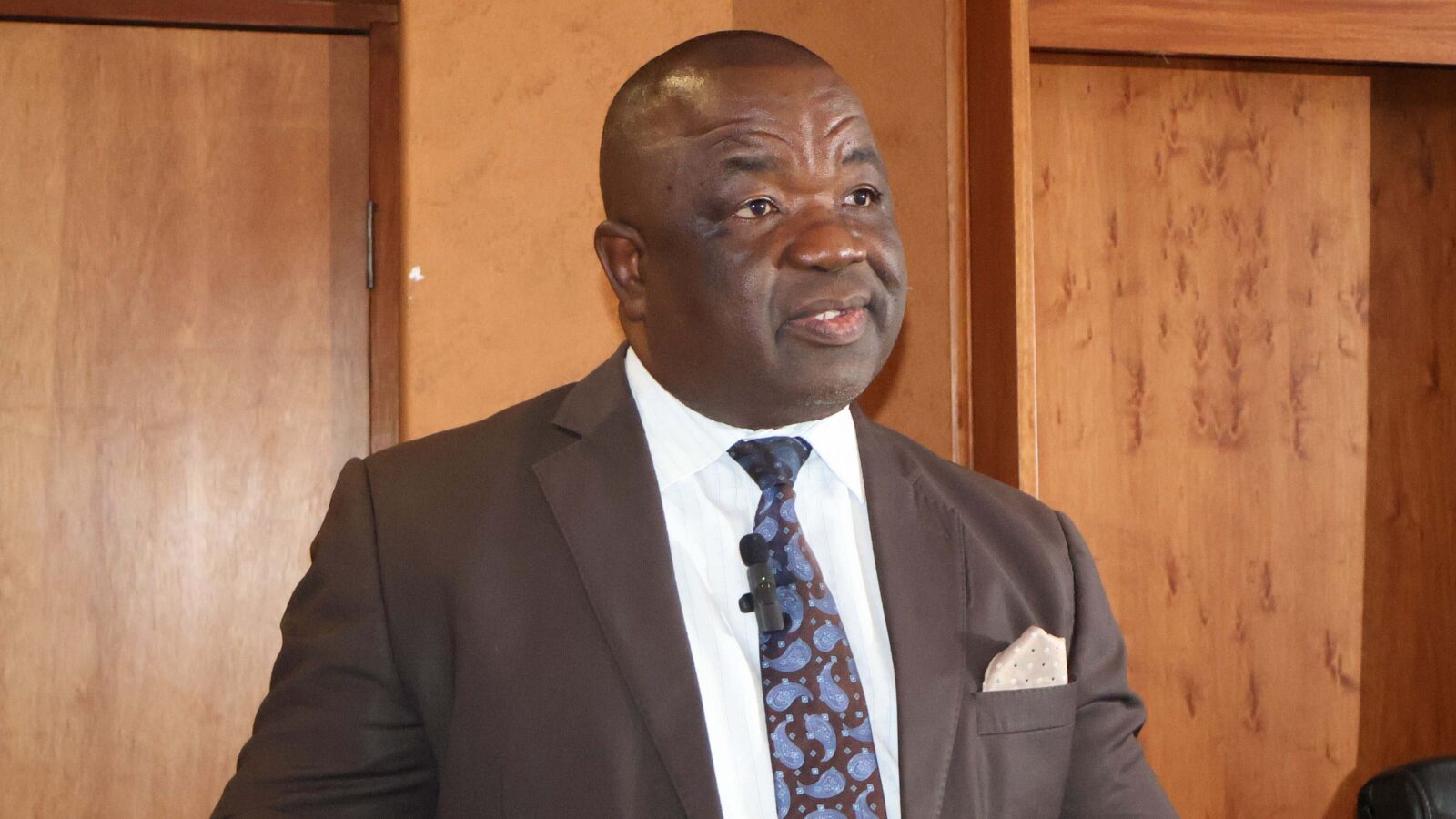
When Minister Owen Nxumalo presented the Final Task Team report to the University of Eswatini (UNESWA) management, he said he was shocked that a member of staff was receiving a full salary while sitting at home. He added: “This is not the time to point fingers but to find a way forward.” I must respectfully disagree.
If the contents of the final report from the task team chaired by Muzi Siyaya are anything to go by, pointing fingers is precisely what must happen if the myriad challenges are to be resolved once and for all. The report — whose compilation could not have been cheap — sets out findings and recommendations to address the institution’s failings and to guide its recovery.
Honourable Minister, pointing fingers is not about baseless accusation; it is about identifying the sources of the persistent problems at UNESWA that have produced a decline in governance and weakened financial controls.
Finger‑pointing is essential where financial mismanagement, irregular expenditure and possible fraud are suspected — as appears to be the case at UNESWA.
We must identify the individuals or entities responsible for the university’s failure to fulfil its mandate — which, the Task Team states, is to produce graduates capable of contributing to national development. That identification will determine whether it is prudent to continue funding the university without fundamental reform of its governance and institutional structures.
Taxpayers’ money largely funds this institution. For the 2024/2025 academic year the university received a subvention of E486 million — a fraction of what management had requested. The monthly subvention is around E40 million, which reportedly barely covers salaries and PAYE, leaving nothing for utilities and other operating costs.
It has been reported that the university, categorised as a public enterprise, is drowning in debt, with more than E527 million owed to pension funds, service providers and banks.
Unpaid utility bills have led to repeated power, water and telephone disconnections. Salaries are frequently delayed and sometimes paid in instalments rather than in full.
On numerous occasions this has led to strikes by academic and non‑academic staff.
The Task Team has identified emerging patterns of poor governance and weak internal financial controls, calling into question the prudence of continuing to allocate taxpayer funds to UNESWA without robust safeguards.
Particular attention must be paid to the university council, reportedly inefficient in decision‑making despite being the apex governance body.
The Task Team was especially concerned about its size and composition: the council has 24 members. Such a bloated body makes consensus almost impossible. No company could make meaningful progress with such a board.
The Task Team rightly noted that this structure produces protracted deliberations and conflicting interests. I agree: the council should be reduced by at least half, if not more. As the Task Team recommended, only individuals with relevant skills should be appointed.
The council must not be used to shelter people who add no value and merely inflate numbers.
It is worse that some past chairpersons reportedly displayed dictatorial tendencies.
That style of leadership reportedly filters down through the ranks, leaving staff demoralised and frustrated.
When Minister Nxumalo presented the Task Team’s report, the university was closed following student class boycotts. This is as predictable as Christmas falling on 25 December.
It happens at the start of every academic year; the usual grievance is delayed allowances. Could this be linked to the Task Team’s finding that the relationship between government and UNESWA is strained?
The Task Team says that relationship is characterised by inconsistent subvention disbursements and disagreements over tuition‑fee policy.
That undermines the university’s financial stability: its ability to pay salaries, manage utilities and run academic programmes.
Indeed, until a couple of months ago there was a serious discrepancy between the annual fees paid by government‑sponsored students and those paid by privately funded students.
Government paid E16 000 for each sponsored student while privately funded students paid E26 000. That discrepancy has now been standardised.
The Task Team’s investigations reportedly also revealed prima facie evidence of corruption at UNESWA.
The team believes that a comprehensive forensic investigation is essential to uncover the full scope and nature of these transgressions and to ensure accountability. That was one of the nine recommendations the team made.
This is where it gets complicated. There is no question that the ills plaguing UNESWA must be uncovered, but forensic audits are usually long and involved. They are costly and will require additional funds to investigate the challenges that bedevil UNESWA.
The Task Team urges stakeholders to be “bold and aggressive” in considering and implementing its recommendations to address the institution’s financial challenges.
Is the Minister of Education and Training — who commissioned this process and says he has the full backing of Cabinet — prepared to be bold and aggressive in following through?
It is unfortunate that the Task Team does not have the same powers as a forensic audit, which investigates specific allegations or suspicions of fraud and embezzlement with the expectation that its findings may be presented in court.
The situation at UNESWA is a man‑made disaster.
Even though the lid has been blown wide open on the challenges and their causes, a solution remains a long way off.
















Leave a comment