

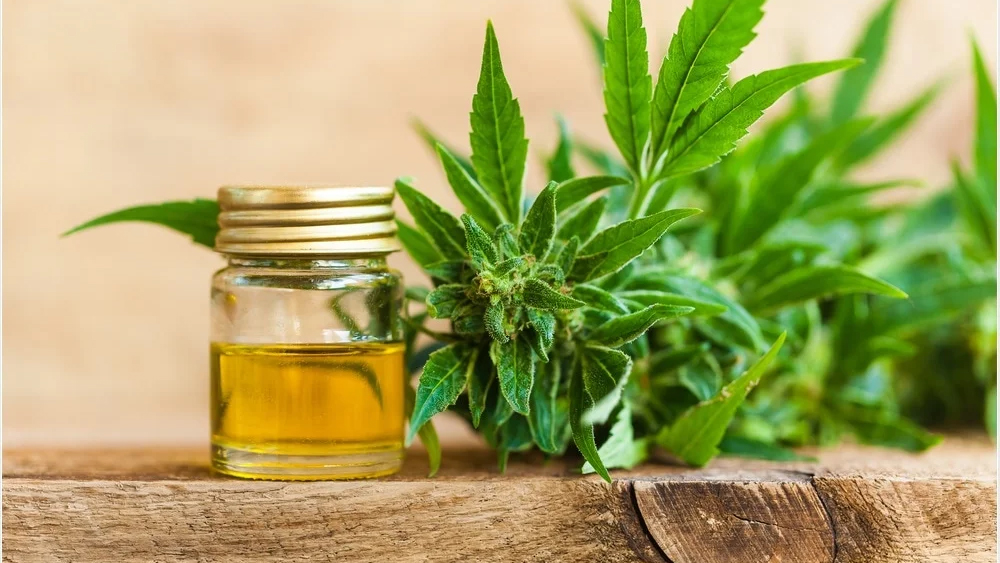
As the world increasingly recognises the economic and healing potential of cannabis, it feels like our nation, Eswatini, is being left behind, held back by old fears and moral concerns.
While other countries across Africa and the globe are creating jobs and new healthcare options through progressive laws, we’re stuck in a cycle of caution and prohibition.
This stance isn’t serving our people or our economy. The real question is not if cannabis has value; that’s becoming clear, but whether we have the vision to harness it responsibly.
Globally, governments are shifting their views, exploring medicinal and economic opportunities they once ignored. Yet here, the debate is still trapped between fear and morality, leaving little room for science or common sense.
For many of us, the issue is no longer if cannabis is simply ‘good’ or ‘bad.’ It is whether treating its growers and users as criminals is still in the public’s best interest. The hard truth is that Eswatini risks being left behind, not because we lack potential, but because we’re clinging to an outdated story.
Those in favour of reform see a plant that could unlock new revenue, create much-needed jobs for our youth and diversify our fragile economy. They point to its proven ability to ease chronic pain, manage epilepsy and support palliative care. Even conservative nations are realising that smart regulation can offer more benefits than a simple ban.
On the other side, people worry that legalisation could lead to social problems, citing concerns about addiction, impaired judgment and the challenge of keeping it away from minors. They caution that in a country already facing unemployment and strained health services, the risks might be too high.
Both sides have valid points. However, the greatest danger of all is our refusal to even look at the evidence. Sticking with criminalisation without a critical review isn’t a policy – it’s paralysis disguised as principle. If we want to move forward as a nation that values truth, we need to ask not just what cannabis is, but what it could become for Eswatini.
Let’s be honest with ourselves. The world is redefining cannabis. It’s no longer just a symbol of rebellion; it’s becoming an opportunity for innovation. Countries like Canada and Uruguay have fully legalised it, while our neighbours, South Africa and Lesotho, have adopted more nuanced approaches.
Lesotho was a pioneer in Africa, issuing licences for medical cannabis cultivation. This attracted foreign investment and created jobs in rural areas. While they’ve faced challenges in ensuring local communities’ benefit, it has positioned them as a serious player in a growing global industry.
South Africa’s Constitutional Court decriminalised private use and possession in 2018, acknowledging that jailing individuals for personal use was neither just nor effective. Their government is now building a framework to regulate cultivation for medicine.
Meanwhile, in Eswatini, we still largely treat cannabis as a criminal substance. Police operations, like the recently reported ‘Operation Thunder,’ see acres of cultivated plants destroyed. Farmers face arrest and users risk prison, often for small amounts meant for personal use. This approach might have seemed sensible in the past, but today, it feels increasingly out of touch.
Science has moved beyond the moral panic. Numerous studies confirm that compounds in cannabis, particularly CBD, have real therapeutic value. They can help manage chronic pain, nausea from chemotherapy, muscle spasms and severe forms of epilepsy.
The World Health Organisation itself has noted that cannabinoids can be therapeutic for nausea and vomiting in advanced illnesses like cancer and AIDS and that research is uncovering benefits for other conditions like asthma and glaucoma.
For a country like ours, where access to advanced medicine can be limited and many rely on traditional healing, cannabis-based treatments could beautifully bridge modern and indigenous practices. Our own healers have used this plant for generations to treat everything from headaches to anxiety. Criminalising that knowledge has not erased it; it has just forced it underground.
Of course, we must be careful. Medicinal cannabis needs strict quality control, proper dosing and oversight from doctors. However, these are reasons for creating a strong regulatory system – not for outright prohibition. We already apply this logic to prescription drugs; why should cannabis be any different?
The global cannabis industry is now worth billions, creating jobs in farming, processing and research. African nations like Uganda and Malawi are now licensing cultivation for export, seeing it as a chance to diversify away from volatile crops like sugar and tobacco.
With our fertile climate and farming heritage, Eswatini is perfectly positioned to benefit. This plant already grows naturally here, often being destroyed by authorities instead of being harnessed responsibly. Regulated cultivation could generate tax revenue, attract investors and offer our smallholder farmers a legal, sustainable livelihood.
Legalisation is not a magic bullet. As Lesotho’s experience shows, there’s a risk of foreign companies dominating the market. A smart policy would need safeguards to ensure local communities participate and see real benefits.
Continuing to criminalise a potential agricultural gold mine while our neighbours reap the rewards simply doesn’t make economic sense. It is like burning potential wealth in the name of an old ideal.
Our current laws have real human consequences. Young people, especially in rural areas, are getting criminal records for possessing small amounts of cannabis. This record follows them for life, limiting their chances for jobs and education.
Enforcing prohibition also drains our police resources, which could be better used to fight violent crime, corruption and hard drugs. Meanwhile, the black market continues to thrive, untaxed and unregulated, making money for those who break the law while ordinary citizens bear the cost.
The irony is that criminalisation doesn’t even achieve its main goals. It doesn’t stop people from using or growing cannabis; it just pushes everything into the shadows, where there’s no oversight or safety. A more rational approach would recognise that the problem is not the plant itself, but how we, as a society, choose to manage it.
Caution: This is not a call for a free-for-all. It is a call for balance. For objectivity. For laws that distinguish between dangerous narcotics and a plant whose risks and benefits can be responsibly managed.
Much of the resistance to change is rooted in morality. Cannabis is often linked with delinquency and social deviance, a view reinforced by decades of policing and propaganda. For many, questioning the ban feels like inviting chaos.
Although morality without compassion and evidence can become hypocrisy. We allow the sale of alcohol and tobacco, which as we all know, are substances proven to cause addiction and disease. However, we regulate them. We do not imprison their users. So why do we treat cannabis so differently?
Cultures evolve. What was once taboo can become accepted when society confronts the facts. This is not about abandoning our values; it is about updating them considering the truth. A moral society should be guided by empathy and evidence, not by a fear of change.
Of course, we must be honest about the risks. Heavy use, particularly by young people, can affect development and mental health. Driving under the influence is dangerous and dependency, while less severe than with alcohol, is possible.
These real concerns highlight the need for a thoughtful framework that includes public education, age limits and support for those who need help. However, these are challenges of good governance, not reasons to do nothing.
Eswatini is at a crossroads. This debate is about more than a plant; it’s about our willingness to adapt to a changing world. We can keep seeing it as a criminal threat or we can start an honest conversation that weighs both its promise and its perils.
Warning: This is not a demand for blanket legalisation. It is a plea for evidence. It’s a request for our scientists, doctors, economists, traditional healers and leaders to sit down together- not to preach, but to listen and learn.
Because behind every headline about cannabis is a deeper question: Can Eswatini afford to let fear dictate its future? Can we keep imprisoning farmers for what might one day be a legal crop? Can we keep destroying a plant at home that we import for medicine from abroad?
At some point, we have to admit that the real crime is not cannabis. It is our refusal to think critically about it.
The world is moving on, science is advancing and markets are changing. Holding onto outdated laws doesn’t make us principled; it makes us miss the moment.
What cannabis becomes here, that is, a tool for healing or a symbol of criminality, depends on our courage to face the facts. It’s time for our leaders to look past the smoke and see the substance. Perhaps the most liberating high we can experience isn’t from the plant at all, but from the liberation of our own thinking.
Peace! Shalom! Wishing you all a happy Sunday and a blessed week ahead.


















Leave a comment