

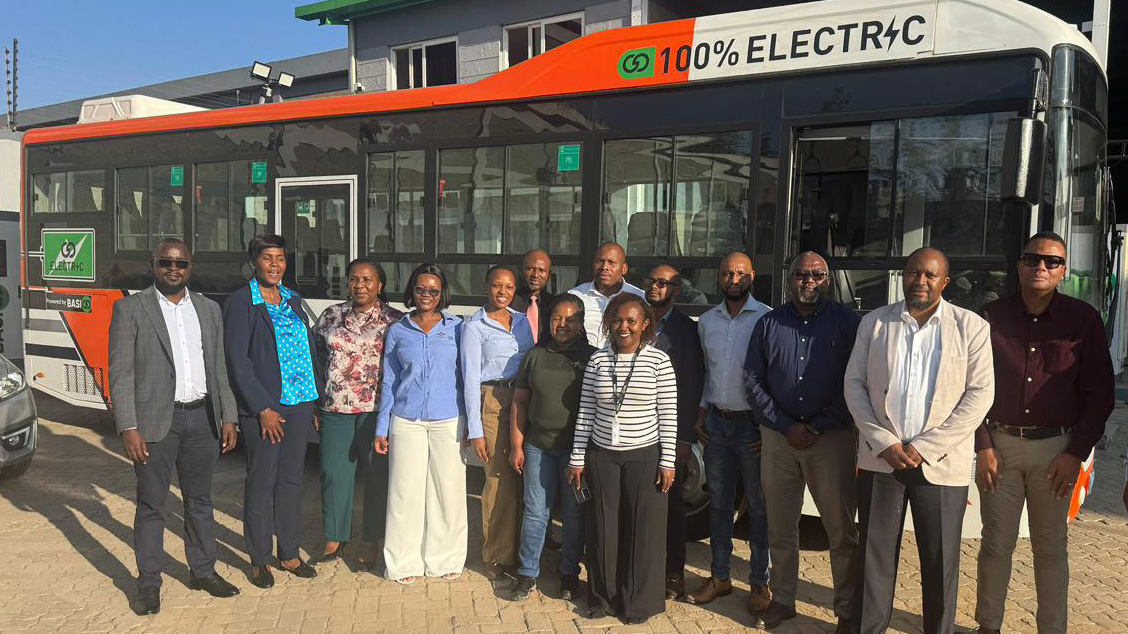
MBABANE – The Principal Secretary in the Ministry of Natural Resources and Energy, Lindiwe Mbingo, led a high-level delegation from the Kingdom of Eswatini on a benchmarking mission to Kenya.
This exercise was aimed at guiding the development of Eswatini’s National Electric Mobility Policy.
The delegation, which comprised senior officials from the Ministry of Natural Resources and Energy, Ministry of Public Works and Transport, Prime Minister’s Office – Policy and Programmes Coordination Unit, Ministry of Finance, Eswatini Electricity Company (EEC) and the Eswatini Energy Regulatory Authority (ESERA), embarked on a two-day mission to learn from Kenya’s pioneering experience in advancing electric mobility.
During the visit, the delegation engaged with several key Kenyan stakeholders, including the Energy and Petroleum Regulatory Authority (EPRA), BasiGO, eBee and the State Department for Transport.
The focus was on understanding Kenya’s leadership in electric vehicle (EV) policy, infrastructure development and innovation – areas that have positioned the East African nation as a regional model for sustainable transport.
The Eswatini team’s first engagement was with Daniel Kiptoo Bargoria, Director General of EPRA, where discussions centred on regulatory frameworks for EV charging infrastructure, tariff structures and strategies to attract private sector participation.
EPRA shared Kenya’s experience in introducing differentiated EV tariffs – including off-peak charging rates and fiscal incentives such as tax reductions –to offset the high initial cost of electric vehicles.
EPRA officials also highlighted the importance of government-led incentives and policy clarity to accelerate the adoption of e-mobility technologies, noting that consistent regulation and public-private partnerships have been crucial in building investor confidence.
On the second day, the delegation met with Mohamed Daghar, Principal Secretary of Kenya’s State Department for Transport, where Mbingo expressed Eswatini’s interest in learning from Kenya’s recently finalised national e-mobility policy.
Kenyan officials shared their journey of formulating and implementing the policy, which involved coordination through a National E-Mobility Task Force that brought together government institutions, private companies, academia and development partners.
They explained that Kenya’s approach includes the zero-rating of VAT on electric vehicles – covering e-buses, e-bikes and three-wheelers – and the formulation of implementation guidelines that set technical and safety standards for EV charging infrastructure.
The Kenyan team also discussed their partnerships with international development institutions such as the World Bank and GIZ, which have helped analyse the fiscal implications of EV adoption.
One of the key areas of focus has been assessing how the transition to e-mobility could affect fuel-based revenue streams, including the Road Maintenance Levy, as electric vehicles begin to displace traditional fuel consumption.
Beyond policy discussions, the Eswatini delegation visited local electric bus and bicycle assembly sites in Nairobi, where they met young engineers – including several women – who are being trained in EV maintenance, operations and battery management.
These facilities not only manufacture and assemble electric vehicles, but also provide innovative sales and leasing models that make EVs more accessible to both individuals and businesses.
*Full article available in our publication


















Leave a comment