

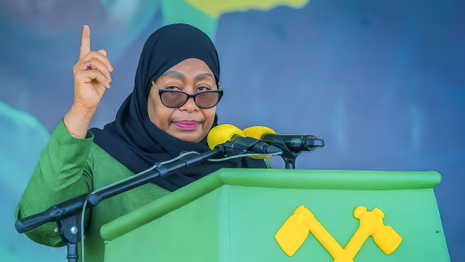
Tanzania’s recent election, similar to the Cameroonian one discussed last week, has also reignited debate about the state of democracy in Africa. Despite claims of progress and modern electoral systems, the events surrounding the polls revealed deep challenges that continue to cast doubt on the integrity of democratic processes across the continent. A blind eye cannot be turned as two countries on the continent, in as many weeks, held controversial and bloody elections. What was expected to be a celebration of democratic maturity instead became a moment of tension and unease, with reports of violence, intimidation and restricted political space clouding the outcome in Tanzania.
The electoral commission announced a clear victory for President Samia Suluhu Hassan, giving her a decisive majority. However, the atmosphere in which the announcement was made told a different story. Opposition figures alleged widespread irregularities, ballot interference and restricted access to polling stations in certain regions. Several independent observers questioned the credibility of the tallying process and noted the heavy presence of security forces in areas known for opposition support.
Violence broke out in several parts of the country before and after the vote. Protesters demanding fairness were dispersed with tear gas and reports emerged of arrests of political activists and journalists. These incidents drew renewed attention to the recurring pattern of electoral unrest that has haunted many African democracies. Similar tensions have unfolded in countries such as Cameroon, Nigeria and Uganda, where elections have repeatedly been marred by disputes, protests and State crackdowns. While every election is presented as an opportunity for renewal, it too often becomes a stage for confrontation and mistrust between citizens and the State.
President Hassan’s inauguration, conducted in a private ceremony, deepened the public’s unease. Such an occasion, which would normally be a symbol of national unity, passed quietly and without the fanfare that usually accompanies a democratic handover. To many observers, the subdued nature of the event mirrored the atmosphere of doubt that surrounded the election itself. It sent an unintended message that even those within government recognised the delicate political climate and the lack of confidence that many citizens had in the process.
This situation mirrors a wider trend across Africa, where elections increasingly act as tests of power, rather than expressions of popular will. Leaders often present electoral victories as validation of stability and continuity, yet the realities on the ground tell another story. Citizens express frustration with systems that appear to recycle the same political elites under new banners of reform.
In Tanzania, the legacy of long-term one-party dominance continues to shape political culture. While the country has maintained relative stability compared to some of its neighbours, this stability has often come at the cost of open dissent and independent political activity.
The violence that accompanied the recent election shows that peace cannot exist where voices are suppressed or where citizens feel excluded from shaping their future. Democracy cannot thrive through managed participation or selective inclusion.
The international community’s response to the election has been cautious. Statements congratulating the president were often paired with calls for dialogue, reconciliation and reform. The events in Tanzania reveal how easily democratic procedures can be maintained in form yet weakened in practice. Ballots may be cast, but the trust that gives them meaning continues to fade.
Across Africa, young people have grown increasingly disillusioned with electoral politics. They witness repeated patterns of violence, contested outcomes and private inaugurations that exclude the public eye. This has created a dangerous gap between citizens’ expectations and State behaviour. When elections fail to deliver legitimacy, people turn to other means of expression, often through protest or migration, leaving governments disconnected from the very populations they claim to represent.
For Tanzania, the path forward depends on restoring public faith in democratic processes. This requires more than political speeches or promises of reform; it demands genuine openness and inclusivity. Opposition parties must be allowed to operate freely and citizens must be assured that their voices carry real weight. Electoral commissions need independence not only in law but in practice, free from interference by those in power. Only then can elections regain their purpose as instruments of choice, rather than contests of control.
The quiet inauguration of President Hassan stands as a symbol of the uneasy state of democracy across much of Africa. It captures a reality in which official celebrations ring hollow against a backdrop of fear and suspicion. The continent’s democratic journey is seemingly far from complete, as each election brings both hope and anxiety. Until governments recognise that democracy is sustained by trust, not authority, the cycle of violence and disillusionment will continue to repeat itself.
Violence, secrecy and political intolerance have again overshadowed the promise of people’s power. For Africa’s democracies to mature, elections must cease to be episodes of unrest and instead become genuine expressions of public will. The lessons from Tanzania and others such as Cameroon, Nigeria and Uganda extend beyond their borders, as the continent continues to search for some middle ground between authority and freedom.













Leave a comment