

EZULWNI – Eswatini has been formally recognised as one of Africa’s newest entrants into the continent’s fast-growing instant payments ecosystem.
This follows the launch of the Eswatini Payment Switch (EPS) Fast Payment Module in December 2024.
This is according to the State of Inclusive Instant Payment Systems (SIIPS) in Africa 2025 Report, a flagship publication by the AfricaNenda Foundation, which maps the progress, inclusivity and readiness of instant payment systems across the continent.
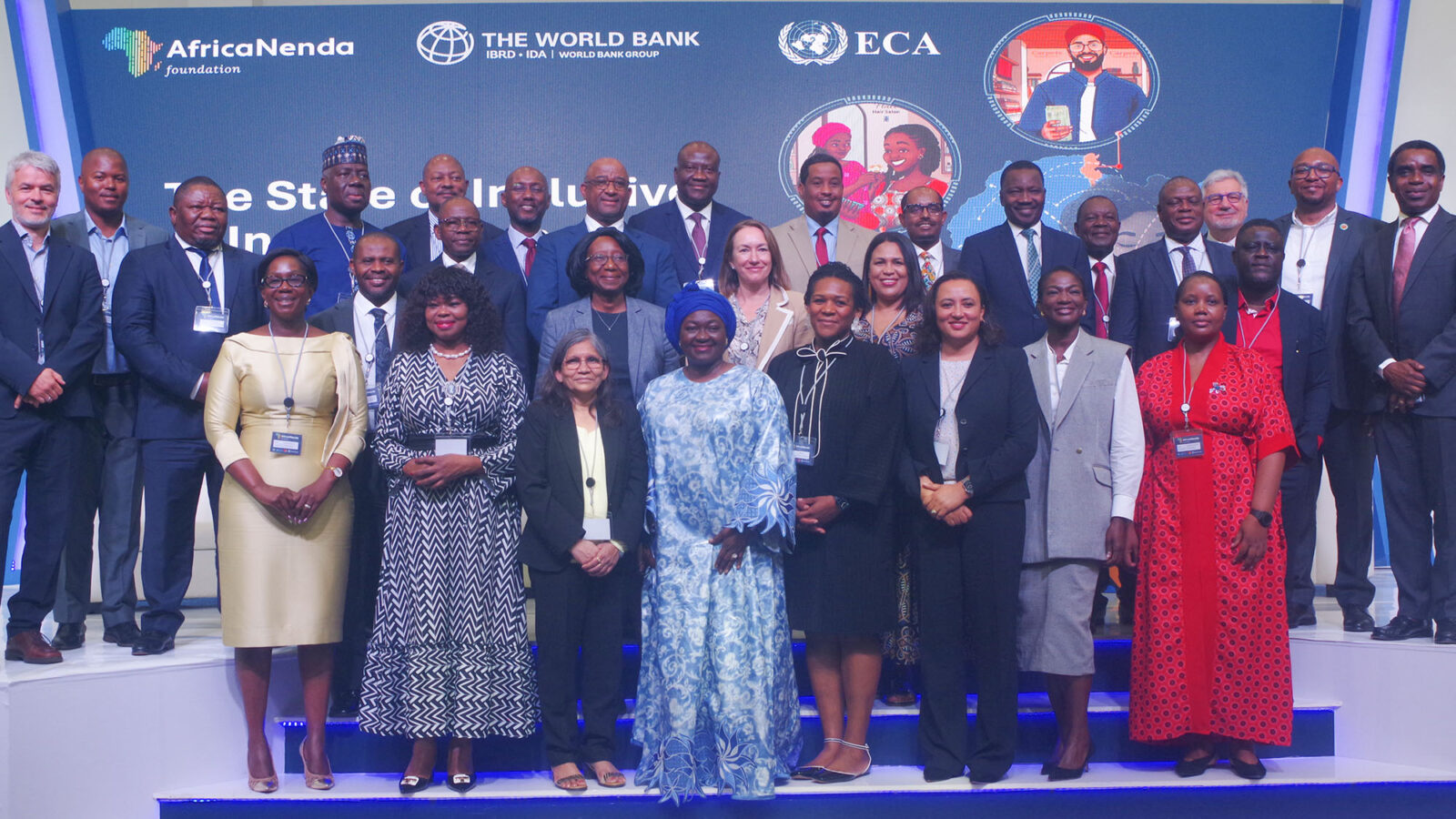
The report was officially launched on Thursday at the Central Bank of Eswatini (CBE) Complex in Ezulwini, in an event that brought together policymakers, regulators, financial service providers and regional payments experts, marking Eswatini’s first time hosting the continental launch of AfricaNenda’s flagship publication.
The report places Eswatini among only five African countries that gained domestic instant payment system functionality over the past year, alongside Algeria, Libya, Sierra Leone and Somalia.
This milestone represents a significant leap in the kingdom’s digital financial development trajectory—moving it from a market reliant on fragmented payment channels to one with a unified, real-time, interoperable payment backbone, a milestone that the Central Bank of Eswatini (CBE) says is only the beginning.
The launch of the EPS Fast Payment Module, according to SIIPS 2025, has positioned Eswatini as a cross-domain IPS market.
This means the system enables all-to-all interoperability between banks, mobile money operators, microfinance institutions and other licensed payment players.
Practically, this allows transactions to flow seamlessly across different account types – bank-to-wallet, wallet-to-bank or wallet-to-wallet – in real time.
Previously, such interoperability was limited or required indirect channels, often resulting in delays, inefficiencies or higher user costs.
*…
Eswatini exploring Central Bank Digital Currencies
EZULWINI – In addition to tracking instant payments systems, SIIPS 2025 reviews Africa’s status on Central Bank Digital Currencies (CBDCs).
The report notes that Eswatini is currently in the research phase of CBDC exploration, along with countries such as Algeria, Botswana, Morocco, Namibia, Ethiopia, Mauritius, Rwanda, Tunisia, Uganda and Zambia.
No new developments were reported for Eswatini since last year’s edition, but its continued presence in the research phase suggests that the Central Bank is analysing the feasibility of a digital Lilangeni. The continent’s only operational CBDC remains Nigeria’s eNaira. The report emphasises that IPS infrastructures like EPS are essential precursors to effective CBDC implementation, as they provide the digital rails upon which future currency systems may run.
AfricaNenda’s analysis shows that instant payments in Africa are expanding rapidly:
- Five new domestic instant payment systems (IPS) launched between July 2024 and May 2025
- 36 IPS are now live
- 25 African countries have domestic IPS functionality
- Cross-domain systems are becoming the norm
- Central banks increasingly own the infrastructure
- Eswatini is now part of this momentum.
The country also benefits from being a member of the Southern African Development Community (SADC). The SIIPS highlights the SADC regional system—Transactions Cleared on an Immediate Basis (TCIB)—as one of the cross-border instant payment initiatives advancing interoperability between member States. Since Eswatini’s EPS is also classified as a cross-domain IPS, this positions the kingdom for future integration into regional payment corridors, enabling real-time, low-cost remittances with other SADC countries.
An engine of national growth – CBE governor
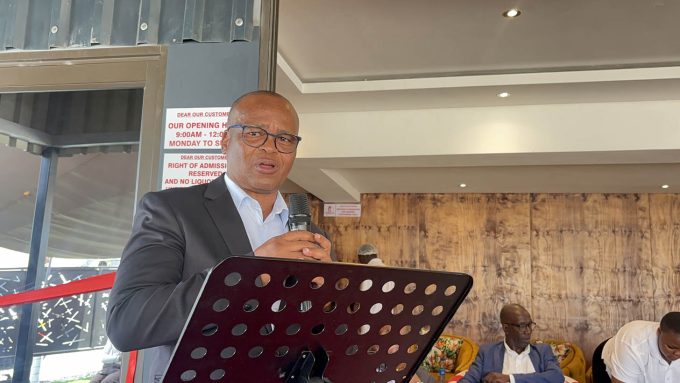
EZULWINI – CBE Governor Dr Phil Mnisi affirms that instant and inclusive payments are no longer peripheral elements of a financial system—they are central to economic transformation.
Reflecting on his three-year tenure, the governor notes that Eswatini now embraces payments as a core pillar of financial inclusion and national development.
“We see payments as a powerful pathway to inclusion,” Mnisi writes, adding that the CBE’s mandate increasingly prioritises digital payment oversight. He highlights that digital ecosystems—particularly real-time, low-cost systems like the EPS—enable broader participation in merchant payments, savings, credit, entrepreneurship and trade. This, he argues, deepens economic engagement and supports intra-African trade.
Mnisi highlighted that Eswatini’s payment reforms align with the continent-wide push for collaboration among central banks. The SIIPS report, he says, is an essential tool for this cooperation, enabling peer learning and supporting the scaling of inclusive instant payments. While EPS has existed for years as the country’s electronic payments switch, the newly-added Fast Payment Module launched in December 2024 represents a fundamental shift: Eswatini now has instant retail payment capabilities—processing transactions in near real time, 24/7.
According to SIIPS 2025, the new module supports:
- Person-to-person (P2P) transfers
- Person-to-business (P2B) merchant payments
- Bank and mobile money interoperability
- Multiple channels, including mobile apps, USSD and QR codes
- Proxy ID support, such as mobile numbers
- Real-time validation and confirmation services
These features place Eswatini among Africa’s cross-domain interoperable systems, alongside advanced markets like Kenya, Ghana, Tanzania and Nigeria.
AfricaNenda notes that cross-domain interoperability is crucial for building inclusive payments ecosystems, as it ensures that all licensed payment providers—not only banks—can participate on fair terms.
While the Fast Payment Module is acknowledged as one of the new systems launched since SIIPS 2024, the report notes that it is not yet ranked on the AfricaNenda Inclusivity Spectrum.
This is not unusual for a newly-launched IPS: The ranking requires up-to-date, fully implemented data across channels, use cases, governance and customer recourse. The report states that unranked systems—including those in Eswatini, Sierra Leone and Somalia—were too new to undergo the inclusivity scoring process.
What Eswatini must prioritise going forward
EZUWINI – With the launch behind it, the next phase for Eswatini is implementation and expansion.
According to the inclusivity framework in SIIPS 2025, Eswatini must advance in several areas to reach the ‘progressed’ and eventually ‘mature’ stages:
1. Strengthening consumer recourse mechanisms
2. Expanding use cases—including G2P disbursements, bill payments, merchant QR ecosystems
3. Ensuring fair access for all licensed payment providers
4. Increasing direct participation of non-bank PSPs
5. Promoting merchant adoption nationwide
6. Driving awareness among consumers, especially in rural areas
7. Integrating EPS with regional platforms such as TCIB
As instant payments become a continental norm, these efforts will be critical for Eswatini to remain competitive and fully inclusive.
*Full article available in our publication

















Leave a comment