

Geography and Physics hold that the higher you go, the colder it gets.
Over time, this has been used as a proverb of sorts, to imply that the more successful or powerful a person becomes, the more challenges they face.
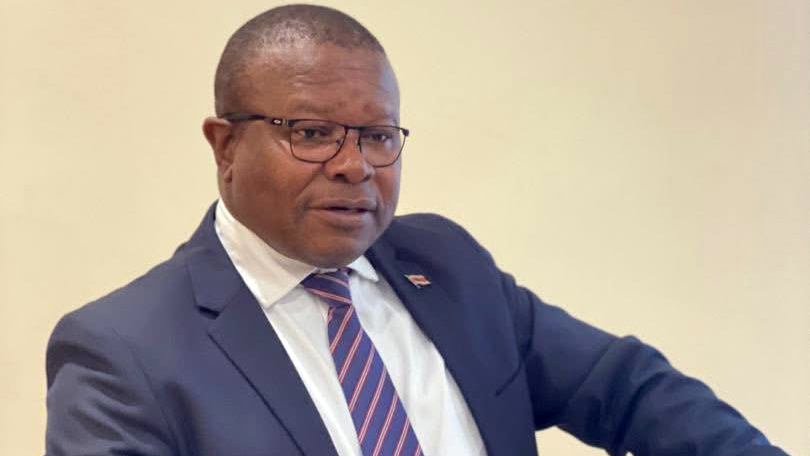
However, Minister for Commerce, Industry and Trade Manqoba Khumalo, believes that in Eswatini, benefits of economic growth are mostly enjoyed by those on the higher rungs of the social ladder.
We can all agree that the past week was a very busy one, especially on the government front, with almost all Cabinet ministers getting out of their offices on various assignments.
Amid all the hype and activity, two events stood out for me.
One of them was the Eswatini Micro, Small and Medium Enterprises (MSME) Conference held at the Royal Villas in Ezulwini where Minister Khumalo made the thought-provoking comment.
The other significant event was the Ministry of Home Affairs’ historic consultation with representatives of the country’s religious groups.
Incidentally, both got off the ground on Monday and were attended by the respective ministers.
At the Royal Villas, Minister Khumalo noted that Eswatini’s economy was showing signs of growth but economic progress was still not being felt by most emaSwati.
Speaking specifically about MSMEs, the minister said they continued to face barriers that prevent them from benefitting fully from the country’s economic gains.
“The question is why?” said Khumalo. “The reality is that the growth is currently saturated at the top. It is being enjoyed up there.”
To me, this was a very poignant statement, particularly coming from a member of Cabinet. It suggested that the country’s politicians were not divorced from the harsh socio-economic realities faced by ordinary emaSwati.
The minister was highlighting the disparity between the rich and the poor in our country. In fact, in a country where economic survival, as opposed to status, is the most defining issue for individuals and families, this is not even about wealth and poverty; it is about simply affording basic needs like food, shelter and clothing.
According to the minister, the intention behind hosting the three-day conference for MSMEs was to provide a platform where these entrepreneurs could speak openly about the challenges they face and collectively explore solutions.
“The conference is for MSMEs. It is a space for them to deliberate on issues affecting them. As government, we are here to sit down and listen,” said Khumalo.
Over the three days of the conference, participants were expected to explore areas like access to finance, digital transformation, market expansion, certification and standards. Sustainable business practice and entrepreneurship development were also on the agenda.
My only concern is that the Government of Eswatini has long identified MSMEs as the backbone of the economy, an engine that could drive the kingdom to a place of prosperity that would be felt by all, not just those ‘up there’.
For example, the Small Enterprises Development Company (SEDCO) has been in existence for decades. Its mandate is to create, develop and promote the very same MSMEs we are talking about today.
SEDCO exists primarily to stimulate homegrown entrepreneurship for sustainable economic growth. Established in 1970, this parastatal has managed to create and promote various MSMEs across the country.
Many entrepreneurs who would have otherwise failed to even take off, have managed to send their children to school and make other personal advancements through businesses set up with the assistance of SEDCO.
The government-owned enterprise prides itself in providing MSMEs with capacity development, business consultancy, legal consultation, business incubation and linkages.
SEDCO has always been a noble concept that, properly tapped into, would have long propelled the kingdom into a developed country.
Why then are we still seeking answers on how to boost the MSME sector, 55 years after the establishment of SEDCO? The obvious answer is finance.
In his Budget Speech back in February, Finance Minister Neal Rijkenberg alluded to the importance of MSMEs, saying SEDCO’s pivotal role in MSME advancement was marked by programmes like the Entrepreneur of the Year Awards and the Business Incubation Programme, which foster enterprise development and digital integration.
He said legislative advancements, including the Citizen Economic Empowerment Act, further entrench the MSME sector’s importance.
Rijkenberg’s speech highlighted collaborative efforts with organisations like Junior Achievement (JA), saying they underscored a commitment to nurturing youth entrepreneurship, ensuring MSMEs remained integral to socio-economic progress.
The Tony Elumelu Foundation (TEF), which fosters MSME empowerment across 54 African States, says governments should invest in the growth of this sector, so that they harness the power of entrepreneurship and foster inclusive economic development.
The foundation says unlocking the full potential of MSMEs will contribute to a more prosperous and sustainable future for Africa.
This organisation, established in 2015, has trained over 1.5 million young Africans at its economic hub TEFConnect and disbursed nearly US$100 million in direct funding to 18 000 African women and men.
In turn, these entrepreneurs have collectively created over 400 000 direct and indirect jobs in their respective countries.
Closer home, in 2022, Mlandvo Mamba, a sound engineer and creative in Eswatini, received seed capital from the TEF to grow his enterprise, known as Walking Microphone Studios in Mbabane.
At the conference in Ezulwini, Minister Manqoba encouraged MSME representatives at the conference to speak openly and government would listen.
It is such a pity that the mid-term budget review report, presented in Parliament by Minister Rijkenberg on Wednesday, paints a grainy picture for productive expenditure, which includes programmes for economic growth and job creation.
Despite the country’s economy being projected to strengthen significantly, the ‘rigid and largest single expense’ which is the wage bill, is bound to affect other important programmes.
Currently standing at an annual budget of E9.3 billion, money spent on salaries for government employees is expected to grow at an average of five per cent annually, over the medium term.
This projected increase is said to be necessitated by salary review adjustments and cost-of-living (CoLA) increases, which government hopes will help keep skilled workers in the public service.
That said, as advised, MSME representatives spoke openly at the Royal Villas conference, with the hope that their submissions would turn things around for their integral sector.
Government listened but, all things considered, will it be able to deliver?



















Leave a comment