

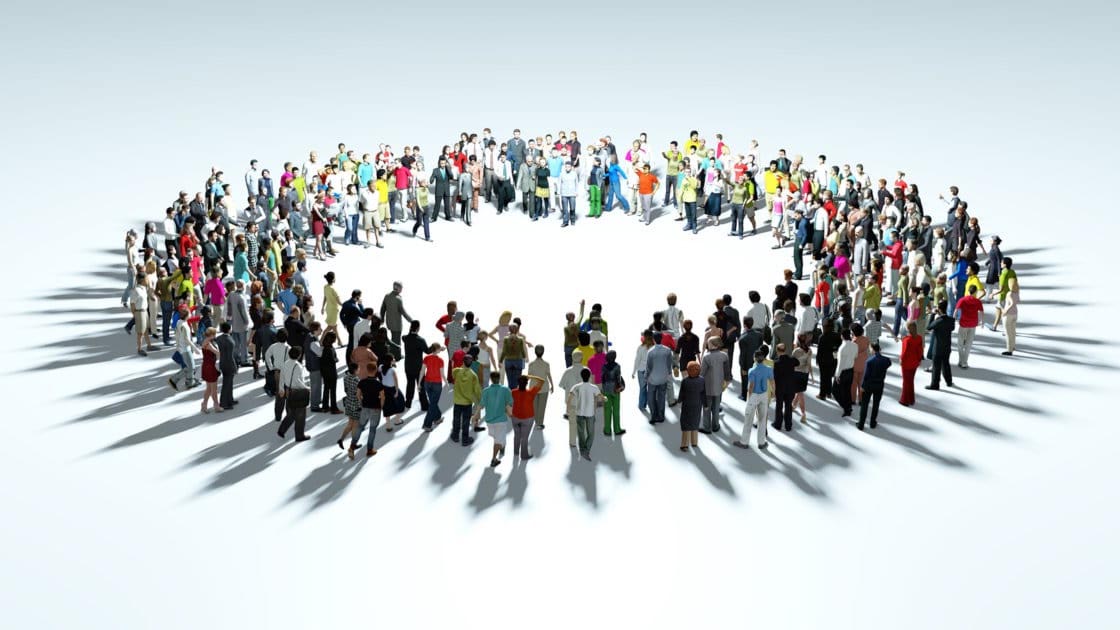
We are living in a dangerous world where politics has become dangerous to society. It is not centred on serving humanity. In a world where inequality is entrenched, poverty levels have reached unprecedented levels, unemployment has skyrocketed, gender-based violence has reached endemic levels, mental health challenges have resulted in suicides, health services have plummeted, food insecurity grips those on the fringes of society.
Human rights violations have persisted in spite of countries having constitutions with a Bill of Rights, and elections in many countries have sparked conflict resulting in loss of life, and one would expect politicians to respond with empathy to the suffering masses. Hence, the call for human-centred politics.
What is politics?
A prominent and widely used definition among modern political scientists is that politics concerns the distribution of resources and power in a society. Harold Lasswell defines politics as, ‘who gets what, when and how’. This emphasises that politics is, fundamentally, about the struggle over and the exercise of influence to obtain valued things, whether they are material resources, status or rights. David Easton, on the other hand, defines it as, ‘the authoritative allocation of values for a society’.
This highlights how political decisions are binding (authoritative) on the whole community and determine which ideals and goals are prioritised and enforced as societal norms.
Politics is also defined as an activity related to the government of a country. Government is a provider of goods and services that individuals cannot provide for themselves. Government in this conception is the solution to collective action problems, the medium through which citizens create public goods that benefit everyone.
Government should cushion citizens who are not able to provide for themselves, particularly the vulnerable – youth, the elderly, the sick, the disabled and the unemployed, affected by economic forces beyond their control.
It provides an infrastructure of care to enable citizens to flourish, socially and economically. (Thomas Hobbes at the World Economic Forum)
Politics is also viewed as a conflict-resolution mechanism. This perspective views politics as a non-violent way to manage disagreements and diverse interests. Bernard Crick defined politics as the activity where differing interests within a ruling unit are conciliated by sharing power, proportionate to their importance to the community’s welfare and survival. Adrian Leftish describes politics as all activities of cooperation, negotiation and conflict resolution within and between societies.
What is politics that serves humanity?
Politics that serves humanity generally refers to political systems, philosophies and actions that prioritise human dignity, welfare and rights above partisan interests or ideology. This is the essence of politics that is in the service of the fellow human.
It focuses on promoting human dignity and rights where government upholds fundamental rights of all, where equality and the inherent worth of every person are core tenets. International agreements like the United Nations Charter and the Universal Declaration of Human Rights are built on this premise. Article 1 states: ‘All humans are born free and equal in dignity and rights. They are endowed with reason and conscience and should act towards one another in a spirit of brotherhood’.
It is about prioritising policies and strategies that alleviate human suffering. It is about policies and actions that aim to prevent and alleviate human suffering wherever it may be found, regardless of nationality or political opinion. In this politically polarised world, serving the interests of the poor and marginalised is not evident in many countries, including rich ones.
Promoting impartiality and non-discrimination is at the core of service for ensuring that assistance and opportunities are provided based solely on need, without discrimination or bias. This was affirmed in the Sustainable Development Goals (SDGs) where world leaders committed to not leaving anyone behind, though, the wars in Gaza, Sudan, Ukraine have exposed the hypocrisy in achieving these onerous ideals.
It is about social protection, implementing systems like universal healthcare, subsidised education and support for families/elders to protect vulnerable citizens from the negative impact of capitalism.
This notion of a government that serves also entails establishing governments and leaders who are accountable to the public and operate in an open and transparent manner.
It is also about justice and equity, challenging systemic inequities and ensuring fair and safe working conditions. Adhering to laws and established principles, rather than the whims of individuals or powerful private interests is fundamental. Sadly, justice remains elusive for the poor and vulnerable in society. In fact, the justice system seems to favour the affluent and powerful.
It is also about taking into account the impact of today’s political decisions on future generations and the habitability of the planet, unlike the anti-climate sceptical leaders, who reject science to serve business interests.
Politics must be for the public good, instead of serving the interests of a few.
















Leave a comment