

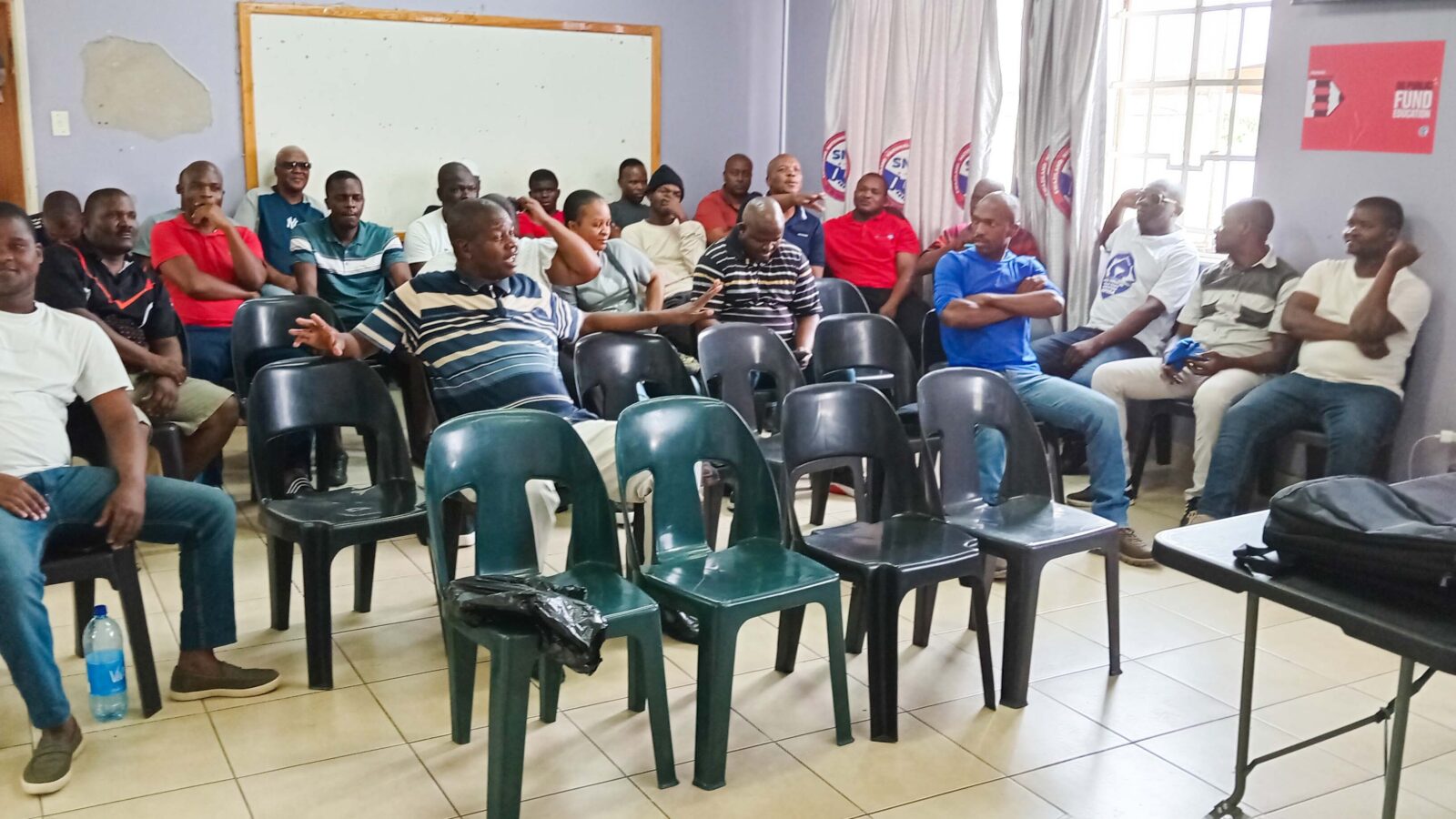
In the quiet corridors of power, much often goes unnoticed. Yet, sometimes, the echoes of discontent become too loud to ignore. This is the moment we find ourselves in with the junior officers of the Royal Eswatini Police Service (REPS) whose voices, often subdued by circumstance and hierarchy, are now rising, not in anger at the authorities they revere, but in a plea for fairness and recognition.
The recent decision by officers affiliated with the Royal Eswatini Police Staff Association (REPOSA) to march to the Ministry of Public Service and later to Cabinet is more than a routine protest. It is a reflection of a deeper, systemic challenge that touches the very soul of governance and public service in Eswatini.
These officers, who operate at the frontline of law enforcement, are the shield that guards our communities. They face daily dangers and responsibilities, yet they feel overlooked in the most fundamental way: Equitable compensation.
While senior officers were awarded a 37 per cent salary increase, their junior counterparts received a mere one per cent, later adjusted to two per cent. The discrepancy is not merely a matter of arithmetic; it is a stark message about value and recognition. As one officer lamented in a recently published news article: There are people making us so angry because they think we can help them by rendering the country ungovernable.” Loyalty to the Monarchy and the State remains steadfast, yet the growing frustration at systemic neglect cannot be dismissed lightly.
The scars of 2021’s civil unrest linger in memory. Junior officers recall a time when they were targeted, their vehicles fired upon, while senior officers, shielded by rank and resources, quietly withdrew from danger.
These experiences are not forgotten – they have shaped a collective consciousness marked by both fear and resolve. The officers now seek to ensure that their loyalty is not mistaken for complacency.
Perhaps, what makes their plea particularly compelling is the human dimension. These are not abstract figures on a payroll. These are fathers and mothers, sons and daughters, struggling to meet the basic needs of their families. School fees remain unpaid and children’s education is disrupted.
The financial strain has seeped into mental health, with some officers reportedly succumbing to the despair of unrelenting stress. This is the human cost of bureaucratic oversight, one that demands both empathy and urgent attention.
The officers have also expressed frustration at being excluded from the salary review negotiations. They argue not from entitlement, but from awareness and intelligence. ‘‘We know what we want,’’ they declare. In this, there is a quiet insistence on dignity, the recognition that frontline workers, whose commitment is often the invisible backbone of national stability, deserve a voice in decisions that affect their livelihoods.
It is worth noting also the officers’ deliberate distancing from senior staff who, sometimes, speak on behalf of the association. This move highlights a desire for authenticity and transparency – a reminder that the concerns being raised are theirs, not filtered through the prism of institutional convenience. They are speaking directly, urgently and unapologetically.
The upcoming march is more than a petition delivery; it is a symbolic assertion that justice, equity and recognition cannot be postponed indefinitely. It invites reflection on the broader dynamics of governance. A society that seeks stability and loyalty must also recognise and reward those who sustain it at the grassroots level. There is wisdom in listening before frustration turns to unrest.
In this unfolding narrative, there are no villains, only systems in need of recalibration. Junior police officers are not merely cogs in a bureaucratic machine; they are active participants in nation-building, whose morale and well-being have ripple effects on the communities they protect.
As Eswatini observes this impending march, it is worth asking a simple but profound question: Can a society truly thrive if those on the frontlines feel unseen and unheard? The answer is not rhetorical, it is a challenge to the conscience of governance, a call for fairness and an opportunity to bridge a divide before frustration escalates into instability.
In the loyalty of these junior officers lies a lesson: ‘‘Commitment cannot thrive on neglect. Recognition and equity are not luxuries; they are necessities for a functional, respected and resilient police force. Their voices, in plea for justice, are a reminder that even in reverence, there is room – and indeed, there must be room – for accountability, fairness and human dignity.’’ For comments, please send an email to khulileb.thwala@gmail.com.


















Leave a comment