

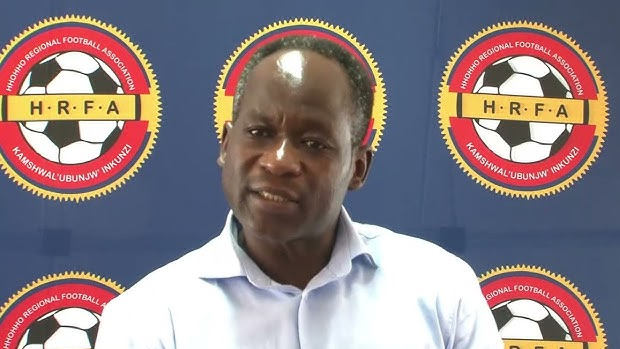
Lobamba Member of Parliament (MP) Michael Masilela recently impressed netizens when he blamed fellow legislators for the high cost of water in the country.
Masilela said Parliament had failed to hold the Eswatini Water Services Corporation (EWSC) accountable.
He complained that government installed infrastructure for water provision but the corporation later turns around to justify its tariff increases by saying expensive infrastructure was partly to blame.
He called for the reduction of the price of water in the kingdom.
Masilela was one of the MPs who contributed to a debate on a motion directed at the Minister for Natural Resources and Energy Prince Lonkhokhela.
The motion sought to compel the minister to provide updates on various issues previously raised by the House of Assembly.
None of the MPs had kind words for the parastatal, with each raising one complaint after another – from service provision to customer service.
The debate was repeated by Eswatini Broadcasting and Information Services (EBIS) last Wednesday, sending social media users into delirium.
Masilela is arguably one of only a few legislators who admit that they fail the electorate in one way or another.
However, it is a different story outside the walls of the August house, as consumers barefacedly blame Parliament for allowing the Executive arm of government free rein in implementing price increases.
EmaSwati also blame MPs for the high price of electricity, bread and other commodities.
That is why there is significant amount of aversion to the news that politicians in the country have been awarded a 53.4 per cent salary increment.
This staggering increase, by more than half of each politician’s salary, has benefitted Prime Minister Russell Mmiso Dlamini, his deputy Thuli Dladla and other ministers.
It has also been awarded to MPs, members of statutory bodies known as emabandla, regional administrators, constituency governors (tindvuna tetinkhundla) and constituency councillors (bucopho). Informal debates on social media reveal the repugnance of some citizens at this news. The general feeling is that civil servants, who fought long and hard for the 2025 salary review, nine years after the last one, have been given the short end of the stick.
Their own salaries have never been increased by such a high percentage as government regularly pleads cashflow challenges each time a significant demand is tabled.
Even that legendary 18 per cent salary increase demand in 1997 was met with fierce opposition by the then administration.
Now, critics are arguing that civil servants, as the people who push service delivery within the government machinery on a daily basis should have received higher percentage increments than politicians.
Of course, one would have thought that to balance the scales, those already earning higher salaries would have received lower percentage increases while low earners have theirs increased by higher percentages.
It would not hurt, for example, to increase the salary of a worker who earns E6 000 by 53.4 per cent because that would take their salary to only about E9 200.
The logic from those who recommended and approved salary raises for politicians, however, is that someone who earns E54 743 per month, excluding other perks like housing, car, constituency and communication, should have their salary increased by E29 240 per month, taking it to E83 984. That is what Eswatini MPs earn now.
The PM sits at E139 973 per month while a Cabinet minister earns E118 977.
Until last month, the prime minister earned E91 239 while a minster’s basic salary stood at E77 553. Tindvuna tetinkhundla and bucopho probably deserved the adjustments, so I will not go into detail on their salaries.
I am aware that some civil servants do not share my capitulation on that score, as they argue that nurses, teachers and other professionals hold diplomas and advanced degrees but end up getting passed up for significant salary increments, yet politicians who only need to be Swati citizens above the age of 18, get huge increases and benefits.
Now we have government reintroducing the Enhanced Voluntary Early Retirement Scheme (EVERS) to reduce the ballooning wage bill while at the same time increasing salaries for politicians and members of statutory bodies by more than half.
This past week, we also learnt that government was on a mission to set stricter budget limits for all ministries and departments, to ensure fiscal discipline in the coming financial year, 2026/2027. A new Budget Call Circular outlines how much each ministry will be allocated for wage, non-wage and transfer lines to balance service delivery with fiscal discipline.
Ministries are being encouraged to focus on core mandates and avoid unnecessary expenditure. Has the horse not bolted here, if we take into account the fact that we have already created a bloated wage bill that will keep rising each year?
Alternatively, haven’t we put the cart before the horse by being extravagant on wage increments, then turning around to demand fiscal discipline where service delivery is concerned? It is never too late to make amends, though.
For the love of the country, our politicians can still take a leaf from governments like that of Japan, which has decided to temporarily cut salaries for the prime minister and other ministers.
Newly-elected PM Sanae Takaichi had made such a promise before she was elected “to share the burden of high inflation affecting citizens.”
Not far from home, in Kenya, the president and deputy president once took an 80 per cent pay cut. In March 2022, the salaries of Ghanaian politicians were cut by up to 30 per cent to ease that country’s financial problems.
Again, in 2015, MPs in Burkina Faso agreed to have their salaries cut by half, following a public outcry over their salaries, which were too high compared to the average national wage.
In Mexico, former President Andrès Manuel Lòpez Obrador reduced his salary by 60 per cent when he took office in 2018.
Many other countries have done this. They include, but are not limited to, Uruguay, Singapore, Indonesia and – as recent as June 2025 – Botswana.
Eswatini politicians can also demonstrate their patriotism and selflessness by at least agreeing to freezing their salaries, and not get any more increments until they leave office in 2028.
Is that too much to ask of a government that has spiritedly indicated it is determined to reduce the wage bill and cut other unnecessary expenditure?














Leave a comment