

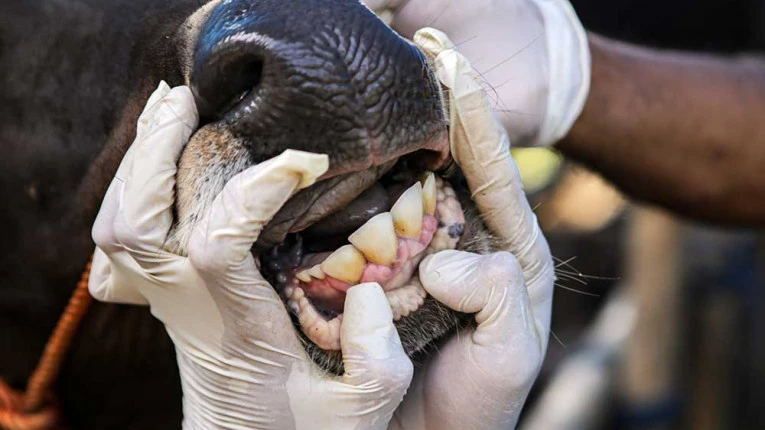
The revelation that at least 10 cattle belonging to the Minister for Agriculture, Mandla Tshawuka, have tested positive for foot-and-mouth disease (FMD) at his Mbola ranch is more than an unfortunate personal setback. It is a stark and deeply damaging indictment of the national response to an outbreak, that now threatens the entire kingdom.
The minister is, after all, the official entrusted with leading the fight against the very disease that has breached his own herd. That breach, which was confirmed while he was addressing a global forum on food security in Rome, undermines public confidence in the Ministry of Agriculture’s capacity to contain, let alone eradicate, a disease that has already spread regionally from Shiselweni through Lubombo, Manzini; which now stands at the doorsteps of Hhohho.
With the festive season approaching, restricted slaughter capacity and soaring demand have driven red-meat prices to levels that place a traditional Christmas braai beyond the reach of many households.The consequences go way beyond the festive season. Jobs in this industry that employes thousands of emaSwati, are now at stake and so is our food security.
Eswatini’s FMD-free status was suspended in June 2025, triggering immediate export bans from the European Union, the United Kingdom, Norway, Taiwan, South Africa, Mozambique and key Asian markets. Livestock and meat processing contribute more than two per cent of our GDP.
The sudden loss of these revenues, combined with domestic movement restrictions and the closure of auctions, has inflicted severe financial distress on farmers and abattoir operators alike.
Farmers, particularly those in commercial pig production, report crippling debt as quarantines prevent sales and loan repayments fall due. The National Farmers’ Union has rightly called for the outbreak to be declared a national disaster, which would enable compensation for verified losses. That call merits immediate consideration, particularly if the fault lies with the inefficiencies of the ministry more than the recklesness of the farmers or community members in the affected regions.
Vaccination, which is our only hope of any credible containment strategy, seems to be proceeding at a pace that has drawn widespread criticism. Only 57 000 of an estimated 700 000 cattle have so far been immunised, despite the arrival of nearly 190 000 doses. This seems slow for a fast-moving virus. Our neighbour, South Africa, which is confronted with a similar FMD challenge, has mobilised industry and State resources to vaccinate its entire 7.2 million national herd within six months. Eswatini must match that urgency.
There are plenty of lessons to guide our response. Argentina, Uruguay and Chile eradicated FMD through sustained, nationally coordinated vaccination campaigns, rigorous movement controls and, crucially, the full engagement of farmer organisations in planning and execution. Mexico’s successful 1946-1954 campaign with the United States rested on transparent cross-border cooperation and decisive enforcement at frontiers. These examples demonstrate that technical measures alone are insufficient. Political will, farmer inclusion and border security are non-negotiable.
In Eswatini, several issues demand immediate attention. The continuing absence of effective border fencing in areas prone to cattle rustling and illicit cross-border movement must be addressed without further delay. A porous borderline is an open invitation to reinfection.
Our security forces should be instructed to intensify patrols and enforce movement controls along the kingdom’s boundaries with South Africa and Mozambique. The Ministry of Agriculture must also establish a formal joint task force with the Farmers’ Union and other stakeholder bodies, granting them a decisive voice in strategy, from surveillance and vaccination scheduling to the design of compensation mechanisms and a phased reopening of markets.
The vaccination campaign requires wartime logistics. Every available veterinary graduate must be mobilised, funding prioritised and targets met daily.
The ministry’s recent measures, which limited trade resumption in vaccinated zones, emergency imports from disease-free South African abattoirs and appeals against smuggling, are welcome but insufficient. Smuggling will persist while farmers feel excluded and uncompensated; borders will remain porous while fences lie in disrepair; and vaccination will continue too slowly while manpower and logistical constraints are not urgently overcome.
FMD is not merely an agricultural problem; it is a direct threat to food security, rural livelihoods and national economic stability. When the minister responsible for defeating the virus finds it in his own kraal, the moment for complacency has passed. What is now required is transparent, inclusive and decisive leadership that unites government, farmers and security agencies in a single, unrelenting campaign.
Eswatini has the resources, the technical expertise and the historical examples to win this war. It lacks only the coordinated will to act. That must change without a day’s further delay.
The infection of Minister Tshawuka’s herd is a potent metaphor: The disease is everywhere and no one is immune. It must now serve as the catalyst for a transparent, collaborative and aggressive national fightback because, among other things, the kingdom’s food security and economic stability depend on it.


















Leave a comment