

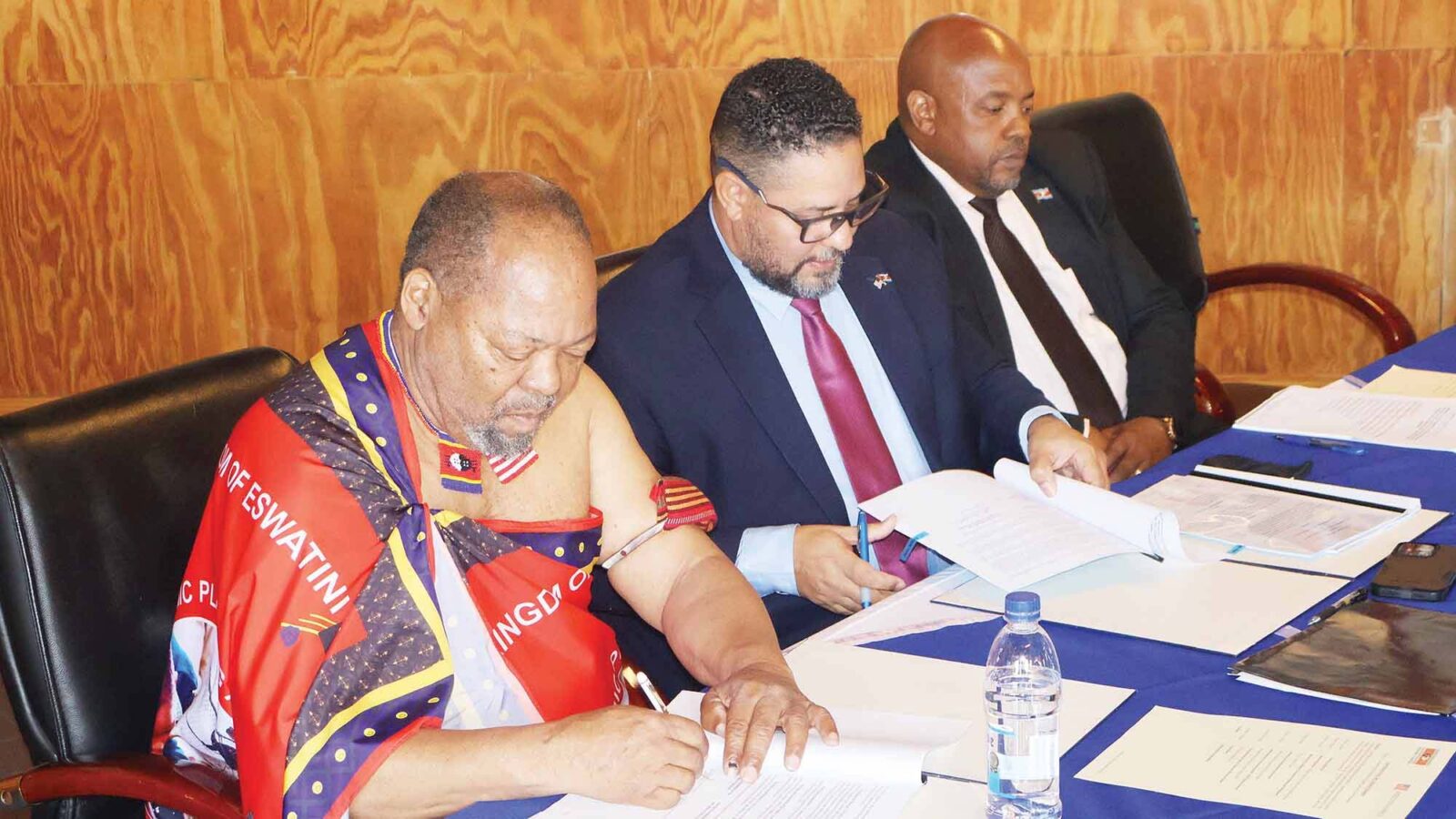
The signing of a E4.1 billion memorandum of understanding between US Government and Eswatini Government on HIV response sits within a long record of bilateral health cooperation that continues to shape national public health outcomes. The agreement comes at a time when Eswatini carries one of the highest HIV prevalence rates globally and, therefore, remains a focal point for international support that targets prevention, treatment and system performance. Over the past 15 years, Eswatini has received more than E15 billion in assistance through largely US-funded programmes, which have altered the trajectory of the epidemic and stabilised services that once struggled with coverage and continuity.
This latest MoU places renewed attention on sustained financing predictability and coordination across institutions that deliver HIV services. It also provides an opportunity to examine how long-term external funding interacts with domestic planning and fiscal choices. Eswatini Government presents the deal as part of ongoing cooperation, rather than a new policy direction and that framing matters. The country already reports high antiretroviral therapy coverage, reduced AIDS-related mortality and improved mother- to-child transmission outcomes. These gains occur alongside steady technical support data systems financing, and procurement channels linked to US assistance.
US Government support through programmes such as PEPFAR has historically focused on scale and reach. Clinics expand laboratory networks, improve and community outreach widens. Within the kingdom, this approach supports decentralised testing, differentiated care models and integration of HIV services with primary healthcare. The E4.1 billion envelope depicts continuity of this model while adjusting to emerging priorities such as sustaining viral suppression among adults addressing new infections among young women and managing the cost of lifelong treatment.
A fair reading of the agreement also requires attention to dependency concerns that often accompany long- standing donor relationships. When external funding dominates a sector, it shapes incentives staffing, patterns and reporting priorities. Eswatini health budget allocations continue to face pressure from competing needs and HIV spending stays heavily donor-financed. The MoU, in this vein, sits within a policy space, where partnership success coexists with questions about long term domestic financing pathways. Managing this balance requires careful coordination rather than abrupt shifts that could disrupt service delivery.
Regional comparisons help situate the Eswatini experience. Botswana has received extensive US assistance for HIV over two decades and now reports epidemic control indicators that rank among the strongest in Africa. Sustained funding allowed early treatment adoption of laboratory capacity and strong surveillance. Rwanda similarly benefitted from US-backed HIV programmes, which contributed to health system rebuilding after the 1990s and supported integration of HIV care into community-based insurance structures. These cases show that prolonged assistance can coincide with improved national capacity, when aligned with domestic systems and planning.
For Eswatini the MoU also interacts with health governance practices. Reporting frameworks procurement rules and monitoring standards attached to US funding influence how programmes operate. This can bring discipline and transparency in implementation though it can also create parallel processes that require management attention. An important safeguard, given the much-publicised procurement challenges that have plagued the Health Ministry. The current agreement provides space to streamline coordination between donors and domestic institutions so that data reporting and planning cycles support rather than duplicate national processes.
The economic dimension of the E4.1 billion deal warrants attention as well. Health funding flows affect employment supply chains and service delivery across rural and urban areas. HIV programmes employ thousands of health workers, community supporters and data staff. Continuity of funding stabilises these roles and reduces service interruptions. At the same time, long-term reliance on donor-funded posts raises sustainability considerations that government must traverse within public service structures and wage policies.
Public communication around the MoU has largely focused on headline figures which may obscure operational detail, if not properly handled. The effectiveness of the agreement depends on how resources translate into consistent drug, patient follow up and prevention coverage. HIV outcomes increasingly depend on quality of care, adherence support and addressing social drivers of infection. Funding alone does not guarantee these results, but it does provide the platform on which they are pursued. The agreement also reflects US Government’s strategic interests in global health security and regional stability. High HIV burden countries face economic and social costs when epidemics remain uncontrolled. Supporting Eswatini response aligns with development and health security goals, simultaneously reinforcing diplomatic ties. For our government, the partnership continues to offer access to financing expertise and global networks that might otherwise remain out of reach.
After 15 years and more than E15 billion in support the relationship has matured into one defined by results and expectations. The E4.1 billion MoU fits within this evolution. Its value lies not only in the scale of funding, but in how it supports continuity adaptation and eventual transition planning. As Eswatini works through future health financing choices, the agreement stands as another chapter in a long running partnership that continues to shape the national HIV response.
Ongoing review mechanisms within the MoU allow periodic assessment of target expenditure and service reach, while maintaining alignment with national plans and regional commitments. Such processes support learning adaptation and continuity without disrupting delivery across facilities communities and partners nationwide over time. Comments: bongwebagcinile@gmail/ 7927 8210
















Leave a comment