

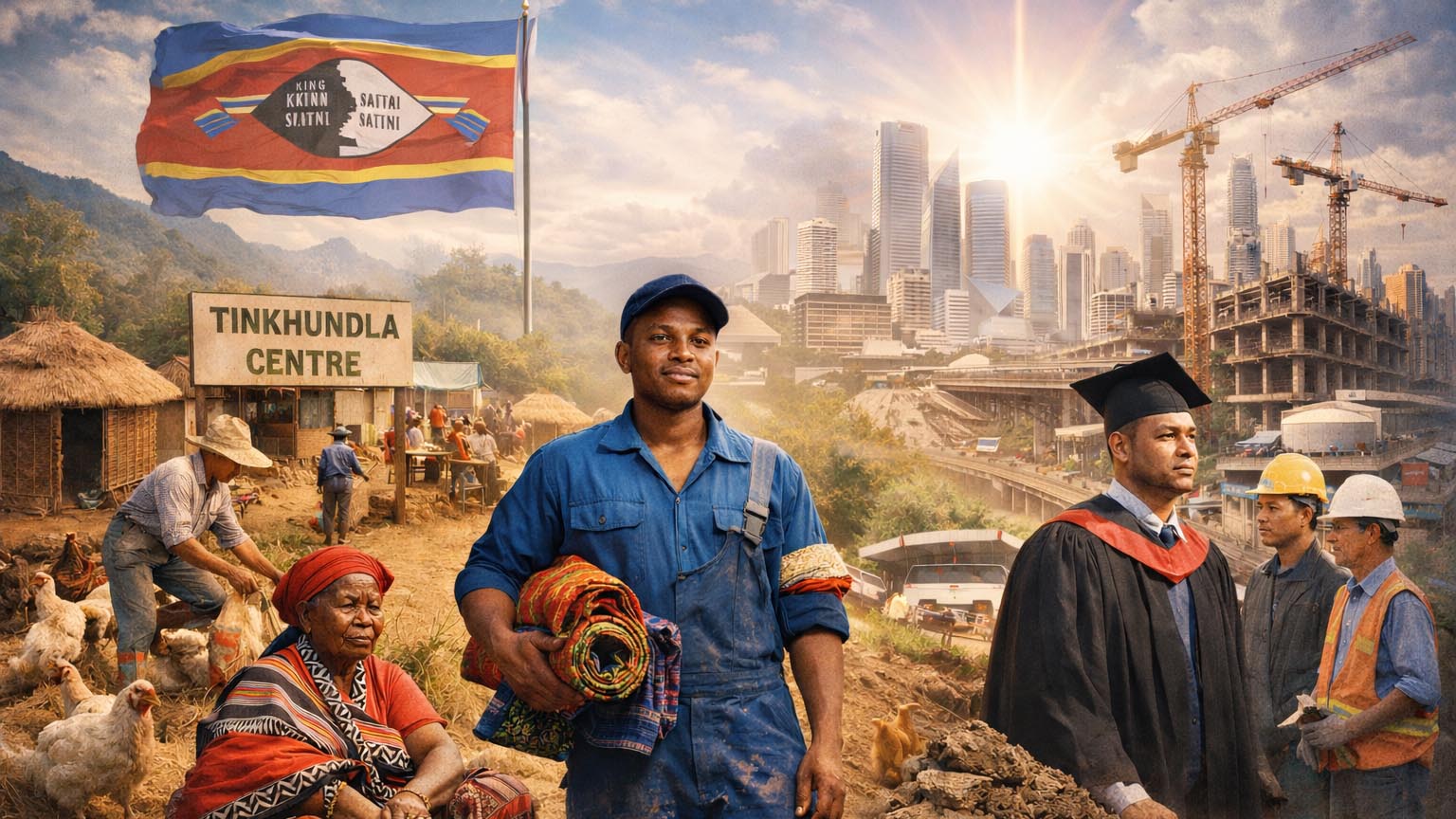
In the grand tapestry of global governance, Eswatini stands as a unique testament to the endurance of tradition and the resilience of a people rooted in their soil. Our political identity cannot be neatly boxed into imported theories; the Tinkhundla System is the very heartbeat of the kingdom. It is a home-grown philosophy that marries ancient wisdom with the fast-moving demands of a modern State.
While external critics peer through a distorted lens of Western doctrine, they fail to see the quiet, grassroots potential vibrating within our regions.
At its core, Tinkhundla is a vehicle for rural empowerment -a bridge connecting the quiet homestead to the bustling marketplace. The Ministry of Tinkhundla Administration and Development has sought to take the system to the people. On paper, the vision is impeccable, promising dignity and opportunity for every liSwati. Through the Regional Development Fund and the Youth Enterprise Revolving Fund, millions have been disbursed to foster community-based projects like poultry farms and sewing co-operatives. This decentralisation is the bedrock of dignity, ensuring a graduate in Lubombo or a grandmother in Shiselweni can thrive without migrating to an overcrowded city. In its purest intent, the system ensures wealth trickles down to the roots of the tree, strengthening the foundation rather than merely polishing the leaves at the top.
Over the years, we have seen the Ministry of Tinkhundla Administration and Development attempt to take the system to the people. This vision of a self-sustaining Eswatini is clearly articulated in the mandate from the Throne. His Majesty King Mswati III has been unwavering in his call for the kingdom to attain First World status. It is a bold, ‘nkwe’ (swift) ambition that envisions Eswatini not as a passive recipient of aid, but as a hub of innovation, world-class infrastructure and genuine economic equity. His Majesty’s vision serves as a First World North Star – a guiding light that demands urgency, excellence and the upliftment of every liSwati to a high-quality life.
Yet, as we walk this path, an uncomfortable discrepancy has emerged. Put plainly, the King has given the nation a Ferrari of a vision – sleek, powerful and capable of extraordinary speed. Government, however, appears to be attempting to drive this machine with the handbrake firmly engaged. While the Throne calls for transformation and momentum, the administrative arm of the State seems trapped in a repetitive cycle of economic catch-and-release.
Foreign companies are wooed with 20-year tax holidays, duty exemptions and the unrestricted right to repatriate profits. Meanwhile, the local liSwati entrepreneur – the one whose roots are in this soil, whose children attend local schools and who cannot flee when conditions worsen -is burdened with a 27.5 per cent corporate tax and a maze of rigid, often illogical procurement rules. We are effectively charging our own people a patriotism tax while granting foreign entities a free pass.
If we look to the economic powerhouses of the East – China, India and particularly Taiwan – as models, we must be honest about what those models reveal.
These nations did not rise by prioritising foreign convenience over domestic capacity. Taiwan, a small island nation facing challenges comparable to our own, built a global semiconductor industry by investing in its people and deliberately integrating local small-to-medium enterprises (SMEs) into every layer of the value chain. They understood that a nation’s strength is not measured by the number of foreign factories on its soil, but by the number of citizens who own and operate them.
In contrast, our own approach appears to ignore this lesson. By awarding major projects – from roads to water infrastructure -to foreign firms, we are exporting our economic recovery. These firms often import skilled labour, leaving local communities with little more than temporary, low-paying work.
The irony deepens when we consider our investment in the youth. Millions are spent annually on scholarships. We train engineers, architects, doctors and accountants to global standards, only to watch them sit idle in their homesteads. Bound by our own policies, they observe foreign firms build our cities and foreign professionals manage profits that exit our borders. We are preparing young people for a marketplace that has been quietly surrendered.
The economic arithmetic is simple. The Scholarship Fund cannot revolve if graduates remain unemployed. Without salaries to garnish, the fund collapses and the next generation is denied opportunity. In effect, we are engineering a brain drain, educating our brightest minds, only to push them outside our borders. Meanwhile, the gap between the governed and the governors continues to widen. On one side is a political elite enjoying luxury vehicles and salaries insulated from hardship. On the other is the ordinary citizen struggling to afford a bag of maize in fertile land. Political office is a sacred trust, not a pathway to enrichment. Corruption remains the silent thief of our 1.2 million people, draining resources into administrative shadows.
In Eswatini, respect is our cornerstone. We respect the Throne, our elders and our peace, but respect requires honesty. To watch a brother, walk towards a cliff without warning him is not respect – it is neglect. The King has set the direction, but the navigators have lost the map. Unless we prioritise the liSwati entrepreneur over the foreign tax-exile, we are merely performing a play of progress. We are tightening the nation’s belt, but it is no longer around the waist – is around our collective neck.
The joke is on the unemployed graduate and the sidelined businessman. However, if government fails to put Eswatini first, the final punchline will be one that none of us find funny. It is time to end the catch-and-release economy. We are only 1.2 million people. If we cannot solve this, that is the biggest punchline of all.

















Leave a comment