

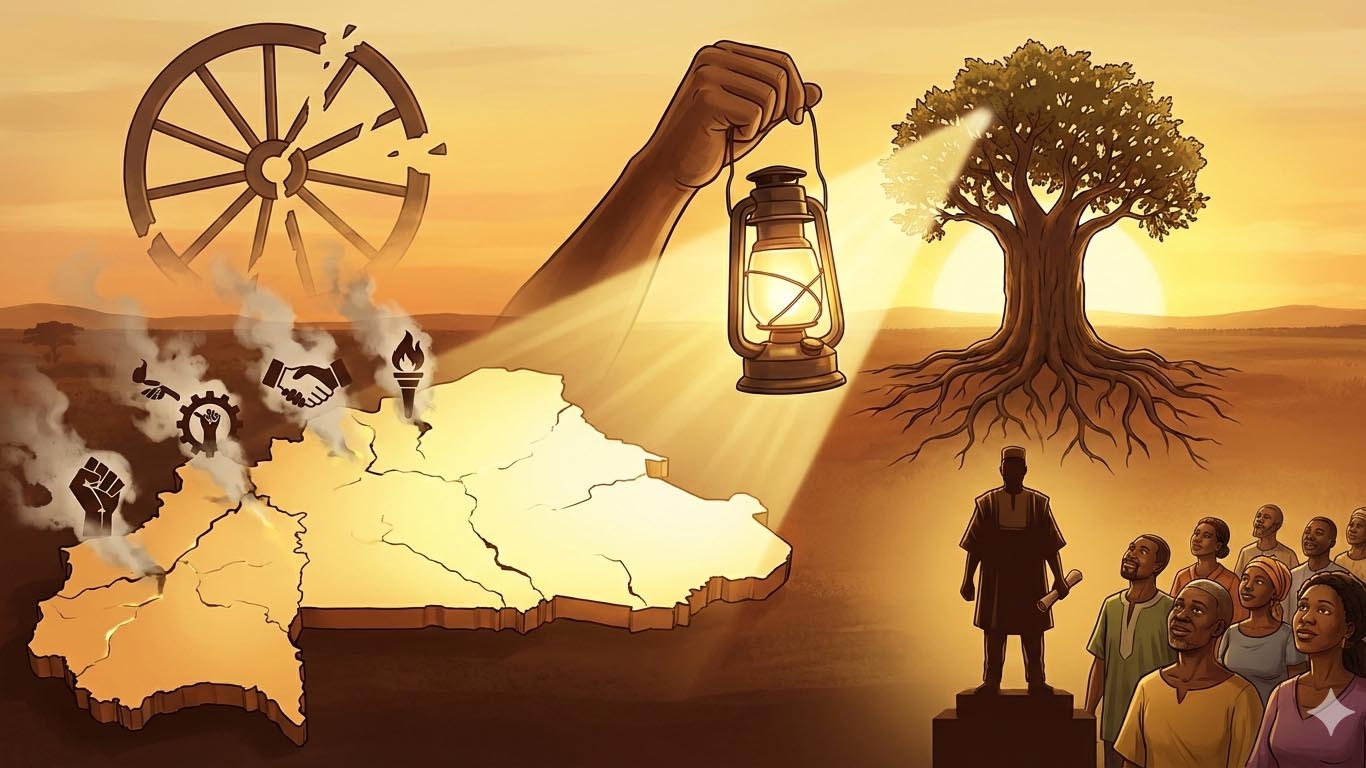
There has been an interesting political development in Burkina Faso, which evoked debate on social media, both for and against it. It was announced that the government of Burkina Faso has adopted a decree dissolving all political parties and groupings, along with a draft law repealing the legal framework governing their operations, financing and the status of the opposition.
Government said that the proliferation of political parties in recent years has contributed to divisions among citizens and weakened social cohesion. The dissolution, it said, is intended to preserve national unity, strengthen the coherence of Government action, and pave the way for reforms to the political governance system.
It is interesting that one-party systems in post-independence States in Africa emerged out of similar sentiments, as expressed by the Burkina Faso government. It is said that the one-party States emerged primarily as a strategy to foster national unity, ensure political stability and accelerate economic development, often viewing multiparty systems as catalysts for divisive tribalism. Leaders argued that a single party best represented the unified national interest, reflecting African traditions of consensus over Western-style competition.
Regrettably, the one-party state models did not address the core governance and development concerns in Africa, hence, governance failures persisted. Bad governance was characterised by oppression and arrest of political opponents, rampant corruption, nepotism, high levels of poverty and weak economic development, among other challenges.
Many countries were forced to introduce multiparty democracy in a bid to improve good governance, so that the country’s development trajectory may change. The reality is that multiparty democracy did not yield the development dividends that benefit the citizenry. The question I ask myself is whether this was due to multiparty failure or hinged on leadership that became greedy for power, control and access to national resources for the benefit of the ruling elites.
Multipartism, to be fully functional, must be accompanied by strong institutions including: The rule of law, free and fair elections, respect and protection of citizens’ rights, access to justice including equality before the law, and a government that is accountable to citizens and gets its mandate from the will of the people.
I would like to argue that blaming the multiparty system as the cause of bad governance in Africa, is unfortunate, simplistic and unrealistic. I would like to posit that the lack of servant and ethical leadership is a primary factor undermining good governance across Africa, leading to a persistent cycle of corruption, poor service delivery, and, in many instances, political instability.
While some leaders have embraced these principles, many African nations still grapple with leadership that prioritises personal agendas and political survival over the needs of the citizenry.
It is a fact that the absence of ethical, servant-oriented leadership enables the misuse of public resources for personal or crony enrichment, rather than for the public good. This has led to poor service delivery and public discontent. In many countries, including Eswatini, the lack of servant and ethical leadership in government directly leads to failures in providing basic services like, education, social protection, water, electricity, and sanitation, among others. In South Africa, for example, where citizens have the freedom to protest, protests have been a common phenomenon.
Bad leadership results in weakened governance institutions. This is manifested in the decline of democratic institutions, where political interference becomes a common feature. Appointments to public office are not merit-based, accountability and transparency are avoided. Institutions of oversight, like Parliament, fail to hold the Executive to account, as opposition parties are weakened and controlled. Elections become source a of conflict. The justice system is often seen as not dispensing justice without fear, favour, or prejudice but tend to favour the politically connected and the rich members of society, among other bad governance practices.
Leaders often focus on political manoeuvring, political survival and maintaining power, rather than implementing developmental agendas for the benefit of the citizenry, in particular the poor and vulnerable groups.
What is servant-ethical leadership?
According to Bailey Hargraves, servant leadership puts people first. They serve. They prioritise the well-being of others. They are characterised by actively seeking to understand others, understanding the feelings of others, facilitating the well-being of others, and convincing others rather than using coercion.
More importantly, they are good stewards of resources placed at their disposal. Ethical leaders are honest, caring and principled.
Africa, to make progress, needs leaders who will, like Lee Kuan Yew of Singapore, be committed to building a capable state that will improve the well-being of the citizens regardless of their status in society. Leaders who will use national resources for the betterment of the country rather than for a few. They invest in developing strong institutions of governance.
Blaming the multiparty political system is not being honest about governance ills!


















Leave a comment