

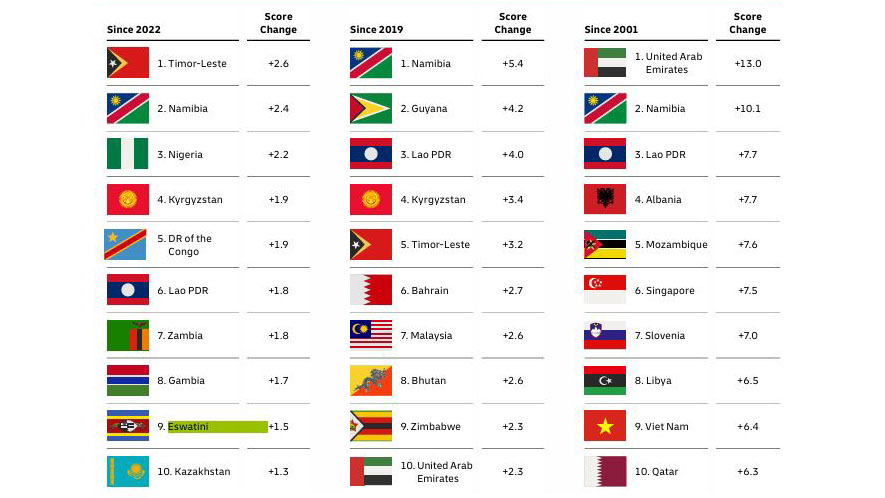
MBABANE – Eswatini continues to demonstrate strong integration with the global economy despite its small size.
The DHL Global Connectedness Report 2026 highlights the kingdom’s significant levels of international trade and cross-border economic activity.
The report was released yesterday by DHL and New York University’s Stern School of Business.
In the report’s 2024 country ranking of 180 economies, Eswatini ranks 164th, while South Africa ranks 53rd overall. Other SubSaharan African countries with relatively higher overall ranks include Seychelles (40th), Mauritius (65th), Namibia (68th), Ghana (97th), Nigeria (100th), Mozambique (107th), and Kenya (119th).
The global study, widely regarded as one of the most comprehensive analyses of international economic integration, ranks countries based on their participation in global flows of trade, capital, information and people.
According to the report, Eswatini stands out among smaller economies for its high degree of global connectedness, driven largely by its deep trade relationships and strong regional economic integration within Southern Africa.
The findings position Eswatini among countries whose economic activity is significantly linked to international markets, reinforcing the country’s reliance on cross-border trade, regional supply chains and international economic partnerships.
The report notes that Eswatini’s economy remains highly trade-oriented, with exports and imports accounting for a substantial share of national economic activity.
This places the kingdom among countries with high ‘depth’ of global connectedness, a measure used in the report to determine the extent to which economic activity crosses international borders.
For Eswatini, trade flows remain the dominant driver of global integration. The country’s exports, particularly sugar, soft drink concentrate, textiles and manufactured goods, are heavily linked to international markets, especially South Africa and other regional trading partners.
Opportunities for local businesses
MBABANE – For the local business community, the report’s findings highlight the importance of strengthening Eswatini’s competitiveness in international markets.
Export-oriented industries, manufacturing firms and logistics operators stand to benefit from deeper global integration if the country continues improving its trade infrastructure and business environment.
The report suggests that countries that actively participate in global networks tend to experience stronger economic growth, higher productivity and greater innovation.
This underscores the need for policies that promote export diversification, improve logistics efficiency and support businesses seeking to expand into international markets.
As the global economy continues to evolve, analysts say countries like Eswatini must focus on strengthening their position within international economic networks.
This includes enhancing digital connectivity, improving transport infrastructure and expanding participation in regional and global trade agreements.
*Full article available on Pressreader*



















Leave a comment