

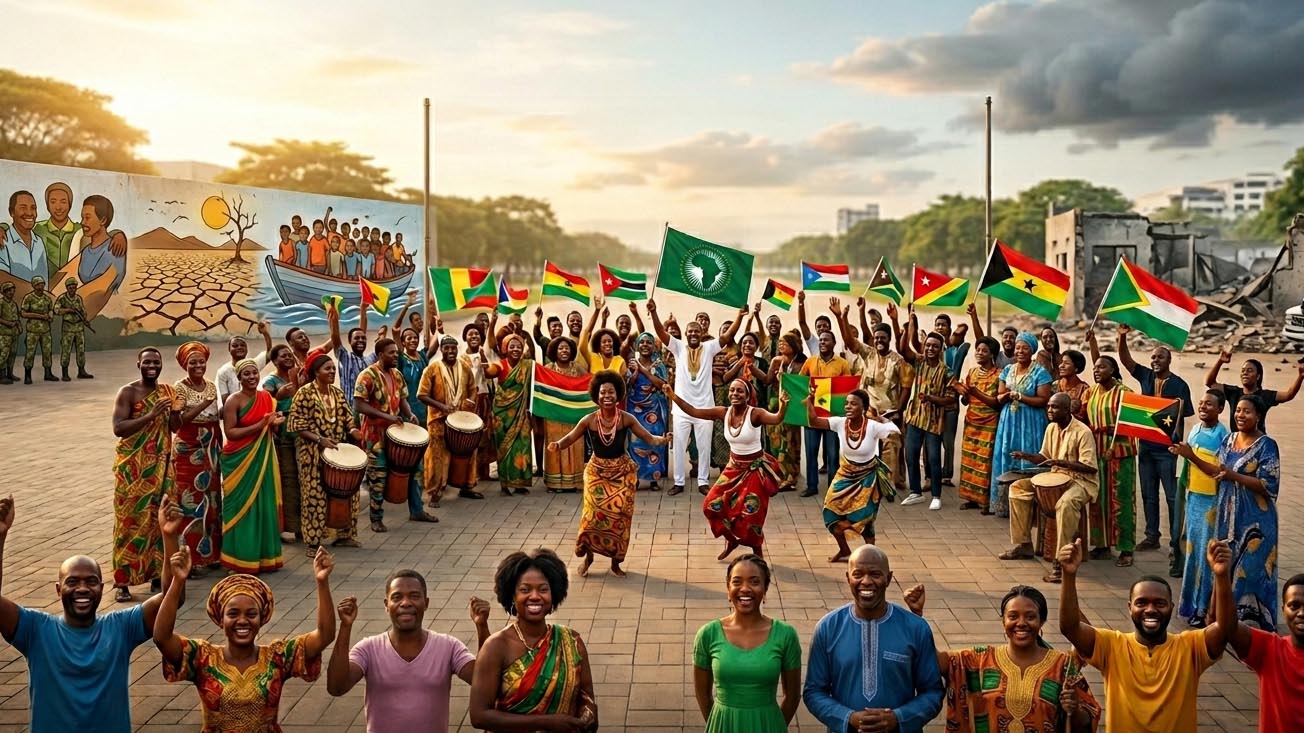
Africa Day, observed annually on May 25, marks the founding of the Organisation of African Unity (OAU) in 1963, a historic moment that codified the vision of African nations for unity, self-determination and socio-political liberation. This commemoration is a strategic moment for advancing the African Union’s Pan-African agenda and renewing the continent’s commitment to integration and renaissance as stipulated in Agenda 2063.
Unfortunately, the scenes of xenophobic marches, harassment and violent attacks by some sections of South Africans indicate a population that is losing its understanding and commitment to the founding fathers of Pan Africanism, which is a global movement and ideology that seeks to unify all people of African descent, promoting solidarity and cultural pride. It asserts that the African diaspora and continental Africans share a common history and destiny, aiming to overcome the legacy of slavery, colonialism and racial discrimination. We are, however, grateful that political leaders, including President Ramaphosa, former President Thabo Mbeki and others, have reminded South Africans that they owe their freedom to Africans as a whole, as they embraced South Africa’s struggle as their own. Hence, the ease with which African migrants gravitate towards South Africa.
The 2025 Africa Day commemoration under the 2025 African Union Theme: ‘Justice for Africans and People of African Descent through Reparations’, as adopted through Assembly Decisions 884, intends to revisit ‘Our History, Shaping Our Future’. It is about remembering in order to connect the historical struggles against enslavement, colonialism and systemic exploitation with the contemporary agenda for reparatory justice and equitable global partnerships. We appreciate that the issue of reparations is rigorously pursued. It is an irrefutable fact that Africa’s development stagnation is due to slavery, colonialism and apartheid. Hence, there is a need for countries that benefitted from these developments to pay some compensation.
This Africa Day is envisioned as both a ceremonial observance and a policy-driving event that will deepen intellectual discourse, strengthen diplomatic and multilateral cooperation and mobilise key actors around the reparatory justice agenda that those who oppressed Africans would like to ignore.
It is worth noting that recognising the African diaspora as the sixth region of the African Union and a critical pillar of the continent’s future serves to recognise Africans in the diaspora as fully Africans. The United States ‘MAGA’ agenda, where the people of colour, Africans in particular, were targeted for deportations just because of the colour of their skin, serves to confirm that recognising the diaspora as a region was indeed the right decision.
Africa Day 2025 will also spotlight the need to reinvigorate linkages between the continent and its global diaspora. This is in line with Agenda 2063, particularly Aspiration 5, which calls for an Africa with a strong cultural identity, common heritage and shared values and ethics and Aspiration 2, which emphasises an integrated, politically united and self-determined continent. We celebrate against the backdrop of serious development challenges. The struggle for socio-economic and political stability across the continent encompasses several distinct obstacles: Africa faces climate vulnerability, which makes it highly susceptible to the impacts of climate change, resulting in severe water scarcity, desertification and unpredictable weather that threaten livelihoods and food security.
Africa remains trapped in armed conflict and political instability. Ongoing conflicts in several regions continue to displace millions. The war in Sudan and conflicts in the Sahel region have had devastating effects on human lives. Tens of thousands have died and millions have been displaced. This undermines the commitment that was made to silence guns in Africa to unleash development.
The other challenge is democratic backsliding and constitutional crises, which threaten peace, stability, and good governance. We are all aware that there are countries which are now under military rule. Elections in Africa have generally sparked conflicts, and this has undermined the will of the people. Africa is beset by high levels of poverty and socio-economic inequality that seriously affect Africans. To this end, persistent poverty continues to restrict access to basic rights and services. This disproportionately affects vulnerable populations, such as children, those with disabilities and women. High rates of malnutrition and stunted development are well documented. The other chronic problem that is also linked to high levels of poverty is high unemployment, which seriously affects the youth. Hence, the outflow of Africans to Europe and America.
Gender-based violence (GBV)is an endemic problem. It disproportionately affects women and girls who face escalating threats, including the rapid rise of tech-facilitated abuse and digital violence, which silences voices and threatens gender equality gains. Despite the rich cultural heritage celebrated, Africa’s creative industries remain under-prioritised in national budgets.
The sector grapples with weak infrastructure, inadequate institutions and poor intellectual property (IP) protections. We all need to make Africa a respected continent, not for ourselves but for generations to come.












Leave a comment