

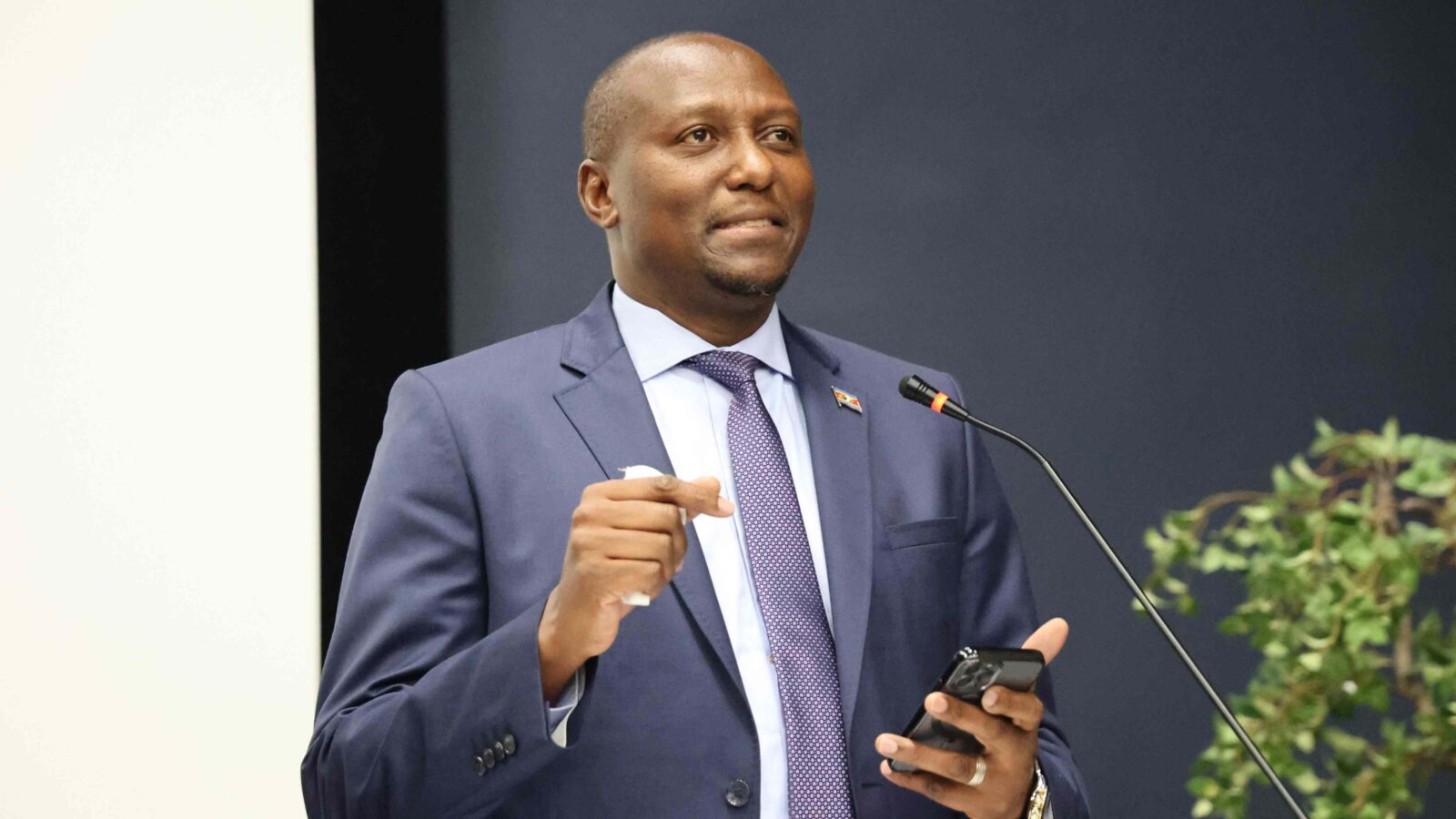
In politics, leadership is often judged not when things are going well, but when questions are asked. That is why Prime Minister Russell Mmiso Dlamini’s decision to welcome a parliamentary motion questioning his leadership style deserves recognition as an important moment for governance and accountability in Eswatini. Rather than dismissing the motion or treating it as a personal attack, the prime minister accepted it and committed to providing detailed responses to Parliament.
The motion, moved by Mbabane East Member of Parliament Welcome Dlamini, seeks clarity on several issues, including the prime minister’s leadership approach, its compatibility with the Tinkhundla System, its impact on Cabinet collective responsibility and its effect on service delivery. MPs have further requested examples, timelines and measurable indicators to allow Parliament and the public to assess the effectiveness of the leadership approach being pursued.
This is precisely how accountability should function in any government. Leadership styles are not merely personal preferences; they shape how institutions operate, how decisions are made and ultimately how citizens experience government services. Whether a leader adopts a collaborative, consultative, directive or results-driven approach has direct consequences for the speed and quality of policy implementation. For Eswatini, the discussion is particularly significant because the Tinkhundla System places strong emphasis on consultation, consensus-building and collective decision-making. Parliament’s request for clarification is, therefore, not simply about the prime minister as an individual. It is about understanding how the country’s chief executive interprets and applies these foundational principles in the modern governance environment.
Importantly, a clear explanation from the premier could help establish expectations across government. Ministers, principal secretaries and public servants perform more effectively when they understand the leadership philosophy guiding national priorities. If the PM provides a coherent framework outlining how decisions are made, how accountability is measured and how collaboration is expected to occur, it can strengthen coordination throughout government and improve service delivery outcomes.
Globally, governments have benefitted when leaders openly explained and defended their governing approaches. In New Zealand, former Prime Minister Jacinda Ardern frequently articulated her ‘empathetic leadership’ model, creating clarity about government priorities and strengthening trust during times of crisis. In Rwanda, President Paul Kagame’s emphasis on performance management and measurable targets helped institutionalise a culture of accountability across public service structures. Meanwhile, in Singapore, successive governments have consistently communicated their governance philosophy, enabling ministries and agencies to align around clear national objectives.
The common lesson is that transparency about leadership style is not a weakness. It is a governance tool. When leaders explain how they lead, citizens can better assess whether outcomes match intentions. Likewise, public officials gain a clearer understanding of what is expected of them.
The prime minister’s acceptance of scrutiny is also important from a democratic governance perspective. Strong institutions are built when leaders are willing to answer difficult questions. Parliamentary oversight should not be viewed as confrontation, but as a mechanism that strengthens government performance. The willingness to engage with criticism signals confidence in one’s leadership and respect for institutional processes.
Eswatini has, in recent years, faced increasing public expectations regarding transparency, efficiency and responsiveness in government. Against this backdrop, Parliament’s questions and the PM’s willingness to answer them present an opportunity to deepen public understanding of how government operates and how national development goals are being pursued. Ultimately, the real value of this motion lies not in political point-scoring but in the possibility of greater clarity. If the prime minister’s forthcoming response successfully outlines his leadership philosophy, demonstrates its alignment with the Tinkhundla System and provides measurable evidence of its impact, the country will emerge with a stronger framework for accountability.
Leadership should never fear examination. On the contrary, scrutiny often provides the clearest path to stronger governance. By welcoming the motion, the prime minister has opened the door to a conversation that could help define not only his leadership legacy, but also the standards by which government performance is measured in the years ahead.

















Leave a comment