

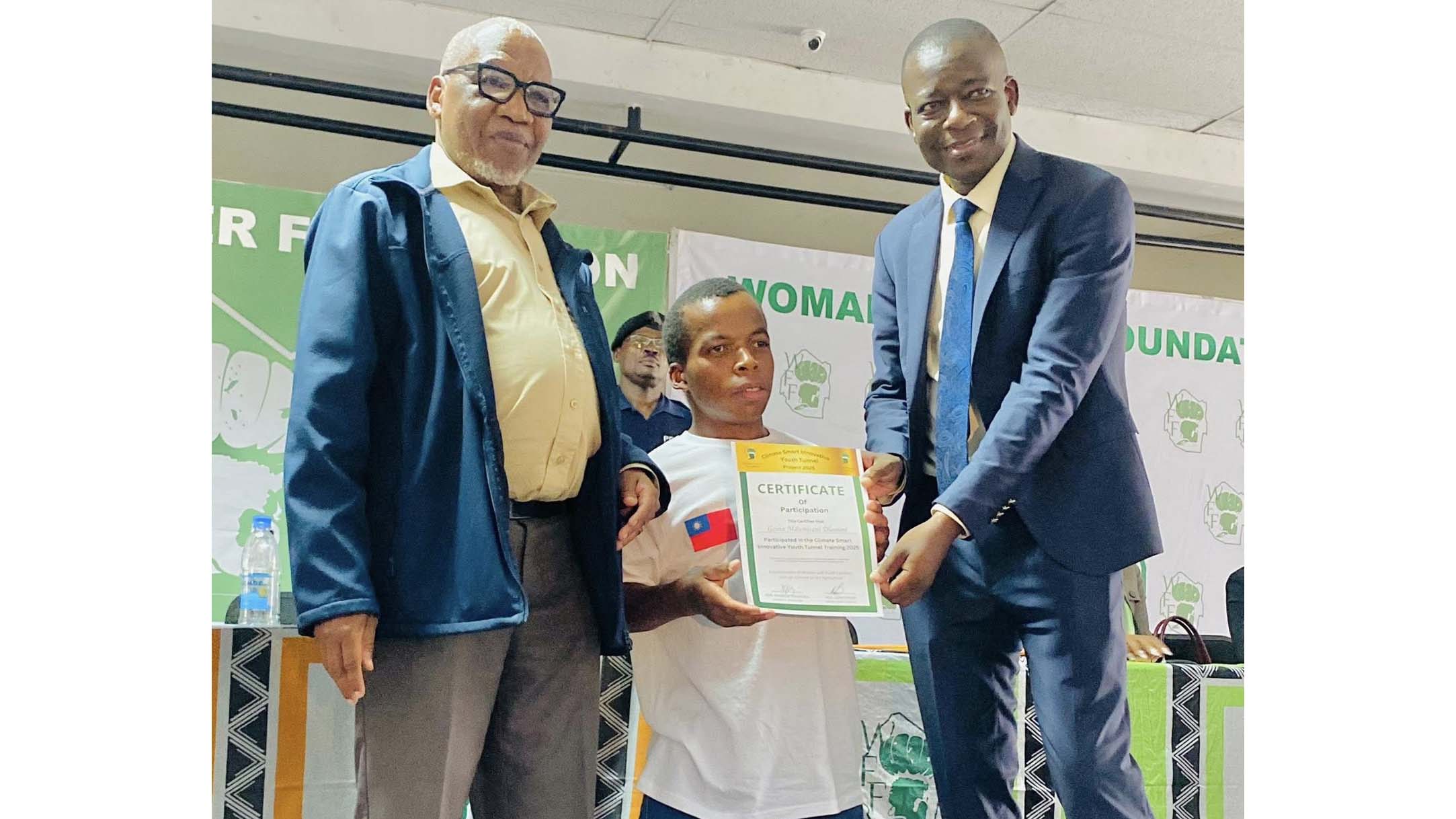
What started as a small project for personal consumption has grown into a promising agribusiness for Gcina Dlamini, this week’s Farmer of the Week. Dlamini’s journey into rabbit farming began in 2020, while still a high school learner, proving that age is no barrier when passion meets determination.
“I initially started rabbitry just for my own consumption,” he recalls, “but as time went on, I realised that many people were interested in buying rabbits for different purposes and some even wanted to venture into rabbit farming themselves.” That growing interest sparked a shift from a household project into a business venture.
Dlamini credits key mentors for laying a strong foundation. “Miss Maphalala, my Agriculture teacher at Ka-Boyce, played an instrumental role in helping source quality breeding stock, while Wandile Shabalala from Emvakwelitje in Mbabane, an established rabbit farmer, continues to serve as a mentor, offering guidance drawn from experience,” shared Dlamini.
Today, he keeps a variety of breeds including New Zealand Whites, New Zealand Reds, Flemish Giants and some mixed breeds. “These rabbits were chosen for their fast growth rate, strong mothering ability, large body size and ability to produce big litters, qualities that make them ideal for both meat production and breeding,” he said.
One of the advantages of rabbit farming, Dlamini explains, is its manageability. “Rabbits are very easy to keep and require less attention compared to other domestic animals,” he says. His daily routine is simple, but disciplined: Feeding each rabbit about 150 grammes once a day, providing clean water daily and ensuring feeders and drinkers are cleaned to prevent disease. The routine starts at 6am and takes less than 20 minutes. Special care is given to mated rabbits, with all activities carefully recorded through notes and photographs.
After completing high school and seeing the business continue to grow, Dlamini invested further in his entrepreneurial skills. “
I completed an Entrepreneurship Programme with Junior Achievement (JA) and undertook Climate Smart Agriculture training with the Woman Farmer Foundation.
These experiences strengthened both my business mindset and his approach to sustainable farming,” he shared. In 2025, Dlamini reached another milestone when he successfully secured a grant from the Eswatini National Youth Council. “The funding enabled me to build a proper rabbit house and increase my breeding stock, a major step towards scaling up production,” mentioned Dlamini.
Looking ahead, he is eager to expand market access.
He is calling on shops and retailers to partner with him in supplying rabbit meat, which he describes as a healthy alternative to other meats. “By the end of this year, I will be able to supply consistently to anyone who comes forward looking for rabbit meat,” he says with confidence.
To aspiring farmers, Dlamini’s message is both honest and inspiring: “Start with what is available. Give yourself time to learn and be willing to give it your all. I have failed more than once in rabbitry, but I am still standing.”
He believes success in farming and in life comes down to three key qualities: Patience, resilience and vision.
















Leave a comment